
When a Blend Separates: Phase Behaviour in Alcohol-Free Concentrates
A bottle of alcohol-free fragrance oil sits clear on the shelf for weeks, then turns hazy, or a thin layer of oil floats on top, or a crystalline sediment settles at the bottom. The customer sees a defect; the brand sees a return. The chemi
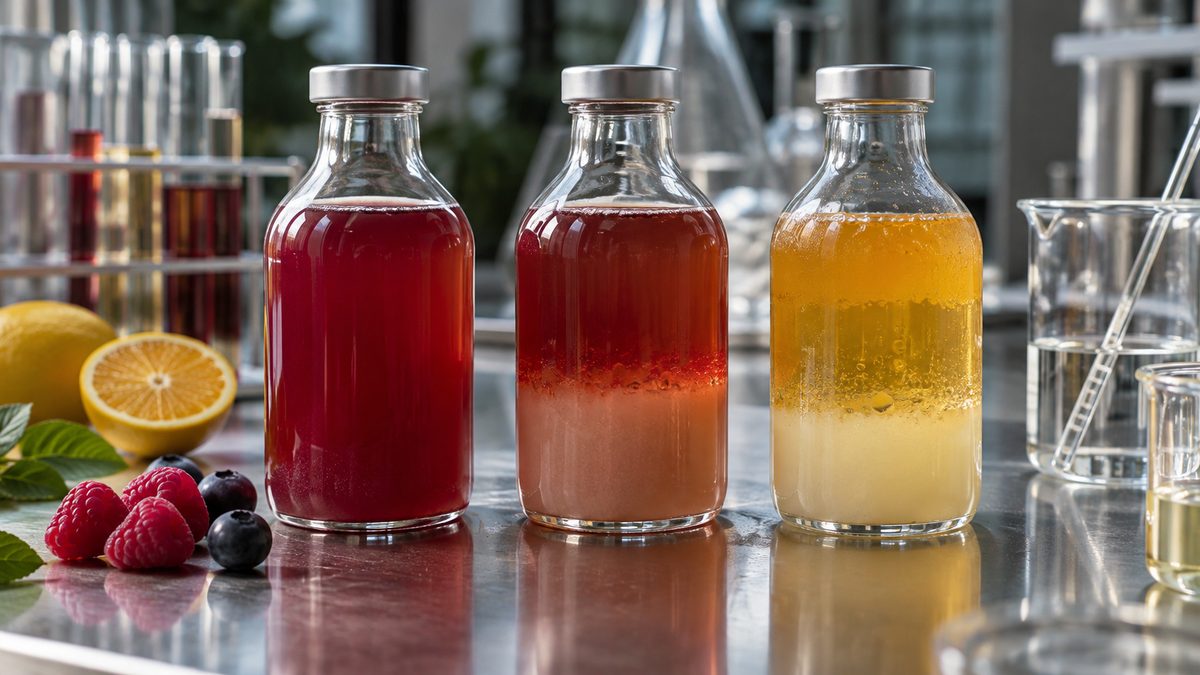
A bottle of alcohol-free fragrance oil sits clear on the shelf for weeks, then turns hazy, or a thin layer of oil floats on top, or a crystalline sediment settles at the bottom. The customer sees a defect; the brand sees a return. The chemistry underneath is phase separation, and it is the defining technical risk of leaving ethanol out of a formula.
This article explains why alcohol-free concentrates separate, which components drop out, how to test for the failure before it ships, and what a formulator can change to hold the blend together.
Table of Contents
- Why removing alcohol invites separation
- What separates, and what it looks like
- Temperature, cloud point and chill haze
- Solubility limits and carrier choice
- Solubilisers and how they hold a blend together
- Testing stability before you commit
- Fixing a blend that has already separated
- Practical guide: specifying a separation-stable concentrate
- Frequently asked questions
- Conclusion
Why removing alcohol invites separation
Ethanol is a forgiving solvent: it dissolves both water-leaning and oil-leaning fragrance components, so an EDP stays clear across a wide range of compositions. Move to an alcohol-free format and that solvent is replaced by a carrier with a narrower solubility window.
The polarity gap
Fragrance components span a spectrum from polar to strongly non-polar. A single carrier can only dissolve so much of both ends before something comes out of solution. Alcohol tolerates this span; glycols, esters and fixed oils each tolerate a narrower slice, so a blend trivially stable in ethanol becomes a compatibility problem the moment the alcohol disappears.
Clarity is a design target, not a default
In alcohol-free work, clarity is something you engineer. Assuming a concentrate will stay clear because the fragrance "always has before" is the most common route to a returned batch, because the previous stability was borrowed from a solvent you just removed.
What separates, and what it looks like
Separation shows up in three characteristic ways: haze (micro-droplets or fine solids leaving solution), a floating or bottom layer (a macro-scale phase split), and sediment (a heavy component crystallising out).
| Appearance | Likely cause | Typical culprit components |
|---|---|---|
| Uniform haze or cloudiness | Micro-emulsion or fine precipitate | Resins, some naturals, water ingress |
| Floating oily layer | Low-density oil phase exceeding solubility | Citrus oils, light terpenes |
| Bottom sediment or crystals | Heavy component dropping out | Vanillin, coumarin-type solids, fixatives |
A concentrate is, by definition, a high fragrance load, so components that would be dilute and harmless in a finished EDT are pushed near their solubility limit — which is exactly where separation lives.
Temperature, cloud point and chill haze
Solubility falls as temperature falls, so a blend clear at 25°C may cloud at 10°C. The cloud point — the temperature at which haze first appears on cooling — is the standard way to characterise this.
Chill testing as a release criterion
Before approval, chill the blend below the coldest temperature it will plausibly meet — many programmes test down to around 4°C or below — and check for haze, layer or sediment on return to room temperature.
Reversible versus permanent haze
Some haze clears when the sample warms again; some does not. Reversible chill haze is a temperature-solubility issue and may be acceptable if the product is never shipped cold. Permanent haze or sediment after warming indicates a component has genuinely left solution, and that is a formulation fault.
Solubility limits and carrier choice
The carrier is the main lever for stability, constrained by end use: a glycol or isoparaffinic base for diffuser use, a cosmetic-grade, skin-safe carrier for skin. Each carrier dissolves a different set of components, so carrier and fragrance must be chosen together.
Match the carrier to the fragrance family
Citrus-heavy blends are rich in light, non-polar terpenes that are hard to hold in a polar carrier; resinous blends carry heavy, sometimes crystalline components that settle. Ask the formulator which fragrance families their chosen carrier handles well, and expect a different carrier for a very different family. The decision logic mirrors the compatibility questions in our note on one concentrate, two specifications.
Water ingress as a silent destabiliser
Small amounts of water — from a raw material, a humid filling room or a poorly sealed cap — can push an otherwise stable blend over the edge, because water is strongly polar and narrows the solubility window of many carriers. Keep water out of the process and the closure, and treat unexplained haze as a water check before anything else.
Solubilisers and how they hold a blend together
A solubiliser keeps incompatible materials in a single clear phase, working at the interface between polar and non-polar components. It must be chosen for the specific system — one that works for one carrier will not automatically work for another.
If you are unsure which carrier will hold a given fragrance family, the team behind our customisation process can scope it before you commit.
Adding solubiliser is not a cure-all
Solubilisers have limits and side effects. They can change the feel, the odour character or the performance, and over-loading them produces its own instability or a cloudy product. Use the minimum amount that holds the blend through the worst-case temperature, rather than pouring in more until it happens to look clear. If a blend needs a large solubiliser load to stay clear, the deeper fix is usually a fragrance rebalance or a carrier change.
Testing stability before you commit
Stability is established by test, not assertion. Run a series of temperature holds — ambient, elevated, chilled and freeze-thaw — observing for haze, layer and sediment at each stage, plus a record of the cloud point.
| Test | Condition | What it reveals |
|---|---|---|
| Cloud point | Controlled cooling | Temperature at which haze first appears |
| Chill hold | Refrigerated hold, around 4°C | Cold-shipping and winter shelf stability |
| Elevated hold | Warm hold, around 40°C | Heat stability and accelerated ageing |
| Freeze-thaw cycle | Freeze then return to ambient | Permanent versus reversible separation |
Document the observation times and the return-to-ambient behaviour. A sample hazy after chilling but clear on warming tells a different story from one that keeps a sediment — and only the written record lets you tell them apart months later.
Fixing a blend that has already separated
When a batch separates, resist the instinct to shake it and ship it. First determine whether the separation is reversible — warm the sample and see whether it returns to a single clear phase. If it does, the issue is temperature and the fix is packaging, storage or a cloud-point improvement. If it does not, the blend is out of spec and needs formulation work.
Diagnose before you reformulate
Check the water content, confirm the carrier and fragrance have not changed since approval, and compare against the reference. Many "separation" complaints turn out to be a substituted raw material or a new dropper, not the formula. The triage in this complaint-handling note applies directly. Whatever the fix, record it as a version change with a reason, and re-run the stability programme on the corrected blend.
Practical guide: specifying a separation-stable concentrate
Step 1 — State the end use and its temperature range
Tell the formulator whether the concentrate is for diffuser or skin use, and the coldest temperature it will meet, so the cloud-point target is realistic.
Step 2 — Choose the carrier and fragrance together
Do not pick a fragrance and then bolt on a carrier. Ask which carriers hold your fragrance family, and expect a modified fragrance for a very different family.
Step 3 — Set a cloud point and a chill-hold requirement
Write the cloud point and a refrigerated hold into the specification, with a clear pass/fail for haze, layer and sediment.
Step 4 — Keep water out of the process
Control raw-material moisture, filling-room humidity and cap sealing, and treat any unexplained haze as a water check first.
Step 5 — Use the minimum solubiliser that holds
Add solubiliser only to the point of worst-case clarity, and prefer a fragrance or carrier adjustment when the load starts to climb.
Step 6 — Re-run stability on every change
Repeat the cloud point, chill, elevated and freeze-thaw tests whenever the carrier, fragrance or solubiliser changes, and record the results.
Frequently asked questions
What is private label fragrance oil manufacturing?
It is when a supplier blends and bottles fragrance oils to your specification under your brand, while you own the label and sell the product, with the supplier handling formulation, blending and filling.
What is a typical minimum order quantity for fragrance oils?
Minimums depend on the blend and packaging, commonly from a few hundred to a few thousand units per SKU, with custom formulations carrying higher minimums than stock options.
What is the cloud point of a fragrance oil?
The cloud point is the temperature at which a clear blend first turns hazy on cooling. It is the standard way to characterise how much cold a fragrance oil can take before components leave solution.
Why does an alcohol-free concentrate separate more easily than an EDT?
Ethanol dissolves both polar and non-polar components across a wide range. Alcohol-free carriers have a narrower window, so incompatible components separate unless the blend is engineered for clarity.
Is haze always a defect?
Not always. Reversible chill haze that clears on warming is a temperature effect; permanent haze or sediment after warming is a formulation fault.
Can a solubiliser fix any separation problem?
No. Solubilisers have limits and can change feel, odour and stability if over-loaded. The robust fix is often a carrier change or a fragrance rebalance.
How do I test whether my blend will survive winter shipping?
Run a chill hold below the coldest expected temperature and a freeze-thaw cycle, observing for haze, layer and sediment throughout.
What should I check first when a batch suddenly separates?
Check water content, confirm the carrier and fragrance match the approved version, and compare against the reference.
Conclusion
Phase separation in an alcohol-free concentrate is a solubility limit being crossed, and it can almost always be predicted before the batch leaves the factory. The cloud point, chill hold and freeze-thaw cycle are cheap insurance against a defect that only appears on a cold shelf.
Specify clarity as a target, match the carrier to the fragrance, and keep water out. When a blend separates, diagnose whether it is reversible before reformulating — the most expensive fix is the one applied to a problem that was really a cold truck.
Discuss your fragrance programme with our team:
WhatsApp: +86 17324762943
Email: adon@customperfumeoem.com
Website: customperfumeoem.com


