One Concentrate, Two Specifications: Diffuser Use vs Skin Use
A brand buys one fragrance concentrate and wants to run it in two products: a reed diffuser for the home and a roll-on for the skin. The scent is identical, so the assumption is that the spec is identical too. It is not — and treating the t
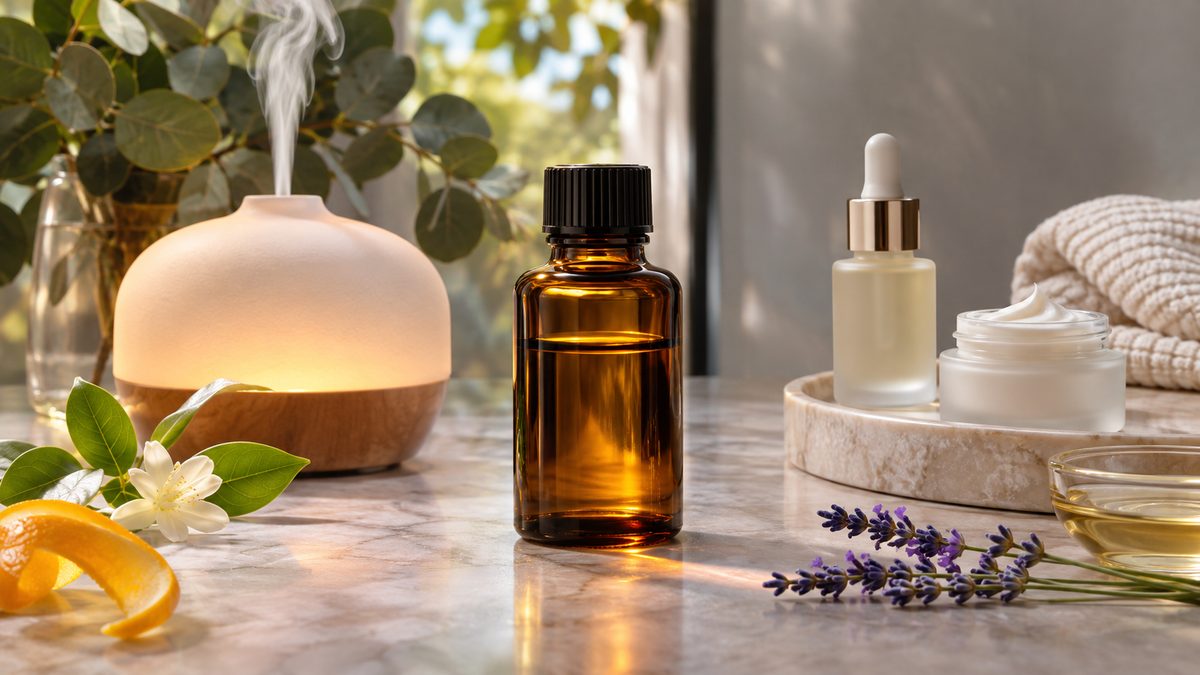
A brand buys one fragrance concentrate and wants to run it in two products: a reed diffuser for the home and a roll-on for the skin. The scent is identical, so the assumption is that the spec is identical too. It is not — and treating the two as one document is how a compliant diffuser oil quietly becomes a non-compliant cosmetic.
This article explains why one concentrate needs two specifications when it crosses from air-care to skin use, and how to run two products from one blend without inheriting the other's compliance risk.
Table of Contents
- Why one concentrate needs two specifications
- Use categories and exposure assumptions
- What the two specification documents contain
- Carrier and performance differences by use
- Allergen and safety labelling by use
- Sharing a blend without sharing the risk
- Approval routing for dual-use programmes
- Practical guide: one concentrate across two uses
- Frequently asked questions
- Conclusion
Why one concentrate needs two specifications
The difference is not the fragrance; it is what the fragrance is allowed to touch and at what concentration. A diffuser oil is an air-care product; a roll-on is a cosmetic that sits against skin. The regulators, exposure limits and labelling rules differ, so the documents describing the same liquid must differ.
The same blend, different legal identities
One product may be classified as an air freshener or diffuser refill, the other as a cosmetic. The classification drives permitted ingredients, concentration limits, warnings and claims. A blend can be legal in the first identity and out of bounds in the second, which is why the specification must name the use rather than assume it.
Concentration is the hidden variable
The same concentrate is almost always used at different strengths in the two products: near full strength in a diffuser, diluted into a carrier for skin. That dilution changes both the safety margin and the performance, so the spec must state the in-product concentration for each use, not just the concentrate's composition.
Use categories and exposure assumptions
Fragrance safety is assessed by use category, which describes how much product contacts the body, where and for how long. A diffuser and a leave-on skin product fall into different categories, so the same ingredient can carry a different allowable level in each.
Why skin use is the stricter gate
Skin use assumes direct, prolonged dermal contact, so the permitted levels of certain fragrance materials are lower than for a room diffuser where contact is incidental. A concentrate that clears the diffuser category may fail the skin category at the same level, forcing a lower load or a reformulation. Confirm which category applies to your exact use and route to market, and keep the assessment current with the official text in force.
What the two specification documents contain
A dual-use programme should carry two documents that share the blend identity but diverge on safety and compliance. The table summarises what differs.
| Element | Diffuser / air-care spec | Skin / cosmetic spec |
|---|---|---|
| Regulatory classification | Air freshener / diffuser refill | Cosmetic |
| Safety assessment basis | Air-care exposure scenario | Dermal exposure scenario |
| In-product concentration | Higher (near concentrate) | Lower (diluted in carrier) |
| Allergen declaration | Per air-care rules | Cosmetic allergen list |
| Carrier | Glycol, isoparaffin or similar | Cosmetic-grade carrier |
Keeping these as two files, rather than one file with footnotes, prevents the most dangerous error in the category: a skin product shipped with only the diffuser's safety assessment because someone reused the same document.
Carrier and performance differences by use
The carrier that works in a diffuser is rarely right for skin. A reed diffuser needs a carrier that wicks and evaporates steadily; a skin product needs a cosmetic-grade carrier with the right feel and dermal safety.
Evaporation versus skin feel
In a diffuser the carrier is a delivery engine that moves the fragrance up the reeds and into the air; on skin it is a cosmetic that must spread, absorb and be safe for repeated contact. These are different engineering goals, and a single carrier almost never wins both. The separation behaviour we described in alcohol-free concentrates is likewise carrier-specific and must be re-checked per product.
Allergen and safety labelling by use
Cosmetic labelling in many markets requires declaring a list of fragrance allergens above defined thresholds, while air-care products follow different rules. A dual-use programme therefore needs two label data sets, and the cosmetic one is almost always the more demanding. Building both from one ingredient list avoids a label that is correct for the diffuser and wrong for the skin product.
Warnings and claims differ too
The diffuser carries instructions about reeds, spillage and keeping away from children; the skin product carries dermal warnings and patch-test guidance. These are not interchangeable. Keep the claims separated as well — a "fragrance for the home" statement must not drift onto the skin product, or a skin benefit onto the diffuser — and state the permitted claims for each use in the specification.
Sharing a blend without sharing the risk
The efficiency of a dual-use programme is real — one fragrance development cost, one scent identity across the range — but it is realised only when the shared part is the concentrate and the separated parts are everything that depends on use. Share the concentrate identity; do not share the safety dossier, the label or the claims.
Whatever you route to skin, run it past the checks on our products page so the two identities stay separate.
What can safely be shared
The concentrate formula, its analytical fingerprint, the golden reference and the scent-development history can all be shared across uses. What must be duplicated per use is the safety assessment, the concentration, the carrier, the labelling and the claims. Blur the line and the failure is asymmetric: the diffuser inherits nothing dangerous, but the skin product inherits a dossier never built for dermal use. For the wider compliance picture, see our ingredient safety gate note.
Approval routing for dual-use programmes
Approval should follow the same split. Sign off the diffuser spec against air-care rules and the skin spec against cosmetic rules, each with its own reviewer and its own reference to the official text in force. A single sign-off for "the fragrance" is the shortcut that reintroduces the risk the two documents were meant to remove.
| Approval step | Diffuser product | Skin product |
|---|---|---|
| Concentrate identity | Shared, approved once | Shared, approved once |
| Safety assessment | Air-care scenario | Dermal scenario, separate review |
| Concentration and carrier | Wicking/evaporation spec | Cosmetic carrier spec |
| Label and warnings | Air-care label set | Cosmetic label set, allergen list |
The table is a routing guide, not a compliance statement. Where any rule or threshold is in question, confirm against the current official text rather than rely on a remembered number.
Practical guide: one concentrate across two uses
Step 1 — Name both uses before development starts
Tell the formulator the concentrate will run in a diffuser and a skin product, and state the intended concentration in each.
Step 2 — Confirm the classification of each product
Establish whether each is an air-care product or a cosmetic in the target market, and which use category applies to your route to market.
Step 3 — Create two specification documents
Share the concentrate identity, but keep safety assessment, concentration, carrier, labelling and claims as separate per-use sections.
Step 4 — Choose a different carrier for each use
Select a wicking carrier for the diffuser and a cosmetic-grade carrier for the skin product, and re-test the concentrate in each.
Step 5 — Build two label data sets from one ingredient list
Generate the diffuser warnings and the cosmetic allergen list separately from the same ingredients, and keep claims separated.
Step 6 — Approve and re-approve on separate tracks
Sign off each spec against its own rules and reviewer, and re-run both approvals whenever the concentrate changes.
Frequently asked questions
What is private label fragrance oil manufacturing?
It is when a supplier blends and bottles fragrance oils to your specification under your brand, while you own the label and sell the product, with the supplier handling formulation, blending and filling.
What is a typical minimum order quantity for fragrance oils?
Minimums depend on the blend and packaging, commonly from a few hundred to a few thousand units per SKU, with custom formulations carrying higher minimums than stock options.
How is a fragrance oil specification structured?
A specification typically records the formula with CAS numbers, physical constants, an odour profile, the in-product concentration, the safety assessment basis and the labelling requirements, with the use stated.
Can one concentrate be used in a diffuser and on skin?
Yes, but only as two products with two specifications. The same blend can be compliant in both if concentration, carrier, assessment, labelling and claims are handled separately.
Why is skin use stricter than diffuser use?
Skin use assumes direct, prolonged dermal contact, so permitted levels of certain fragrance materials are lower than for a room diffuser.
Can I reuse the diffuser label on the skin product?
No. The skin product needs its own allergen declaration, dermal warnings and usage instructions, and skin-specific claims. Copying the diffuser label leaves the cosmetic mislabelled even if the ingredients are correct.
Does the carrier have to be different for the two uses?
Almost always. A diffuser carrier must wick and evaporate steadily, while a skin carrier must be cosmetic-grade with the right feel and dermal safety. Using one for the other fails either function or safety.
What should I do if a rule or threshold is uncertain?
Confirm against the current official regulatory text for the target market rather than relying on a remembered number, and keep the assessment dated so it can be checked against the version in force.
Conclusion
Running one concentrate across a diffuser and a skin product works only when the shared part is strictly the blend. The assessment, concentration, carrier, label and claims must fork by use, because the two products live under different rules even when they smell identical.
The discipline is simple to state and easy to skip: two documents, two approval tracks, one shared concentrate. Skipping it saves a little paperwork and risks the exact failure — a skin product holding a diffuser's dossier — that turns a cost-saving programme into a compliance problem.
Discuss your fragrance programme with our team:
WhatsApp: +86 17324762943
Email: adon@customperfumeoem.com
Website: customperfumeoem.com