Vent-Clip, Hanging and Dashboard: Matching Format to Channel
A car fragrance that sells well through one channel fails in another, and the format is usually why. The vent clip that suits an accessories shop rattles loose in a rental fleet, the hanging card that works as a promotional drop looks cheap
A car fragrance that sells well through one channel fails in another, and the format is usually why. The vent clip that suits an accessories shop rattles loose in a rental fleet, the hanging card that works as a promotional drop looks cheap on a premium shelf, and the dashboard unit that sells online melts or leaves a ring in a summer cabin.
This article matches the three main car fragrance formats — vent clip, hanging, and dashboard — to the channels that sell them. It covers the holding mechanisms, the safety constraints, how each format should be packaged, and the specific failure modes a buyer should design against before committing tooling.
Table of Contents
- Format overview
- Holding mechanisms and safety
- Matching format to channel
- Packaging per format
- Specifying each format
- Failure modes by format
- Practical guide: matching a car fragrance format to a channel
- Frequently asked questions
- Conclusion
Format overview
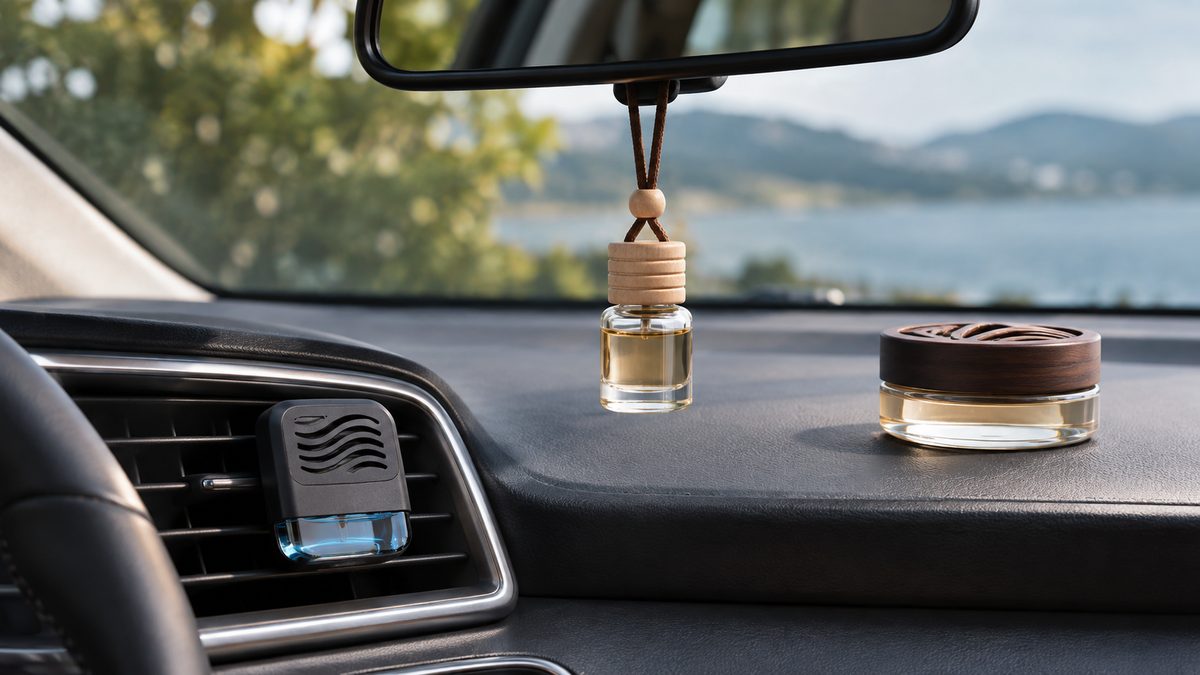
The three formats differ in where the scent sits, how it is held, and what the customer sees. A vent clip attaches to an air-conditioning vent and rides the airflow, so it delivers strongly while the fan runs and little when it does not. A hanging card or unit swings from the rear-view mirror and works by passive diffusion into the cabin air. A dashboard unit sits in direct sun, which drives release hard but also drives the format's failure modes.
Each format puts the fragrance in a different thermal and airflow environment, which is why the same scent performs differently across them. The vent clip lives in moving air at a moderate temperature; the dashboard lives in still air at the highest temperature in the car; the hanging unit sits in the middle. Choose the format for the environment it will actually occupy, not just for the look.
Holding mechanisms and safety
The holding mechanism is a safety component first and a convenience second. A vent clip must grip the louvre firmly enough not to fall into the footwell yet not break brittle vent vanes, and it must not obstruct the driver's view or controls. A hanging unit must stay clear of the driver's line of sight and must not swing into the driver under braking. A dashboard unit must not slide on the dash or melt and bond to the surface in heat.
Heat is the hidden test
A parked car in summer can push the dashboard far above ambient, and adhesives, plastic clips, and soft-touch coatings all behave differently at that temperature. A dashboard unit held by a peel-and-stick pad can soften and leave residue; a vent clip made of a low-melt plastic can deform. Specify the materials for the parked-car temperature, and confirm with the supplier what happens above it, because the customer's worst day is the test.
Airflow and the driver
A vent clip is the only format that actively rides airflow, which is its strength and its constraint. It must sit where it neither blocks an airbag path nor directs scent straight into the driver's face at full blast. The clip's angle and the vent's position matter, so the format is partly a compatibility question with real vehicle interiors, not a universal part.
Matching format to channel
Channel fit is about who buys, where the product is displayed, and what failure is tolerable. An accessories shop sells to an owner who wants a scent that works with their specific car, so a vent clip with adjustable grip fits. A promotional drop or event wants a cheap, instantly fragrant giveaway, so a hanging card wins. A dealership or premium shelf wants something that looks substantial and sits confidently on the dash.
| Channel | Best format | Why |
|---|---|---|
| Accessories shop | Vent clip | Adjustable, rides airflow, specific fit |
| Promotional drop | Hanging card | Cheap, immediate, visible |
| Dealership / premium | Dashboard unit | Substantial look, steady presence |
| Online direct | Any, if packaged well | Packaging and claims carry the sale |
The table is a starting point, not a rule, because a brand can sell a vent clip online or a hanging unit in a shop. What matters is that the format's constraints — the clip's fit, the card's disposability, the dashboard unit's heat tolerance — line up with what the channel's buyers will actually tolerate. For the accessory-shop and dealer channels in detail, see our car fragrance pack planning guide, and for the ingredient checks behind any format, our ingredient-check checklist.
Packaging per format
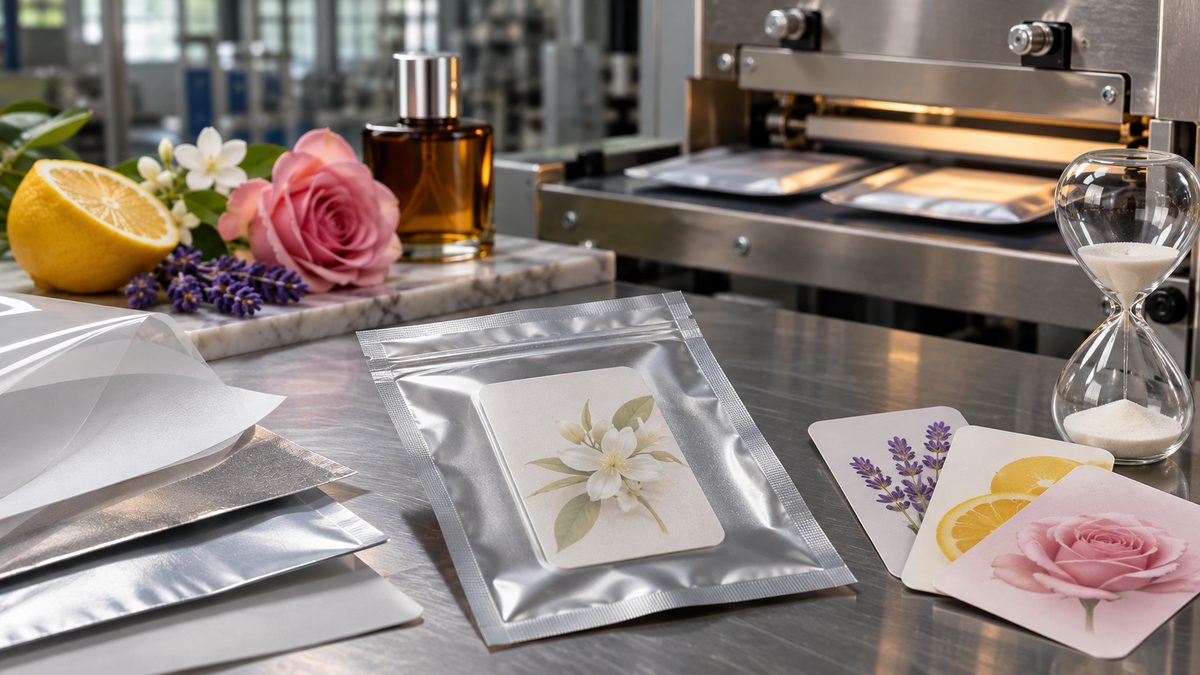
Packaging must protect the format's weak point. A vent clip needs a blister or tray that holds the clip without crushing the grippers, because a clip that arrives deformed will not stay in the vent. A hanging card needs a sealed pouch so the scent does not off-gas before purchase, and the pouch must be easy to open without damaging the card. A dashboard unit needs packaging that protects a possibly soft or adhesive surface from scuffing in transit.
The packaging is also the retail sell, especially where the format cannot be demonstrated. A card or clip in a sealed pouch carries the whole marketing message on the pouch print, so the copy and the scent-loading claims must be accurate against a tested release. For the barrier and sealing details that keep a card's scent intact, see our scent-card packaging guide.
Specifying each format
Each format has its own critical specification fields, and a buyer who specs them all the same way misses the point. The vent clip spec is about grip force and material temperature rating; the hanging spec is about line length and scent load; the dashboard spec is about adhesive and heat resistance.
| Format | Critical spec fields | Primary failure it prevents |
|---|---|---|
| Vent clip | Grip force, material melt point, clip angle | Falling out, deforming in heat |
| Hanging unit | Line length, scent load, card weight | Swinging into view, weak scent |
| Dashboard unit | Adhesive type, heat rating, base finish | Melting, residue on the dash |
Adding the environmental envelope
Writing the environmental rating
Add an environmental envelope to every format spec: the temperature range, the sun exposure, and any humidity the product must survive. State the parked-car high temperature explicitly and require the supplier to confirm material and adhesive behaviour at that point. A format that is only rated to room temperature is not rated for the car at all.
Failure modes by format
Vent clips fail by losing grip or deforming in heat, and the damage is usually a dropped unit and a lost customer. Hanging units fail by swinging, obstructing the view, or fading fast because the card is fully exposed. Dashboard units fail by melting, sliding, or leaving residue, which is the most damaging failure because it harms the customer's vehicle.
Design against the specific failure rather than a generic quality promise. For the clip, test grip on representative louvre shapes at temperature. For the card, control scent load and package barrier. For the dashboard unit, use a heat-rated adhesive and a base finish that does not bond to the dash. A format chosen and specified against its real failure mode stops being the product that comes back.
Practical guide: matching a car fragrance format to a channel
Step 1 — Identify the channel and its buyer
Confirm whether the product sells to owners, promotional recipients, or premium buyers, because each tolerates a different format and failure.
Step 2 — Match the format to the environment
Choose vent clip for airflow, hanging for passive diffusion, dashboard for steady presence, and document the choice.
Step 3 — Spec the holding mechanism first
Fix grip force, line length, or adhesive and heat rating before decoration, because the holder is the safety component.
Step 4 — Add the environmental envelope
State the parked-car high temperature and sun exposure, and require supplier confirmation of behaviour at that point.
Step 5 — Package to protect the weak point
Protect the clip's grippers, seal the card's pouch, and shield the dashboard unit's adhesive and finish.
Step 6 — Test the format's own failure mode
Run grip tests on louvres, control card scent load, or check heat resistance and residue, depending on the format.
Frequently asked questions
What are the main car fragrance formats?
The main formats are vent clips, hanging units, and dashboard units, each placing the fragrance in a different thermal and airflow environment. A gel tin is a related format that can sit in a cup holder or on a flat surface.
What is a vent clip car fragrance?
A vent clip attaches to an air-conditioning vent and rides the airflow, delivering scent strongly while the fan runs. It needs a grip that holds the louvre without damaging it and a material that does not deform in heat.
Why do dashboard fragrances fail in summer?
The dashboard is the hottest surface in a parked car, and adhesives, plastics, and coatings soften there. A unit not rated for the parked-car temperature can melt, slide, or leave residue on the dash.
Which format is best for a promotional giveaway?
A hanging card is usually best for a promotional drop: it is cheap, immediately fragrant, and visible, and its disposability matches a giveaway. Package it in a sealed pouch so the scent does not off-gas before it is handed out.
Can I sell the same scent in all three formats?
You can, but the same scent performs differently in each because the thermal and airflow environment differs. Test the scent in each format rather than assuming the same load works across all three.
How do I stop a vent clip from falling out of the vent?
Specify a grip force suited to the louvre shapes the product will meet, use a material that holds its shape in heat, and test on representative vents at temperature. A deformed gripper is the usual cause of a dropped clip.
What packaging protects a hanging card's scent?
A sealed barrier pouch protects the card from off-gassing before purchase, and the pouch should open without damaging the card. The pouch print carries the marketing message, so claims must match tested release.
Should I put a temperature rating in the format spec?
Yes. Add an environmental envelope stating the parked-car high temperature and sun exposure, and require the supplier to confirm material and adhesive behaviour at that point. Room-temperature rating is not a car rating.
Conclusion
The car fragrance format is a channel decision wearing a design costume. A vent clip belongs where airflow and specific fit are valued, a hanging card where cost and immediacy win, and a dashboard unit where steady presence and a substantial look sell — and each fails in its own way if the environment is ignored.
Spec the holding mechanism before the decoration, add a parked-car temperature envelope to every format, and package to protect each format's weak point. Do that, and the format stops being the reason a good scent sells in one channel and fails in the next.
Discuss your fragrance programme with our team:
WhatsApp: +86 17324762943
Email: adon@customperfumeoem.com
Website: customperfumeoem.com