Substrate Safety Data and the Fragrance-Impregnated Paper File
A buyer asks for the safety data on a finished scent card and receives the fragrance oil's SDS, which describes a liquid the consumer never touches and says nothing about the paper, the ink or the coating the card is actually made of.
A buyer asks for the safety data on a finished scent card and receives the fragrance oil's SDS, which describes a liquid the consumer never touches and says nothing about the paper, the ink or the coating the card is actually made of.
This article explains what safety data a fragrance-impregnated paper product actually needs, why the fragrance SDS and the substrate's own data have to be combined rather than substituted for each other, and how to assemble the finished-article file a buyer or authority will accept.
Table of Contents
- What substrate safety data means for impregnated paper
- Why the fragrance SDS alone is insufficient
- The substrate's own profile: ink, coating, adhesive
- The finished-article file versus the mixture SDS
- How the fragrance load changes the profile
- Documentation gaps and how they surface
- Assembling the finished-article file
- Practical guide: building the impregnated-paper file
- Frequently asked questions
- Conclusion
What substrate safety data means for impregnated paper
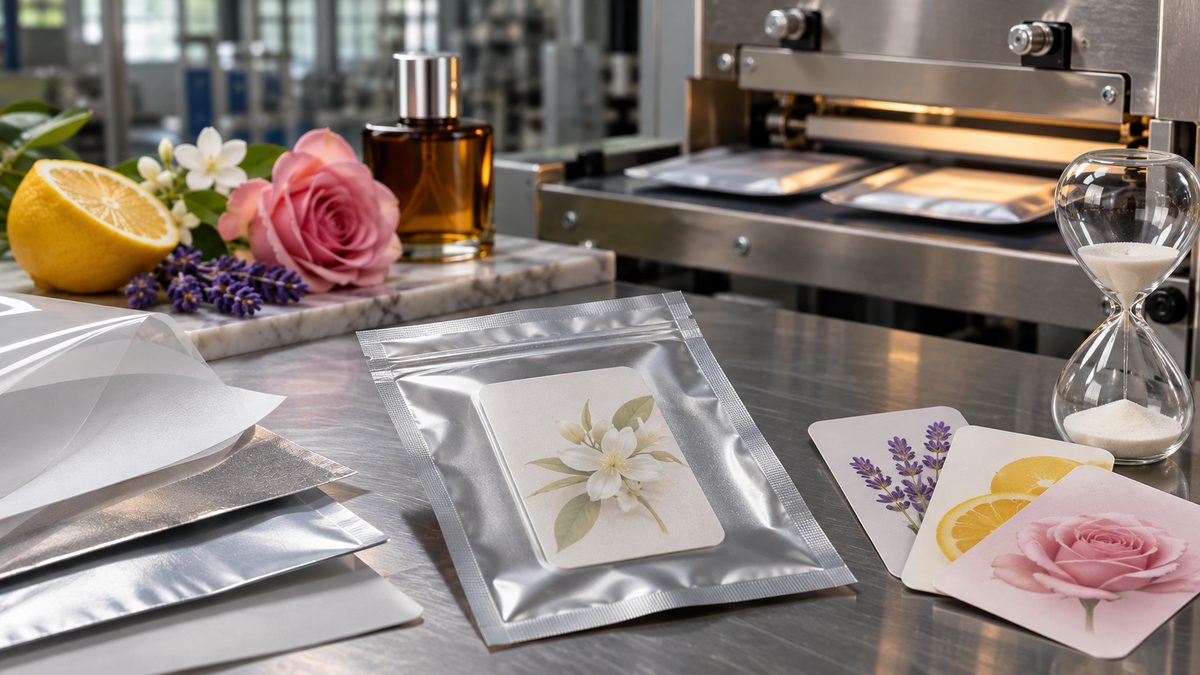
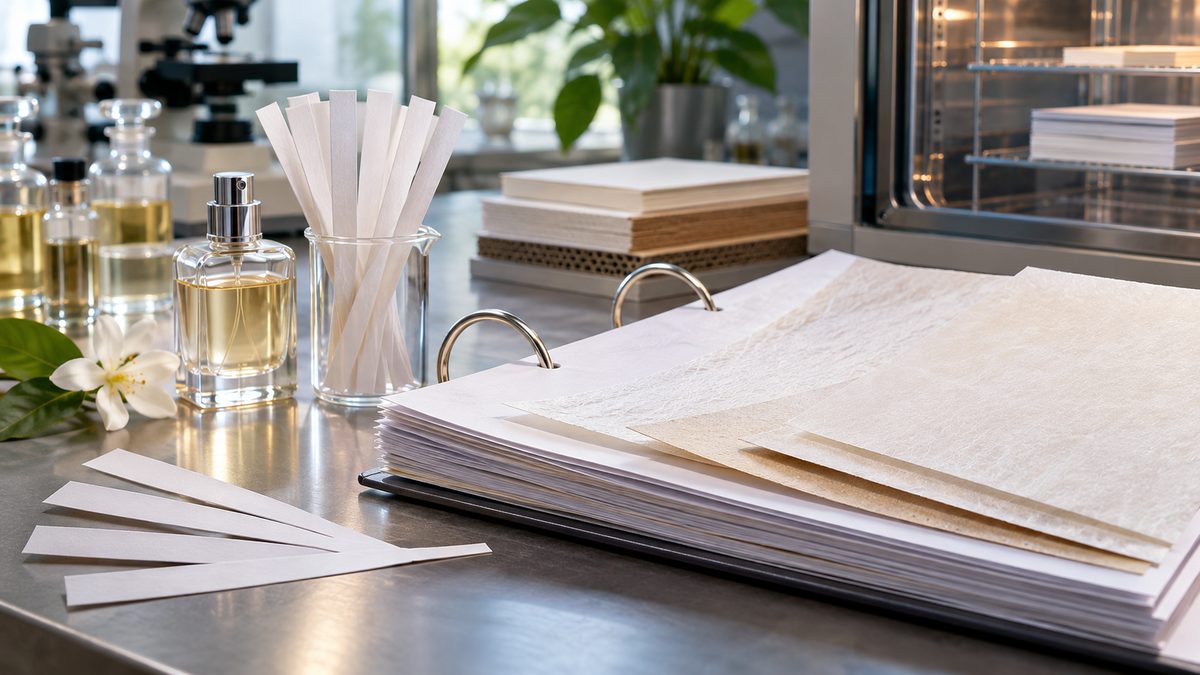
A scent card is not a single material; it is a layered product: a paper or board substrate, a printed layer, possibly a coating, and a fragrance that has been absorbed into the fibre.
The layers a card is built from
The substrate brings the paper's fibre source and any bleaching or sizing treatment; the print layer brings the inks and any varnish or lamination; and the fragrance load brings the volatile blend absorbed into the paper.
Why the combination is the product
The consumer handles the finished card, not the fragrance concentrate or the blank paper.
| Layer | Contribution | Data source |
|---|---|---|
| Fragrance | Volatile blend released over time | Fragrance SDS |
| Substrate | Fibre, sizing, residual chemistry | Paper supplier |
| Print and coating | Inks, varnish, adhesive | Printer |
Why the fragrance SDS alone is insufficient
The fragrance SDS is the document a supplier can produce immediately, so it is the one a brand most often submits.
What the SDS does and does not cover
The SDS covers the fragrance blend's hazards, physical properties and handling requirements as a liquid.
The substrate's own profile: ink, coating, adhesive
The paper is not a neutral carrier.
What to document for the substrate
Record the paper or board grade and its fibre source, the ink system used for printing, any coating or varnish, and any adhesive where the format uses one.
| Layer | What to document | Why it matters |
|---|---|---|
| Paper / board | Grade, fibre source, treatment | Source and any residual chemistry |
| Ink | Ink system and compliance statement | Substances on the printed surface |
| Coating / varnish | Coating type and statement | Surface chemistry and release |
| Adhesive | Adhesive type and statement | Exposure where the card is handled |
The substrate's own data is usually straightforward to obtain, but it is the part of the file most often missing, because brands think of the card as "just paper" and never ask the printer for it.
The finished-article file versus the mixture SDS
There is a legal distinction between a substance or mixture, which carries an SDS, and an article — a finished object whose shape and function matter more than its chemical composition.
The article distinction
An article is an object whose function is determined by its shape, surface or design more than its composition, and it does not normally require an SDS in the way a liquid mixture does.
What the finished-article file contains
The file brings together the fragrance SDS as background, the substrate and print documentation, the fragrance load, and the exposure reasoning for the finished card.
How the fragrance load changes the profile
The amount of fragrance absorbed into the paper is a design parameter, and it changes the card's safety and performance profile.
The load as a specification value
The fragrance load — typically expressed as a percentage of the substrate weight or a grams-per-card figure — should be fixed in the specification and kept consistent batch to batch.
Why the load must be documented, not just set
The load is the link between the fragrance SDS and the finished card: it tells a reviewer how much of the documented liquid is actually present in the article.
Documentation gaps and how they surface
The gaps in an impregnated-paper file follow a consistent pattern, and they surface at the moments when the file is actually needed: a buyer's questionnaire, an authority's inquiry, or a consumer complaint.
The missing substrate and print data
The printer's compliance statement for the ink and coating is the document most brands do not have, and it is exactly what an inquiry about the finished card asks for first.
The SDS-as-whole-file gap
Submitting the fragrance SDS as the card's complete safety file is the most common substitution, and it is easy for a knowledgeable reviewer to spot, because the SDS describes a liquid and says nothing about the paper. Our contact page is the channel for requesting the substrate and print documentation for a specific card, the packaging options page covers the substrate and coating choices that determine what needs to be documented, and the card formats sit in our product range.
Assembling the finished-article file
The finished-article file is not a single certificate but a small dossier, and its value is that it lets a reviewer reconstruct the product's safety story from the materials up.
The dossier's contents
Include the fragrance SDS as background, the substrate and fibre-source data, the ink and coating compliance statements, the adhesive data where applicable, the stated fragrance load, and the exposure reasoning for the finished card in its intended and foreseeable use.
Keeping it keyed and current
Key the dossier to the SKU and re-verify it whenever the substrate, print, coating or fragrance load changes, because a changed layer invalidates the old file.
Practical guide: building the impregnated-paper file
Step 1 — Treat the card as an article, not a mixture
Confirm the finished card's status as an article for the destination market, so the deliverable is a finished-article file rather than a second SDS.
Step 2 — Collect the fragrance SDS as background
Obtain the fragrance SDS with a current revision, and record the fragrance load as the quantitative link between the liquid and the card.
Step 3 — Request the substrate and print documentation
Ask the paper and printer suppliers for the fibre source, ink system, coating and adhesive compliance statements covering the destination market.
Step 4 — State the fragrance load in the specification
Fix the load as a percentage of substrate weight or grams per card, and keep it consistent batch to batch so the release profile stays documented.
Step 5 — Write the exposure reasoning
Describe how the card is used — handled, heated, enclosed — and confirm the finished card's classification status for each destination against current official requirements.
Step 6 — Key the dossier to the SKU and re-verify on change
Assemble the file per SKU, and re-verify it whenever the substrate, print, coating or load changes, so the file always describes the product that ships.
Frequently asked questions
What is private label scent card manufacturing?
It is the production of fragrance-impregnated paper or board cards under your brand by a factory that supplies the substrate, fragrance and finishing, so the cards carry your identity.
What is a typical minimum order quantity for scent cards?
Minimums vary by substrate, fragrance and print, but a common starting point is a few thousand cards per scent, with smaller runs available at a higher unit cost.
Is the fragrance SDS enough for a finished scent card?
No.
Is a fragrance-impregnated card a mixture or an article?
It is usually best treated as an article, because its function comes from its shape and design rather than its composition.
What substrate data should I collect for a scent card?
The paper or board grade and fibre source, the ink system, any coating or varnish, and any adhesive, each with a supplier compliance statement covering the destination market.
What is the fragrance load and why does it matter?
The load is the amount of fragrance absorbed into the paper, expressed as a percentage of substrate weight or grams per card.
Who holds the substrate and print documentation?
The paper and printer suppliers hold the fibre, ink and coating statements, and they should be requested at the time the card is ordered so the data arrives with the product.
When should I update the finished-article file?
Whenever the substrate, print, coating, adhesive or fragrance load changes, because a changed layer invalidates the old file.
Conclusion
A fragrance-impregnated paper card is an article built from layers, and its safety story has to be told the same way — from the fragrance, the substrate and the print upward, with the fragrance load as the link between the liquid and the finished product. Substituting the fragrance SDS for that story is the single most common error in the category.
Assembling the finished-article file is a one-time, per-SKU effort that converts a stack of supplier documents into a defensible whole. When the substrate data, the print statements and the load are all keyed to the product and kept current, the card's documentation finally describes the thing the consumer actually holds.
Discuss your fragrance programme with our team:
WhatsApp: +86 17324762943
Email: adon@customperfumeoem.com
Website: customperfumeoem.com