Scented Candle Science: How Wax, Fragrance and Wick Work Together
Understand how wax, fragrance, wick and vessel interact, and compare candle prototypes with a practical testing plan.
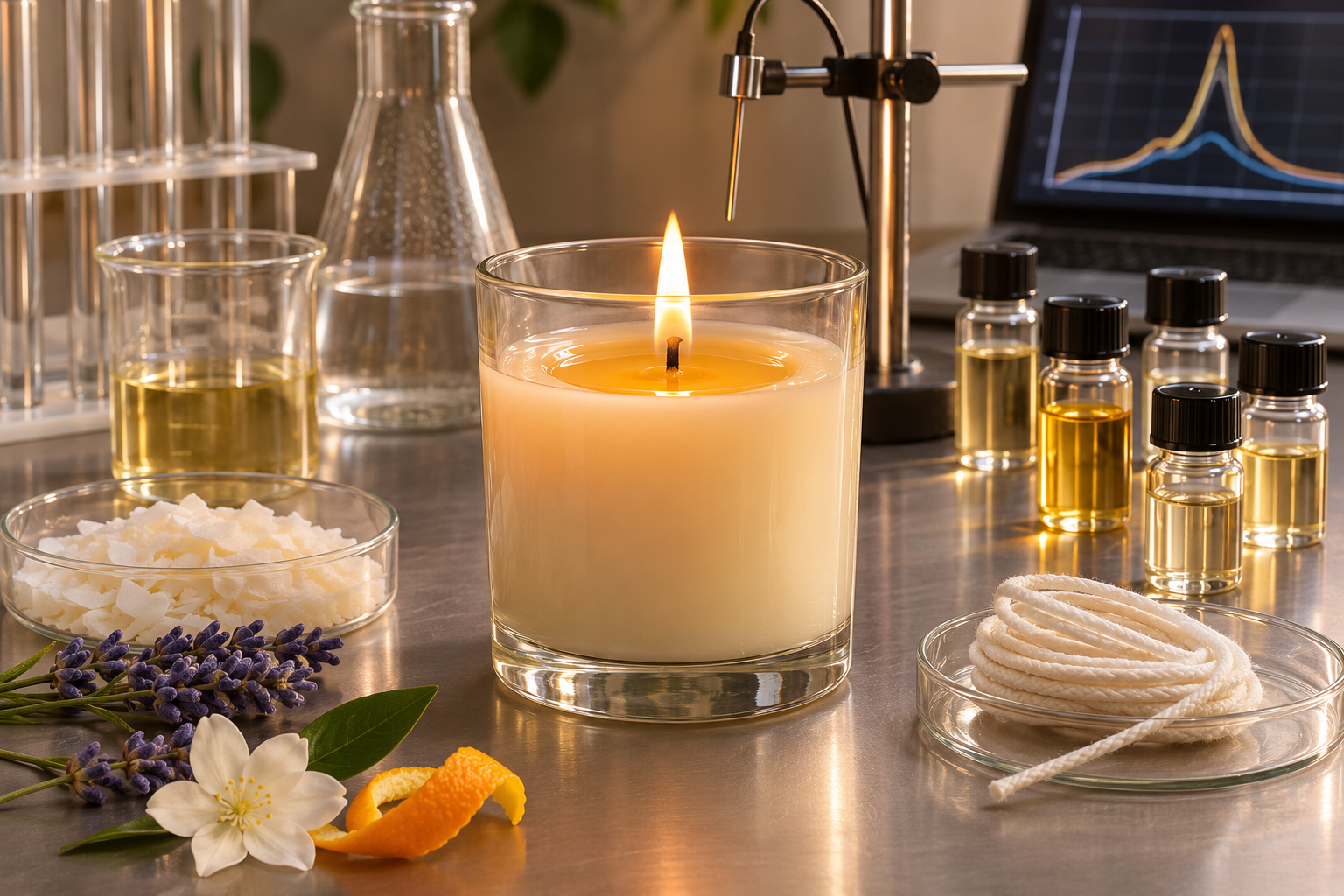
A scented candle can smell excellent in its jar and still need further development before production. Wax, fragrance, wick and vessel interact as the candle burns; changing one can change the behaviour of the whole assembly. For a private label scented candle, understanding these interactions helps buyers ask better questions and approve samples with meaningful evidence.
This guide explains how a candle delivers fragrance, why burn observations vary and how to structure a practical development review with a manufacturer.
Table of Contents
- How a scented candle burns
- How wax, fragrance and wick interact
- Compare common burn observations
- How to compare candle prototypes
- A practical approval checklist
- Frequently asked questions
- Conclusion
How a scented candle burns
Heat from the flame melts wax near the wick. Liquid fuel travels up the wick, vaporizes and supports combustion. Fragrance can also evaporate from the warm wax pool, contributing to the scent perceived in the room. Some fragrance material drawn toward the flame is exposed to combustion. A study of selected candles describes both evaporation from the wax pool and combustion of material reaching the flame; its results should not be treated as predictions for every candle formula. Read the study.
Cold throw is the perceived fragrance before lighting; hot throw is the fragrance perceived while burning. Neither alone proves the product is ready for sale. A finished candle also needs suitable burn behaviour, stability, packaging and safety information for its intended market.
How wax, fragrance and wick interact
Wax and fragrance
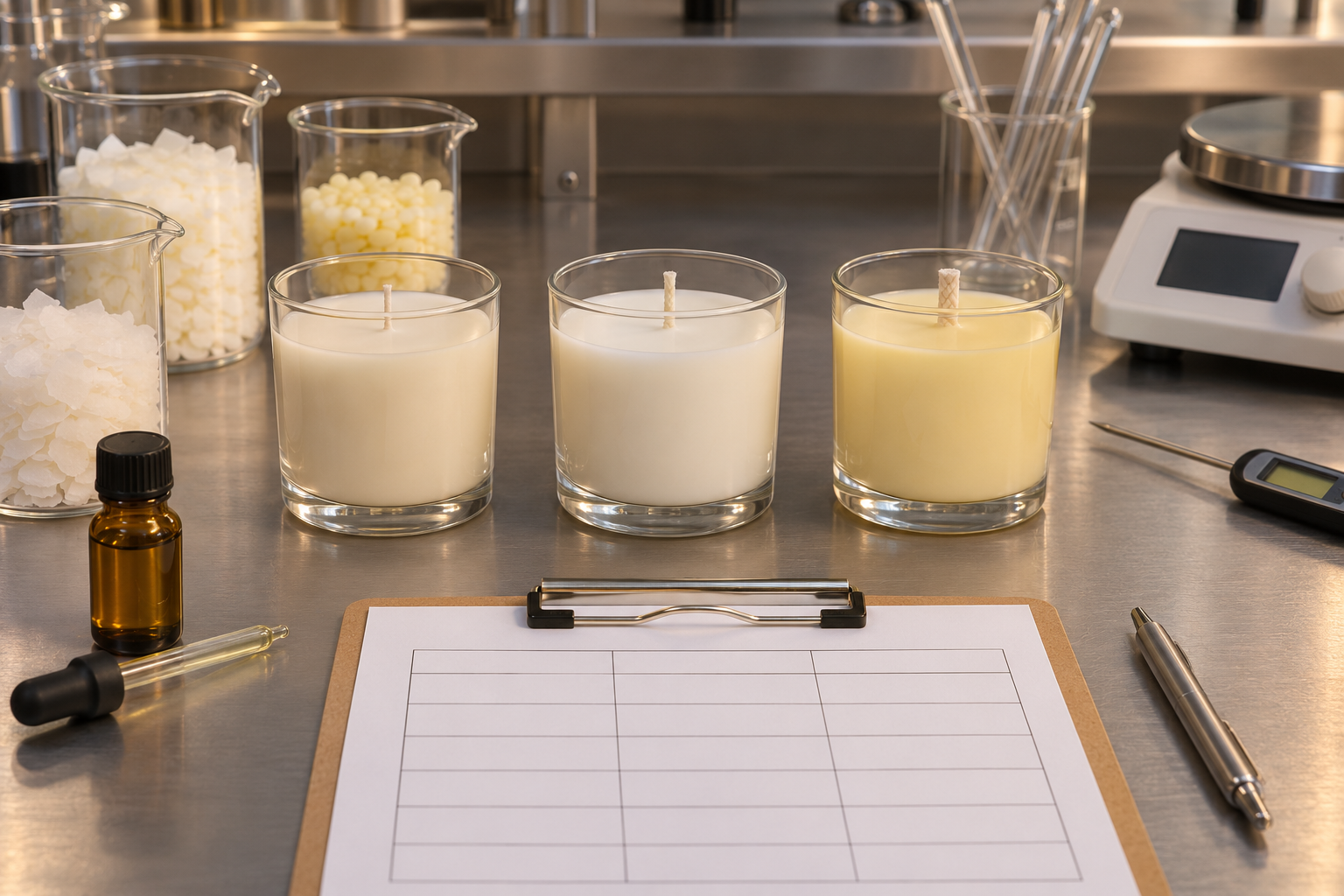
Wax composition affects melting behaviour and how fragrance is held in the candle. Fragrance blends differ in their ingredients and volatility, so two scents at the same dosage may behave differently. A change to the wax blend or fragrance composition warrants a fresh compatibility and burn review; increasing fragrance dosage is not a reliable substitute for testing.
Wick and vessel
The wick influences fuel delivery, while the vessel’s diameter, shape and material influence the way heat is retained and distributed. A wick that performs well in one jar or fragrance may not perform the same way in another. The National Candle Association notes that wick, wax, fragrance and size all affect burning behaviour.
Airflow and user conditions
Drafts can disturb a flame and contribute to visible smoke. Keep the test environment documented and compare like with like; a consumer’s room may differ from the test area. Observed results under controlled conditions do not describe every possible use.
Compare common burn observations
| Observation | Possible contributing factors | What to investigate |
|---|---|---|
| Small melt pool and wax remaining at the edges | Wick, vessel diameter, wax or burn duration. | Compare controlled prototypes and record performance over repeated cycles; avoid diagnosing from one burn. |
| Large or unstable flame | Wick characteristics, wick length, airflow or formula. | Review setup and wick specification, then repeat under the agreed protocol. |
| Visible smoke or soot | Flame disturbance, wick length or formulation and construction. | Record when it occurs, airflow and wick condition; assess according to the relevant test method. |
| Weak hot throw | Fragrance composition, wax pool, room conditions or perception. | Use a consistent sensory panel and compare against the same reference in the same environment. |
| Surface sweating or separation | Formula compatibility or storage conditions. | Review storage history, batch details and compatibility samples with the manufacturer. |
These observations are diagnostic starting points, not proof of a single cause. Do not adjust a production formula without reassessing the complete finished candle.
How to compare candle prototypes
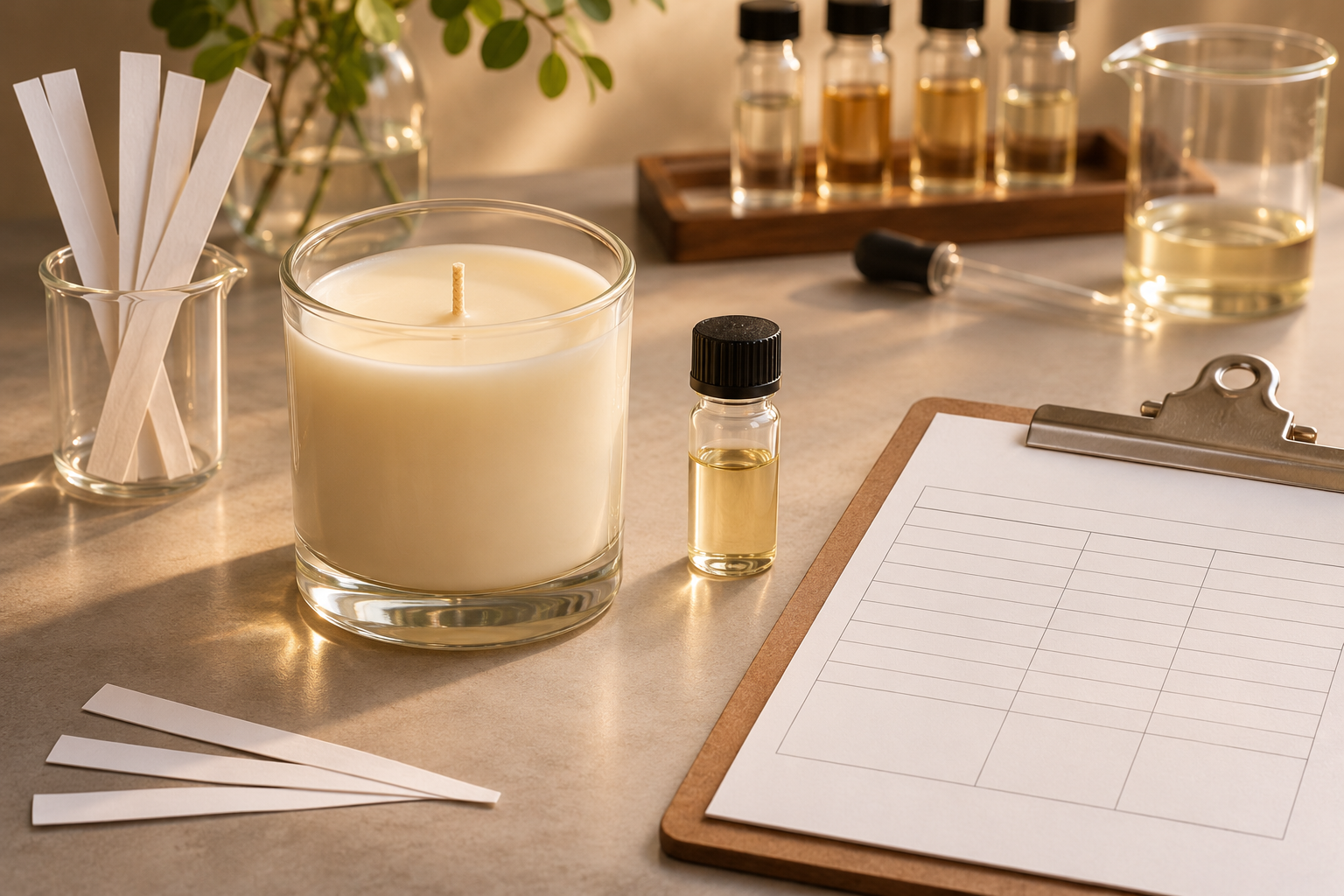
Agree the question before testing. To compare wick options, hold the wax, fragrance, fill, vessel and preparation method consistent and vary the wick. Use coded samples, suitable replicate units and an agreed observation schedule. Record flame behaviour, melt pool, vessel condition, visible smoke and any other agreed measurements across the candle’s useful life.
Use qualified facilities and an appropriate fire-safe procedure. ASTM lists F2417-26 for candle fire safety among its standards; confirm the applicable edition and market requirements with the testing provider. A controlled test does not replace a complete assessment of actual use conditions.
A practical approval checklist
- Define the market, intended use, vessel size, target scent and planned order quantity.
- Document wax and fragrance versions, dosage, wick code, vessel and fill mass for each prototype.
- Agree the test protocol, acceptance criteria, number of samples and responsibility for evaluation before testing.
- Compare sensory performance and burn observations using consistent conditions and written records.
- Review product safety, warnings, transport and market-specific chemical requirements with qualified parties.
- Approve a retained production reference and require notification and reassessment after material or supplier changes.
Discuss your brief through our OEM customization service, explore scented candle options, and review packaging choices before signing off a complete sample.
Frequently asked questions
What is a private label scented candle?
It is a candle manufactured for sale under a buyer’s brand, with fragrance, vessel and packaging options agreed for the project.
Can I customize the fragrance and vessel?
Options depend on the supplier, order size and technical compatibility. Confirm the exact materials and test the completed assembly.
What should I tell a candle manufacturer?
Provide the intended markets, fragrance direction, vessel dimensions, budget, quantity, packaging preferences and desired launch date.
Does more fragrance always make a candle smell stronger?
No. Fragrance composition, wax, wick, room conditions and perception also affect hot throw. Excess fragrance can introduce compatibility or burn issues.
Can the same wick be used for every fragrance?
Do not assume so. Fragrance and wax changes can affect burning, so each intended configuration should be assessed.
Is a candle safe because it burns well once?
One observation is insufficient. Agree a suitable test plan covering repeated burns, the product’s useful life and relevant safety requirements.
Why can a candle produce visible soot?
Flame disturbance, airflow and wick condition can contribute. Investigate the actual construction and conditions rather than attributing soot to one ingredient alone.
Should a replacement wax trigger a new review?
Yes. A changed wax can affect compatibility and burn behaviour. The manufacturer should assess the change against the approved specification and testing plan.
Conclusion
Candle performance emerges from the complete system: wax, fragrance, wick, vessel and conditions of use. A structured prototype comparison and clear change controls help a brand make decisions using evidence rather than scent alone.
Discuss your candle project with our team:
WhatsApp: +86 17324762943
Email: adon@customperfumeoem.com
Website: customperfumeoem.com