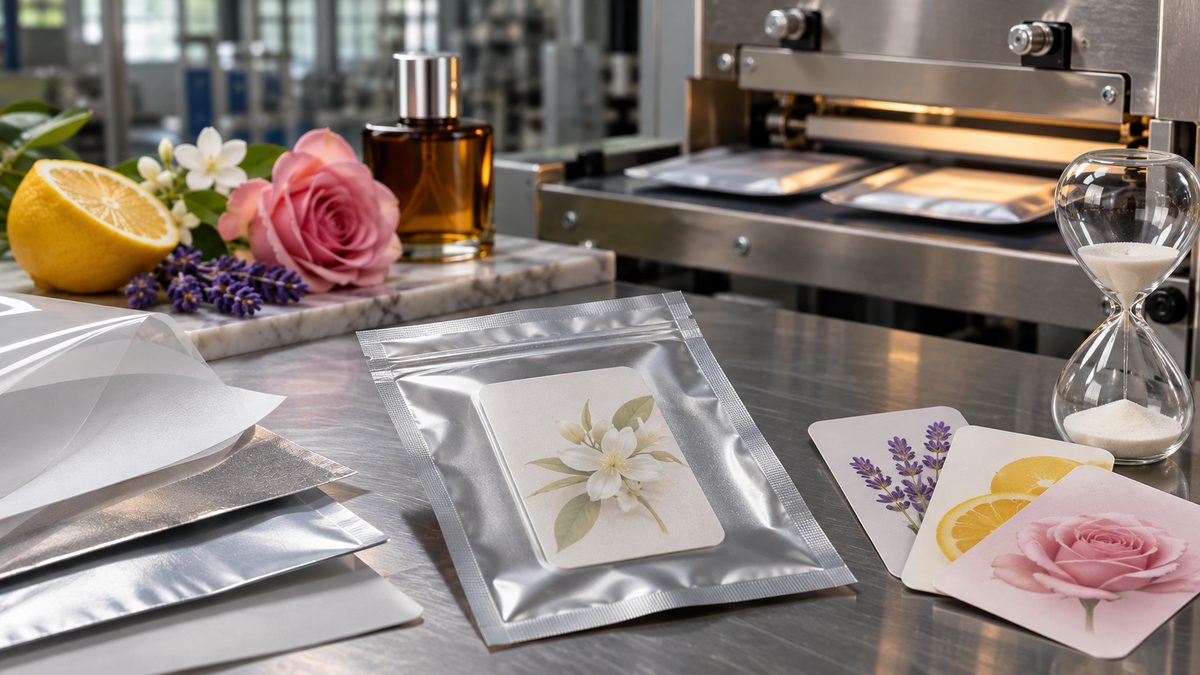
Scent Card OEM: Matching Fragrance Load to Print Method
You ask a printer to add a strong scent to a card, and the result either smells weak, smells like ink, or arrives with the cards stuck together in the box. The mistake was treating the fragrance load and the print method as two separate dec
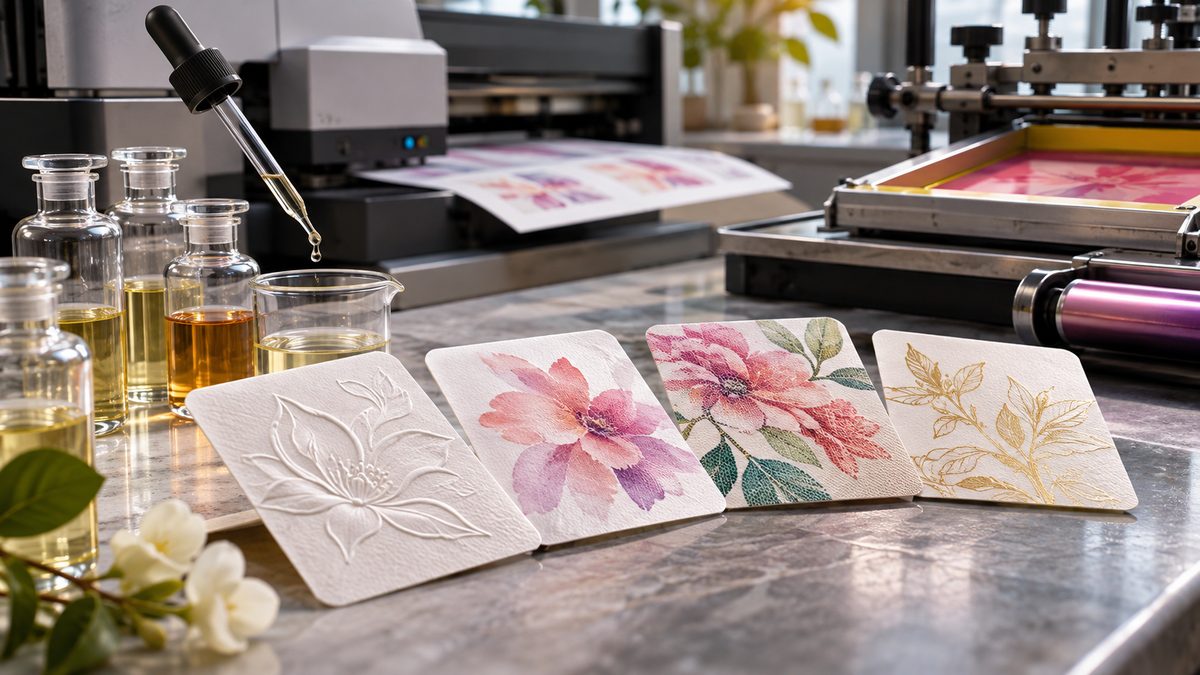
You ask a printer to add a strong scent to a card, and the result either smells weak, smells like ink, or arrives with the cards stuck together in the box. The mistake was treating the fragrance load and the print method as two separate decisions, when on a scented card they are one decision that has to be made together.
This article explains what fragrance load means on paper, how the main print methods — offset, digital and screen — place ink and heat on the card, and why each method sets a different ceiling on how much fragrance the card can carry. It gives you the compatibility and drying checks to run and a specification order that keeps the printer and the scent on the same page.
Table of Contents
- Fragrance load and what it means on paper
- Print methods and their ink films
- Why the print method caps the load
- Load ranges by method
- Drying, stacking and off-gassing
- Spec'ing the load with the printer
- Practical guide: matching fragrance load to print method
- Frequently asked questions
- Conclusion
Fragrance load and what it means on paper
Fragrance load is how much fragrance is applied to the card, usually expressed as a weight of fragrance per unit area or per thousand cards. It is the main lever for scent strength, but it cannot be raised freely: paper, ink and coating all have a limit on how much they will hold without bleeding, sticking or reeking of solvent.
Load is a budget, not a dial
Too low a load and the card smells weak; too high and the card stains, blocks in the stack or off-gasses so strongly it is unpleasant to open. The usable load is a window set by the substrate and the print process, and the goal is to sit inside that window, not to maximise it.
Print methods and their ink films
Each print method deposits a different ink film and subjects the card to different heat and pressure. Offset lays a thin, even ink film and dries relatively cool; digital toner is fused under heat and pressure; screen printing lays a thick, heavy deposit of ink that can take time to dry.
The ink film matters to the scent
A thick screen-printed ink film can seal the paper surface or interact with the fragrance, while a thin offset film leaves more of the paper open. The scent has to coexist with whatever ink film the design requires, which is why the print method is part of the fragrance decision.
Why the print method caps the load
The print method limits fragrance load in two ways: heat and surface chemistry. Heat from a digital fuser or a drying tunnel can drive off volatile fragrance, while a heavy ink or coating can seal the surface and stop the fragrance from being absorbed in the first place.
Heat is the silent thief
Fragrance applied before a heated step evaporates during that step, so a load that reads correct on the bench arrives on the finished card far weaker. The order of operations — scent before or after printing — is as important as the load itself.
The fuser temperature is the digital constraint
Digital toner is fused to the paper at high temperature, and any fragrance already on the sheet can evaporate or even scorch at that stage. For digital runs the scent is usually applied after fusing, which changes how the load is dosed and how it dries.
Load ranges by method
The practical fragrance load differs by method because of the heat and ink film each one imposes. The table below shows the direction of the trade, not fixed numbers, since the exact load depends on the stock, the fragrance and the coating.
| Print method | Heat exposure | Ink film | Typical load direction |
|---|---|---|---|
| Offset | Low to moderate | Thin | Higher usable load |
| Digital toner | High at fusing | Thin | Lower load, scent after fusing |
| Screen | Low, slow dry | Thick | Load limited by surface seal |
Drying, stacking and off-gassing
After the fragrance is applied, the cards must dry before they are stacked, or the residual solvent causes blocking — cards sticking together — and a strong, unpleasant smell when the pack is first opened. Drying time is a production constraint that has to be planned, not discovered on the line.
Stacking too soon is a common defect
Cards stacked before the fragrance carrier has dried will fuse together and can transfer fragrance unevenly from one card to the next. Allow a defined drying window and test a stack, not just a single card, before you sign off the run.
| Condition | What to check | Pass result |
|---|---|---|
| Cards stacked too soon | Blocking, set-off | Cards separate cleanly |
| Insufficient drying | Residual solvent odour | No solvent smell on opening |
| Uneven load | Weak or patchy scent | Even scent across the pack |
Spec'ing the load with the printer
The fragrance load cannot be specified in isolation; it has to be written with the print method, the stock, the coating and the drying step all named. A spec that gives only "strong scent" leaves the printer to guess, and the guess will not match the sample you imagined.
Practical guide: matching fragrance load to print method
Step 1 — Choose the print method first
Fix the print method and stock before setting the load, because the method's heat and ink film are what cap how much fragrance the card can carry.
Step 2 — Set the load budget
Define a target load by weight per area or per thousand cards, and set upper and lower limits so the card is strong without staining or blocking.
Step 3 — Run a compatibility test
Apply the fragrance to a printed and coated sample and check that the ink does not bleed, dissolve or discolour under the load.
Step 4 — Adjust the coating
Choose or adjust the coating so it holds the ink and lets the fragrance absorb or adhere correctly, rather than sealing the surface shut.
Step 5 — Test stacking and off-gassing
Dry the cards for the defined window, then stack a representative pack and check for blocking and for an acceptable smell when the pack is opened.
Step 6 — Lock the load in the specification
Record the print method, stock, coating, load and drying time together so the next run reproduces the approved sample exactly.
Frequently asked questions
What is fragrance load on a scent card?
Fragrance load is the amount of fragrance applied to the card, usually measured by weight per area or per thousand cards. It sets the scent strength and is capped by the paper, ink and coating's ability to hold it.
What is offset printing?
Offset printing transfers ink from a plate to a blanket and then to the paper, laying a thin, even ink film. It is economical at higher quantities and dries at relatively low heat.
What is digital printing?
Digital printing applies toner or ink directly from data without plates, which suits short runs and variable content. Toner-based digital printing fuses the image under heat, which constrains when and how much fragrance can be applied.
How much fragrance can a card hold?
The amount depends on the paper, the ink film and the coating, not on the fragrance alone. A thin ink film leaves more paper open for a higher load, while a thick film or heavy coating lowers the ceiling.
Does the heat from toner destroy fragrance?
Yes, the fusing step can evaporate or scorch fragrance that is already on the sheet. For digital runs the scent is usually applied after fusing so the load survives to the finished card.
Which print method works with microcapsules?
Microcapsules must survive the heat and pressure of printing, so a low-heat method or applying the capsules after printing is usually safer. Confirm the capsule wall is specified for the method's temperature before committing.
Why does my card smell like ink?
The fragrance may be interacting with an ink or coating that has not fully dried, or the load may be too low to cover the ink's own odour. Check the compatibility and the drying window rather than simply raising the load.
How do I stop cards sticking together?
Cards stick when they are stacked before the fragrance carrier has dried. Allow a defined drying window and test a full stack, not a single sheet, before approving the run.
Conclusion
Fragrance load and print method are one decision, because the method's heat and ink film set the ceiling on what the card can carry and when the scent can be applied. Write the load together with the stock, coating and drying time, and the printer stops guessing.
Test a printed and coated sample, then a full stack, before you approve the run. For the assortment side of the decision, see our guide on planning starter holders and replacement cards, review our packaging options, ask about custom scent card production, or contact us to spec your run.
Discuss your fragrance programme with our team:
WhatsApp: +86 17324762943
Email: adon@customperfumeoem.com
Website: customperfumeoem.com