
Scaling From 1,000 to 10,000 Units: What Changes in Fragrance Production
At a thousand units the line runs slowly and inspection is by eye; at ten thousand, sampling replaces looking and a batch may split across compounding runs. This article covers what changes, where cost falls, and the scale-up risks that appear.
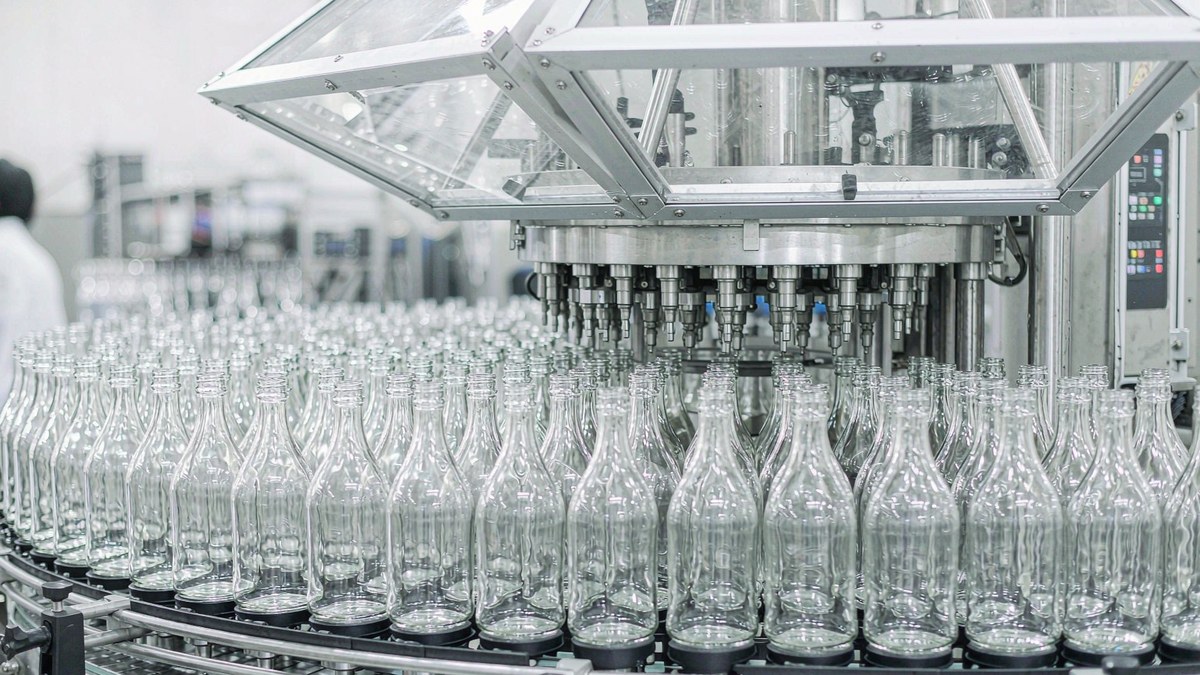
Going from a thousand units to ten thousand is not the same product made longer. At a thousand, the line runs slowly, the operators inspect by eye, and the fragrance is compounded in a batch that fits in one tank. At ten thousand, the line speed triples, sampling replaces looking, and the batch may be split across two compounding runs that must match.
This article sets out what actually changes when a fragrance programme scales by an order of magnitude, where cost per unit really falls, and the four points where quality most often degrades.
Table of Contents
- What changes at ten times the volume
- Where the cost actually falls
- Compounding and batch splitting
- Line speed and inspection
- Components and lead times
- Four points where quality degrades
- Practical guide: preparing for a scale-up
- Frequently asked questions
- Freight and container planning at volume
- Cash flow and payment terms at scale
- Who owns the scale-up
- Conclusion
What changes at ten times the volume
Three things stop being manual. Inspection moves from "look at every unit" to a sampling plan. Fill control moves from periodic checks to in-line measurement. And traceability moves from a handwritten sheet to a batch record that has to hold across multiple compounding runs and multiple days of filling.
The fourth change is commercial: at ten thousand units, a defect rate that was invisible at one thousand becomes a returns problem, and a component delay becomes a missed season rather than a late delivery.
Where the cost actually falls
| Cost line | At 1,000 units | At 10,000 units |
|---|---|---|
| Fragrance compound | Fixed per kg, small volume premium | Better pricing at compound batch size |
| Components | Stock or short-run | Volume pricing, but longer lead times |
| Conversion | Setup dominates | Speed dominates |
| Testing | Per-batch cost spread over less volume | Same tests, spread further |
| Freight | LCL or partial | FCL, lower per unit |
Note that the largest percentage saving usually comes from conversion and freight, not from the fragrance. A brand that negotiates hard on the compound and accepts the same carton specification often leaves the bigger saving on the table.
Compounding and batch splitting
A ten-thousand-unit order may require several compounding batches, because tank size and maceration time limit how much can be made at once. Those batches must be indistinguishable in the finished product, which means a retained sample from each and an odour and colour comparison against the approved standard before filling.
Where the fragrance house can supply a single split lot, that removes the variable entirely. It costs slightly more and is worth asking for on any order that crosses two compounding runs. Our notes on building an FOB cost model show how to place that cost against the unit price.
Line speed and inspection
At higher speed, in-line checks become mandatory and the sampling plan has to be defined rather than improvised. Fill volume, torque, label position and leak are the four parameters that drift with speed. A line that holds a 2 ml tolerance at forty units a minute may not hold it at a hundred and twenty.
The practical requirement is data: fill weights recorded at intervals across the run, torque readings logged, and a rejection count by defect type. Without that, a scale-up is a hope.
Components and lead times
Component lead times lengthen at volume because the order moves from stock to production. A bottle that ships in two weeks at a thousand units may take eight at ten thousand, and decoration adds its own queue. The production plan has to be built backwards from the component arrival date, not forwards from the purchase order.
Four points where quality degrades
- Batch-to-batch variation across compounding runs, invisible at low volume
- Fill drift as nozzles foul at higher speed
- Label misalignment as line speed increases
- Carton and pallet configuration that was fine for 40 cartons and fails at 400
Freight and container planning at volume
At a thousand units, freight is a line item. At ten thousand, it becomes a design constraint, because the shipment may fill a container before it reaches the payload limit — or the opposite.
Perfume is weight-dense, so a full container of 50 ml bottles usually maxes out on mass rather than volume. That means the lever is glass weight and carton count, not packaging arrangement. Candles behave similarly; diffusers are more balanced because the vessels are larger and emptier.
Three planning questions
- How many units fit before the container hits its payload limit, and does that match your order quantity?
- Does the decoration or packing schedule allow the goods to be consolidated, or will you ship two half-containers?
- Is any part of the range classified as dangerous goods, and does the carrier's allocation cover the volume?
Answering the first question early often changes the order quantity: it is better to ship a full container of the core SKU and a second shipment of the slow movers than to pay for a partially filled box on both.
Cash flow and payment terms at scale
A tenfold increase in volume is a tenfold increase in working capital, and it arrives before the revenue does. Deposit on order, balance before shipment, freight and duty on arrival, and retail payment terms after that.
At a thousand units, most brands can absorb that. At ten thousand, the deposit alone can be a five-figure sum, and the cash is committed for the length of production plus transit plus retail terms — often four to five months.
Where the cash goes
- Tooling and plates, paid up front and not recoverable if the launch slips
- Components, often paid before the fragrance is compounded
- Fragrance compound, at order
- Balance on shipment, before the goods are sellable
- Duty and VAT on import, recoverable later and not always quickly
The practical response is to stage the order: a pilot run that validates the process and generates early revenue, then the main volume. It costs a little more per unit and materially reduces the risk of a single large commitment.
Practical guide: preparing for a scale-up
Step 1 — Re-quote the whole bill of materials
Components, cartons, testing and freight change at volume, not only the liquid.
Step 2 — Ask for split lots of compound
One fragrance batch removes the largest source of variation.
Step 3 — Define the sampling plan in writing
Parameter, interval, acceptance range, who checks.
Step 4 — Pilot a partial run
Two thousand units before ten thousand. It surfaces drift while correction is cheap.
Step 5 — Build the plan backwards from components
Decoration and bottle lead times set the date.
Step 6 — Require data, not assurances
Fill weights, torque logs and defect counts by type.
Frequently asked questions
Does unit cost fall linearly with volume?
No. It falls steeply from 1,000 to 3,000, then flattens. Materials do not discount much; conversion and freight do.
Why does my fragrance smell slightly different at higher volume?
Usually because the order was split across compounding runs. Ask for a single split lot, or compare retained samples from each run.
What is the main risk of a ten-times scale-up?
Component lead time. The liquid can be ready in weeks; a decorated bottle cannot.
Do I need a pilot run?
For a first large order, strongly recommended. It is the cheapest way to expose fill drift and label alignment problems.
How does inspection change?
From visual checking of every unit to a defined sampling plan with recorded data. Without data, sampling is guesswork.
Should I renegotiate the specification at volume?
Yes, but carefully. A cheaper component at volume can be a false saving if it changes the product's appearance or performance.
What about packaging for pallets?
Carton compression strength and pallet pattern need re-checking at volume; a configuration that survives 40 cartons may fail at 400.
When should I start planning the scale-up?
At least twelve weeks before the target production date, because component and decoration queues dominate.
Who owns the scale-up
At a thousand units, one person can hold the whole programme in their head. At ten thousand, the failure mode is that nobody does. The technical decisions are the same, but they arrive faster and in greater number.
Three roles need naming before the order is placed. A production owner at the factory, accountable for line performance and fill control. A quality owner, accountable for release decisions and deviation handling. And a brand-side owner who can approve a deviation within a day, because decisions that wait for a weekly meeting become schedule losses.
The decisions that must not queue
- Accepting a compound lot that is within specification but perceptibly different
- Approving a substitute component when the specified one is late
- Releasing a batch with a cosmetic defect below the AQL threshold
- Switching a shipment from sea to air to protect a launch
Each of these is a commercial judgement as much as a technical one, and each is easier to make before the line stops than after. Naming the person, and the limit of their authority, is the cheapest preparation available.
Conclusion
Scaling is a process change, not a quantity change. The liquid scales easily; the inspection, traceability and component planning do not.
Re-quote everything, ask for split lots, define sampling, pilot a partial run and plan backwards from components. Ten thousand units is achievable on the same specification — provided the process grows with it.
We invite you to explore our capabilities and discuss your next product line.
You can reach us directly via WhatsApp +86 17324762943
Email: adon@customperfumeoem.com
Website: customperfumeoem.com


