
Microencapsulation vs Direct Impregnation on Paper
You want a scented card that still smells when the customer opens it months later, but the samples you have received either fade within days or smell fine only when scratched. The difference is not the fragrance; it is the way the fragrance
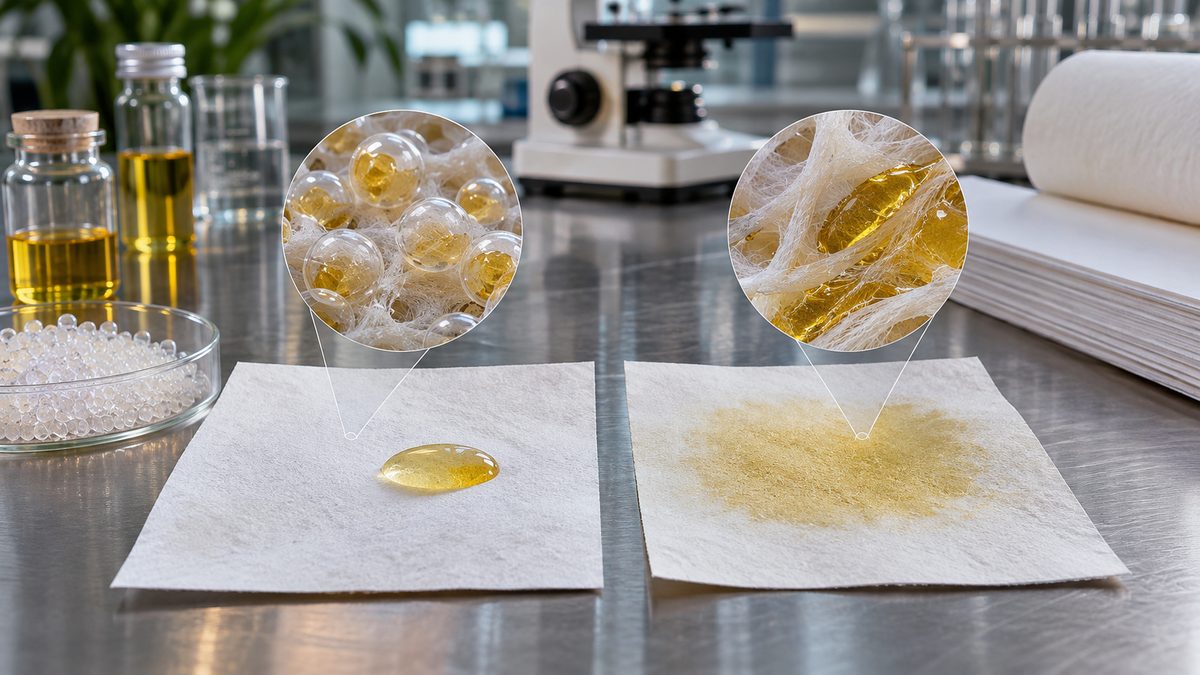
You want a scented card that still smells when the customer opens it months later, but the samples you have received either fade within days or smell fine only when scratched. The difference is not the fragrance; it is the way the fragrance is put onto the paper, and the two main methods behave nothing like each other.
This article compares direct impregnation and microencapsulation for scented paper products. It explains how each method holds and releases fragrance, how long each lasts, what each costs, and how they interact with printing, so you can choose the delivery method that matches the life and the release trigger your product actually needs.
Table of Contents
- Two ways to put scent on paper
- Direct impregnation and why it fades
- Microencapsulation and the release trigger
- Longevity compared
- Cost and print compatibility
- Choosing the method for the product
- Practical guide: choosing a scent delivery method for cards
- Frequently asked questions
- Conclusion
Two ways to put scent on paper
Scented paper is made in two fundamentally different ways. Direct impregnation soaks or coats the fragrance into the paper fibres, where it is free to evaporate immediately. Microencapsulation traps the fragrance inside tiny shells that hold it until the capsules are broken, usually by scratching.
The trigger is the dividing line
The real difference between the two is when the scent is released. Impregnation releases continuously from the moment the card is made, while encapsulation releases only when the consumer ruptures the capsules. Your choice depends on whether the card should smell on its own or only on demand.
Direct impregnation and why it fades
Direct impregnation applies the fragrance in a liquid that soaks into the paper. The fragrance molecules sit in the fibres and evaporate into the air, which means the card is fragrant the moment it is handled and starts losing scent immediately.
The fade is continuous and unavoidable
Because the fragrance is exposed, an impregnated card loses its lighter notes within days and its strength steadily declines. The only way to extend it is to load more fragrance or slow the evaporation, and both have limits on paper.
Microencapsulation and the release trigger
Microencapsulation wraps fragrance droplets in a microscopic shell, usually a polymer or gelatin wall. The shell holds the fragrance in place until mechanical force — a scratch or rub — bursts the capsules and releases a fresh burst of scent.
Scratch-and-sniff is the classic form
Because the capsules are sealed until broken, a microencapsulated card can retain its fragrance for a long time on the shelf and still deliver a strong hit when scratched. The trade is that the card smells neutral until the customer activates it.
The capsule wall is the control
The shell material and thickness set how much force is needed to break the capsules and how well they survive printing and handling. Capsules that break too easily release during manufacture and waste the fragrance, while capsules that are too tough need more scratching than a customer will give.
Longevity compared
The two methods sit at opposite ends of the longevity scale. Impregnation trades shelf life for an immediate, always-on scent, while encapsulation trades the immediate smell for a scent that survives until it is needed.
| Property | Direct impregnation | Microencapsulation |
|---|---|---|
| Release trigger | Continuous | Scratch or rub |
| Shelf life | Short, fades steadily | Long, held in capsules |
| First impression | Scented immediately | Neutral until scratched |
| Strength on demand | Fixed, declining | Strong fresh burst per scratch |
Cost and print compatibility
Encapsulation is the more expensive process because it adds a capsule-formation step and a coating step, and the capsules must survive the print process. Impregnation is cheaper but its continuous fade means more fragrance is needed to hold a given level for a given time.
Printing constrains both
Heat and pressure from printing can rupture capsules or drive off impregnated fragrance. Whichever method you choose, the fragrance load and the print method have to be specified together, or the printing process will undo what the scenting process did.
| Product type | Best method | Reason |
|---|---|---|
| Mailer or sample | Impregnation | Must smell on opening |
| Long-life insert | Encapsulation | Scent must survive to scratch |
| Promotional drop | Either, by trigger | Depends on customer action |
Choosing the method for the product
The decision comes down to how the customer is meant to experience the scent. A mailer or sample that must smell the moment it is opened points to impregnation; a long-life insert or a promotional card that should keep its punch points to encapsulation.
Practical guide: choosing a scent delivery method for cards
Step 1 — Define the lifetime requirement
Write down how long the card must hold its scent and whether the customer expects it to smell immediately or only when scratched.
Step 2 — Set the release trigger
Decide between continuous release and on-demand release, because that single choice points you to impregnation or encapsulation before any other detail.
Step 3 — Test the substrate
Run both methods on the actual paper stock and coating you will print on, because the substrate changes how fragrance loads and how capsules adhere.
Step 4 — Compare the cost per card
Price both methods including the fragrance consumed by fade and any additional coating step, not just the raw fragrance cost.
Step 5 — Run a stability test
Store finished samples for the intended shelf life and check scent strength at intervals, so you know what the customer will actually receive.
Step 6 — Choose and document the method
Lock the chosen method, fragrance load and trigger into the specification so the next production run reproduces the sample you approved.
Frequently asked questions
What is microencapsulated fragrance?
Microencapsulated fragrance is fragrance trapped inside microscopic shells that hold it until the capsules are broken by mechanical force. It is the technology behind scratch-and-sniff products and gives a long shelf life with an on-demand release.
What is direct impregnation?
Direct impregnation is the process of soaking or coating fragrance into paper so it evaporates continuously. It produces a card that smells the moment it is handled but fades steadily as the fragrance escapes.
What is a scent card?
A scent card is a printed paper product that carries fragrance, used for sampling, inserts and promotional drops. The fragrance is delivered either by impregnation or by microencapsulation, and the method determines when and how long it smells.
How long does a microencapsulated card last?
A microencapsulated card holds its fragrance until the capsules are ruptured, so it can survive a long shelf life and still deliver a strong scratch. The exact life depends on the capsule wall and how the card is stored and handled.
Does impregnation stain the paper?
Impregnation can alter the paper's appearance or leave an oily mark if the fragrance or its carrier is not matched to the stock. Test the actual paper and coating, because the same load behaves differently on coated and uncoated surfaces.
Which method is cheaper?
Impregnation is usually cheaper because it skips the capsule-formation and coating steps, but its continuous fade can mean more fragrance is used over the product's life. Compare the total cost per card, not just the raw fragrance price.
Does heat destroy the capsules?
Heat from printing or storage can soften or rupture capsules, releasing the fragrance early. The capsule wall must be specified to survive the print and handling temperatures the card will actually meet.
Can I combine both methods?
It is possible to impregnate for an immediate scent and overprint capsules for a long-life scratch, but the two processes must be made compatible. Combining them adds cost and complexity, so only do it when the product genuinely needs both triggers.
Conclusion
Direct impregnation and microencapsulation answer different questions. Impregnation sells the immediate smell and pays for it with a short life, while encapsulation sells a long life and pays for it with a neutral first impression that needs a scratch to activate.
Choose by the release trigger and the lifetime the product promises, then test the method on the real stock and coating. For the complaints that follow a wrong choice, see our guide on triaging scent card complaints, and for the pack side, read planning scent card packaging. Browse the scent cards we produce or ask about custom scent card development.
Discuss your fragrance programme with our team:
WhatsApp: +86 17324762943
Email: adon@customperfumeoem.com
Website: customperfumeoem.com


