Heat Exposure in Parked Cars: The Test Protocol Buyers Now Request
A car fragrance leaves the factory looking perfect and is photographed two weeks later by a customer whose dashboard melted the adhesive, warped the clip and left a pool of gel in the vent. The buyer has no test record showing what temperat
A car fragrance leaves the factory looking perfect and is photographed two weeks later by a customer whose dashboard melted the adhesive, warped the clip and left a pool of gel in the vent. The buyer has no test record showing what temperature the product was ever exposed to, so the complaint cannot be answered with evidence.
This article explains the heat-exposure test protocol buyers now request for car fragrance, covering the real temperatures of a parked cabin, what fails first, and how to specify a test with written pass/fail criteria. It is written for private label buyers who need to prove their product survives the inside of a car in summer.
Table of Contents
- Why parked-car heat became a test requirement
- The temperature reality and what fails first
- Protocol components and cycling
- Scent retention after heat exposure
- Pass/fail criteria, and getting the protocol from the supplier
- Practical guide: specifying a heat test that means something
- Frequently asked questions
- Conclusion
Why parked-car heat became a test requirement
Car fragrance is one of the few product categories that must survive a hostile thermal environment as part of its normal use. A parked car in summer turns into an oven, and a product that was only tested at room temperature has never been tested for the conditions it will actually meet.
Retailers and platforms now ask for the evidence
Marketplaces and automotive accessory buyers increasingly request a heat-exposure test result before listing, because the failure mode — leaking, melted or detached fragrance — produces returns and safety complaints that fall back on the seller. The point of the test is not simply to confirm survival; it is to find which part fails first and at what temperature, so the buyer knows the margin and can fix the design before it ships.
The temperature reality and what fails first
The numbers matter because the test must reproduce them. A parked car in direct sun develops interior temperatures well above the outside air, and surfaces exposed to the sun get hotter than the cabin air.
Dashboard and vents are hotter than the cabin average
The dashboard and upper surfaces absorb direct sunlight and can reach temperatures far above the ambient cabin air, while the vent area and shaded zones run cooler. The cabin heats rapidly once parked, and the peak can arrive within an hour or two, so the test needs to reproduce the climb and the peak for the position where the product sits.
Gels weep, liquids leak, adhesives let go
A gel can soften and weep liquid at high temperature, a liquid format can leak through a seal or expansion of the bottle, and an adhesive pad or clip can soften and release the product from its mount. Clips and housings made of the wrong plastic can warp or relax, so a clip that held at room temperature no longer grips the vent fin, and the test should check dimensional stability and grip after heat.
Protocol components and cycling
A meaningful protocol states the temperature, the exposure time, the orientation and the position being simulated, and what is measured before and after.
| Protocol element | What it specifies | Why it matters |
|---|---|---|
| Target temperature | The peak to reach and hold | Must reflect the dash or cabin position |
| Exposure duration | Hours at the peak | Short soaks miss slow failures |
| Orientation | Upright, clipped, laid flat | Leakage depends on how the product sits |
| Measurement set | Leak, warp, grip, scent, colour | Each format has its own failure mode |
Orientation is not optional, and cycling catches cumulative failure
A fragrance that does not leak upright may leak when laid flat or clipped at an angle, because the liquid or softened gel moves to a different point, so the test must hold the product in its actual orientation. Repeated heating and cooling cycles stress seals, adhesives and plastics in a way a single soak does not, so a practical test combines a peak soak to find the immediate failure with a series of cycles to find the cumulative one.
Scent retention after heat exposure
Heat is the main driver of fragrance evaporation, so the test must also measure what the product smells like after exposure, not just whether it leaked.
Heat can strip the top notes
High temperature drives off the most volatile molecules first, so a fragrance that survives heat physically may have lost its top notes and smell flat. The test should include an odour evaluation after exposure, not only a leak check, and the exposed product should be compared against a control kept at room temperature so any scent loss is measured as a difference rather than judged in isolation.
Why the ingredient profile matters here
The fragrance's most volatile components are the ones most at risk, which is why the ingredient screening described in our supplier ingredient checklist helps identify which top notes are likely to fade first under heat.
Pass/fail criteria, and getting the protocol from the supplier
A test without written criteria is an observation, not a test. The criteria must be set before the run so the result means something.
Define acceptable leakage, deformation and scent change
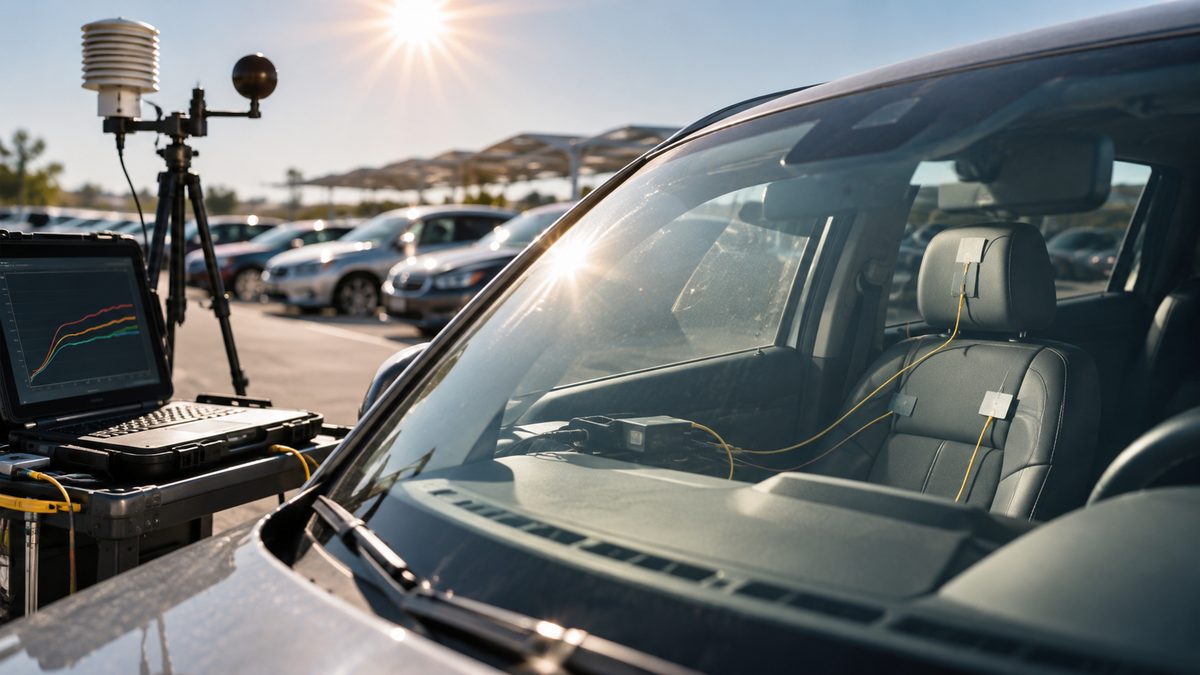
State what counts as a pass: no visible leakage or weeping, no dimensional change beyond a stated tolerance, the clip still holds a stated weight, and the odour still matches the control within an agreed standard. Write these down before testing, and record the result with photos of the product in the chamber and after removal, the temperature trace, and the before-and-after measurements.
| Criterion | Pass condition | Failure if unchecked |
|---|---|---|
| Leakage | No visible weeping or leak | Gel or liquid escapes in the car |
| Deformation | Within a stated tolerance | Warped clip no longer grips |
| Grip | Holds a stated weight | Product detaches from the vent |
| Scent | Matches the control | Flat or off-odour after exposure |
Ask for the protocol, not just a pass statement
Request the actual protocol — temperature, duration, orientation, cycles and criteria — and the results, rather than accepting a supplier's statement that the product "passed heat testing". A pass statement without the protocol is not evidence. Specify that the test should reproduce the product's mounted position on the relevant surface, because the dashboard, vent and clip conditions differ.
Reproduce the mounted position
This connects to the placement planning in our car fragrance pack guide, and the packaging considerations in our scent card packaging guide.
Practical guide: specifying a heat test that means something
Step 1 — Fix the mounted position
Decide where the product will actually sit — dash, vent or visor — and specify the test orientation to match that position.
Step 2 — Set the target temperature and duration
State the peak temperature and hold time that reflect the dash or cabin position in your market's summer, and write them into the protocol.
Step 3 — Add a cycling phase
Include a stated number of heating and cooling cycles after the peak soak so the test also catches cumulative seal, adhesive and clip failure.
Step 4 — Define the pass/fail criteria first
Write the acceptable limits for leakage, deformation, grip and odour change before the run, so the result is judged against a fixed standard.
Step 5 — Measure scent against a control
Include an odour evaluation of the exposed product against a room-temperature control so heat-driven scent loss is captured as a difference.
Step 6 — Request photos and the temperature trace
Ask for before-and-after photos, the temperature record and the measurements in the report, so the result can be shown as evidence to buyers and platforms.
Frequently asked questions
What is a car fragrance heat test?
It is a controlled exposure of the product to the high temperatures of a parked car, with measurements of leakage, deformation, grip and scent, to confirm it survives its intended environment.
How hot does a parked car get inside?
In direct summer sun, cabin surfaces exposed to sunlight can reach temperatures far above the outside air, with the dashboard among the hottest areas, so the test must reproduce that peak.
Why do car fragrances leak in the heat?
High temperature softens gels and expands liquids, and can relax seals and adhesives, so a format that was tight at room temperature can weep, leak or detach in a hot car.
Is a single high-temperature soak enough?
It catches immediate failures, but daily heating and cooling cycles cause cumulative seal and adhesive failure, so a cycling phase should follow the peak soak.
Does heat affect the scent, not just the packaging?
Yes. Heat drives off the most volatile top notes first, so a product can survive physically yet smell flat, which is why odour is measured against an unexposed control.
What should a heat test protocol include?
It should state the target temperature, exposure duration, orientation, any cycling, and the written pass/fail criteria for leakage, deformation, grip and scent change.
Is a supplier's "passed heat testing" statement enough?
No. You need the protocol and the results, including photos and the temperature trace, so the claim can be verified rather than taken on trust.
How do I make sure the test matches my product's use?
Specify the mounted position and orientation, and require the test to reproduce that position on the relevant surface rather than testing the product lying flat in open air.
Conclusion
Heat testing for car fragrance is not about surviving an oven; it is about reproducing the parked-cabin environment for the position where the product actually sits, and measuring the specific failure modes of its format. A test that does not state its temperature, orientation and criteria produces a pass statement but no evidence.
Fix the mounted position, set the peak temperature and a cycling phase, and write the pass/fail limits before the run. With photos, a temperature trace and a scent comparison against a control, the buyer can answer a summer complaint with a record instead of an apology.
Discuss your fragrance programme with our team:
WhatsApp: +86 17324762943
Email: adon@customperfumeoem.com
Website: customperfumeoem.com