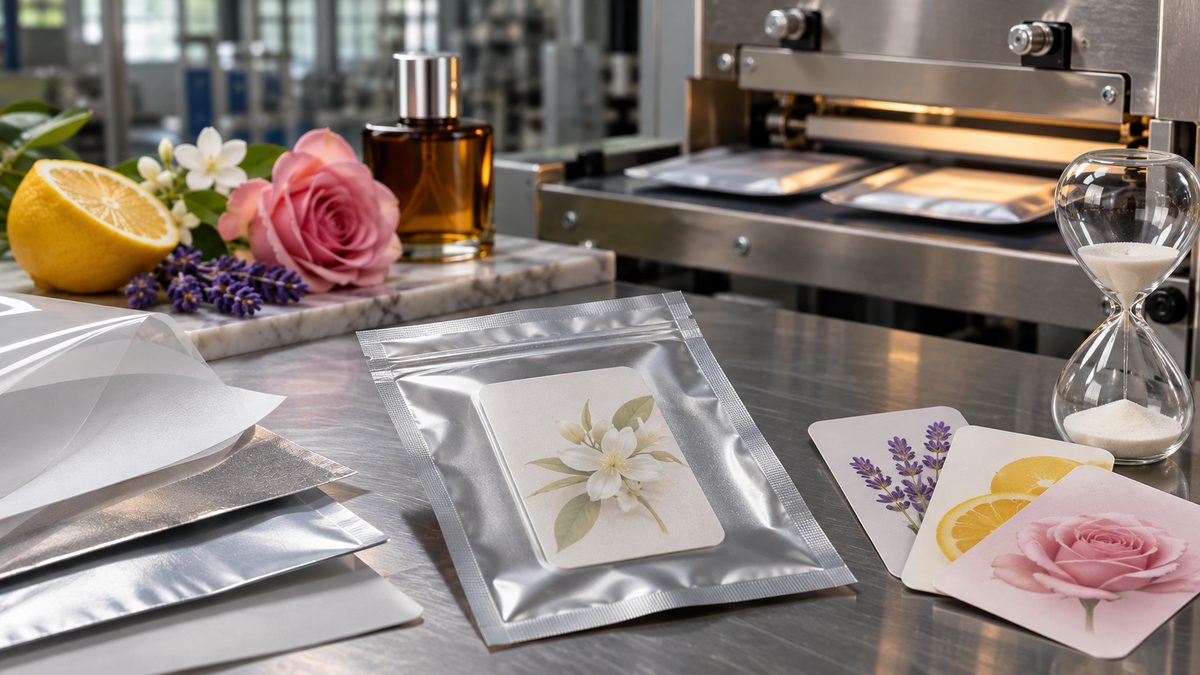
Flammability Labelling for Car Fragrance in Hot Climates
A car fragrance card ships into a market where summer cabin temperatures routinely pass 60°C, and the brand's label says nothing about flammability or storage. The fragrance blend was classified in a temperate lab, the card was tested at ro
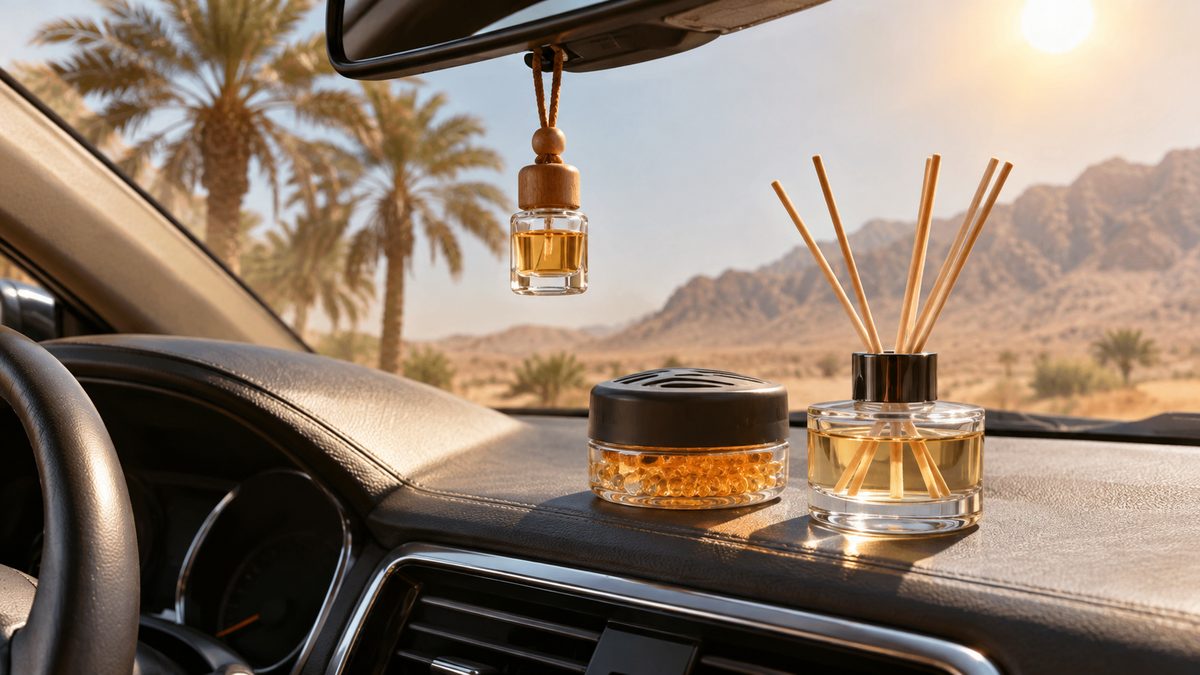
A car fragrance card ships into a market where summer cabin temperatures routinely pass 60°C, and the brand's label says nothing about flammability or storage. The fragrance blend was classified in a temperate lab, the card was tested at room temperature, and neither number reflects the environment the product will actually sit in.
This article explains why hot climates change the flammability question for car fragrance, how the fragrance blend's flash point drives the label, and what a compliant label and package must communicate. It covers classification, the cabin heat cycle, placement constraints, and the testing and documentation a hot-climate launch needs before it ships.
Table of Contents
- Why hot climates change the flammability picture
- Flash point and how the blend is classified
- What the flammability label must say
- The cabin as a heat cycle
- Placement and package constraints
- Testing and documentation for hot climates
- Market-specific label variants
- Practical guide: hot-climate flammability labelling
- Frequently asked questions
- Conclusion
Why hot climates change the flammability picture
Flammability is a property of the fragrance blend and the carrier, and it is temperature-dependent. A blend that is comfortably non-flammable at a 20°C warehouse can approach its flash point inside a closed car parked in the sun, where the cabin and the surfaces touching the product reach far higher temperatures.
The environment, not the product, moved
The product did not change; the temperature at which it is used and stored did. A classification made for a temperate retail shelf does not automatically describe the same product clipped to a dashboard vent in a hot market, and a label written without that environment in mind understates the risk.
Flash point and how the blend is classified
The flash point is the temperature at which the liquid gives off enough vapour to ignite near an ignition source, measured by a closed-cup method. For a car fragrance, the flash point of the fragrance blend or the carrier is the number that determines whether the product carries a flammability classification and label.
The classification path
A blend with a low flash point is classified as a flammable liquid, and that classification carries hazard statements, pictograms and precautionary text onto the label. A blend with a higher flash point may fall below the threshold, but "below the threshold" still needs a margin, because the cabin is hotter than the lab that produced the number.
| Blend characteristic | Likely label outcome | Hot-climate implication |
|---|---|---|
| Low flash point, solvent carrier | Flammable-liquid pictogram and statements | Higher caution burden in a hot cabin |
| Higher flash point, low-volatility carrier | May fall below the threshold | Still needs a temperature margin |
| Solid or gel format | Different classification logic | Check format-specific rules |
The precise thresholds and classification wording are set by the applicable transport and chemical-classification rules, which vary by market and change over time. Confirm the current official text for each destination rather than working from a remembered figure.
What the flammability label must say
A flammability label is not a single sentence; it is a small set of elements that must be present together: the hazard pictogram where required, the signal word, the hazard statement, and the precautionary statements covering storage and handling.
The elements that travel together
Where the blend is classified as flammable, the label typically carries a flame pictogram, a signal word, a hazard statement such as "flammable liquid and vapour", and precautionary text about keeping the product away from heat and ignition sources. The exact wording is dictated by the classification, so the label text is derived from the SDS and the classification record, not written by a copywriter.
The cabin as a heat cycle
A car cabin is not a steady temperature; it is a daily cycle of cool mornings and hot afternoons, with surfaces inside reaching temperatures far above the outside air when parked in direct sun. The product lives through this cycle every day, and the label and package must be designed for the worst part of it.
What the cycle does to the product
Repeated heating can soften a cartridge, thin a liquid, drive off volatile components faster, and in the worst case bring a borderline blend close to its flash point. A product that passes a single room-temperature check can still fail across a season of daily heat cycles.
Why the cycle, not the peak, is the test
A single high-temperature reading shows whether the product survives one afternoon; a cycle shows whether it degrades over weeks of repeated exposure. The cumulative effect — fragrance loss, carrier separation, seal softening — is what generates the mid-season complaints, and it only appears when the test repeats the heating rather than sampling it once.
Placement and package constraints
Where the product is mounted inside the car changes its temperature exposure, and the package must be designed and labelled for the worst realistic placement rather than the most flattering one. A vent clip, a dashboard mount and a sun-visor card all live in different thermal environments.
Designing for the worst placement
A dashboard mount in direct sun is the harshest case, and if the product can be placed there, the label and the packaging must assume that placement. If the brand intends to restrict placement — for example, vent-only use — the restriction must be stated on the label.
Testing and documentation for hot climates
A hot-climate launch is not complete until the product has been tested against the environment it will actually face, and the results are written down. The tests are specific: a flash point on the actual blend, a heat-cycle test on the finished product, and a legibility check on the label after cycling.
| Test | What it verifies | Failure it prevents |
|---|---|---|
| Flash point, method and unit | Classification basis | Wrong or missing label class |
| Heat-cycle on finished product | Survival over daily range | Leakage, warping, scent loss |
| Label legibility after cycling | Print survives heat | Illegible or lifted label |
File the flash point, the cycle-test results and the label legibility check against the SKU, and confirm the classification the label text was derived from. The flash point and the classification live in the supplier's safety data and classification record, which should be requested before the label is drafted; our contact page is the channel for obtaining that data for a hot-climate market.
Market-specific label variants
The flammability wording that is correct in one market is not automatically correct in another, and a car fragrance sold across several hot-climate destinations may need a label variant per market rather than a single universal text. The classification is shared, but the required wording and language are not.
When variants become necessary
If two markets require different languages, different pictogram styles or different precautionary phrasing, a single label cannot serve both. Build the variants from the same classification record, so the hazard content is identical while the language and formatting follow each market's requirements. Label size and curvature are set by the container, which is a packaging decision, and the car fragrance formats these variants apply to sit in our product range.
so the hazard content is identical while the language and formatting follow each market's requirements.Practical guide: hot-climate flammability labelling
Step 1 — Confirm the blend's flash point and classification
Obtain the production blend's flash point with method and unit, and the resulting classification, from the supplier before drafting any label text.
Step 2 — Define the cabin environment
State the temperature range and daily cycle the product will face, including the worst placement, so the label and package are designed for that environment.
Step 3 — Derive the label from the classification
Build the hazard pictogram, signal word, hazard statement and precautionary text from the classification record, and add the storage cautions the hot environment requires.
Step 4 — Run the heat-cycle test
Cycle the finished product through the daily temperature range and inspect for leakage, warping, carrier separation and scent loss over repeated exposure.
Step 5 — Verify label legibility after cycling
Confirm the flammability text and pictogram remain legible and attached after the cycle, using materials rated for the temperature range.
Step 6 — Build market variants and file the record
Produce the required language and formatting variants from the same classification, add market codes and revisions, and file the results against the SKU.
Frequently asked questions
What is private label car fragrance manufacturing?
It is the production of car fragrance products under your brand by a factory that supplies the fragrance, holder and card or cartridge, and handles finishing so the range carries your identity.
What is a typical minimum order quantity for car fragrance?
Minimums vary by format and fragrance, but a common starting point is a few thousand units per scent, with smaller runs available at a higher unit cost.
Why does a hot climate change the flammability question?
Because flammability is temperature-dependent, and a blend that is non-flammable at a warehouse temperature can approach its flash point in a sun-heated car.
What must a car fragrance flammability label include?
Where the blend is classified as flammable, a flame pictogram, a signal word, a hazard statement and precautionary statements about heat and ignition sources, plus storage cautions.
How is a car fragrance blend classified as flammable?
By its measured flash point against the applicable classification thresholds.
What test should I run before a hot-climate launch?
Confirm the flash point of the production blend, run a heat-cycle test on the finished product over the daily range, and verify the label stays legible after cycling.
Do I need a different label for each hot-climate market?
Often yes, because languages, pictogram styles and precautionary phrasing vary by market even when the classification is shared.
What happens to the product over repeated heat cycles?
Repeated heating can soften a cartridge, thin a liquid, drive off volatiles faster, and bring a borderline blend closer to its flash point.
Conclusion
Hot-climate flammability labelling is a case where the environment, not the formulation, does the damage. A blend classified in a temperate lab and tested at room temperature does not describe the same product clipped into a sun-heated car, and the label is the only place the brand can close that gap.
The remedy is to classify the actual blend, design the label from that classification, and prove the product and the label survive the cabin's daily heat cycle before shipping. A brand that runs those three steps can sell into hot markets with a label that says what it needs to, and stays legible long enough to be read.
Discuss your fragrance programme with our team:
WhatsApp: +86 17324762943
Email: adon@customperfumeoem.com
Website: customperfumeoem.com