Designing Car Fragrance for Family Vehicles: Safety Constraints Brands Overlook
A car fragrance designed for a single adult driver ships into a family-vehicle channel and immediately hits problems the design never considered: the clip sits within a child's reach, the liquid reservoir weeps onto upholstery, and the scen
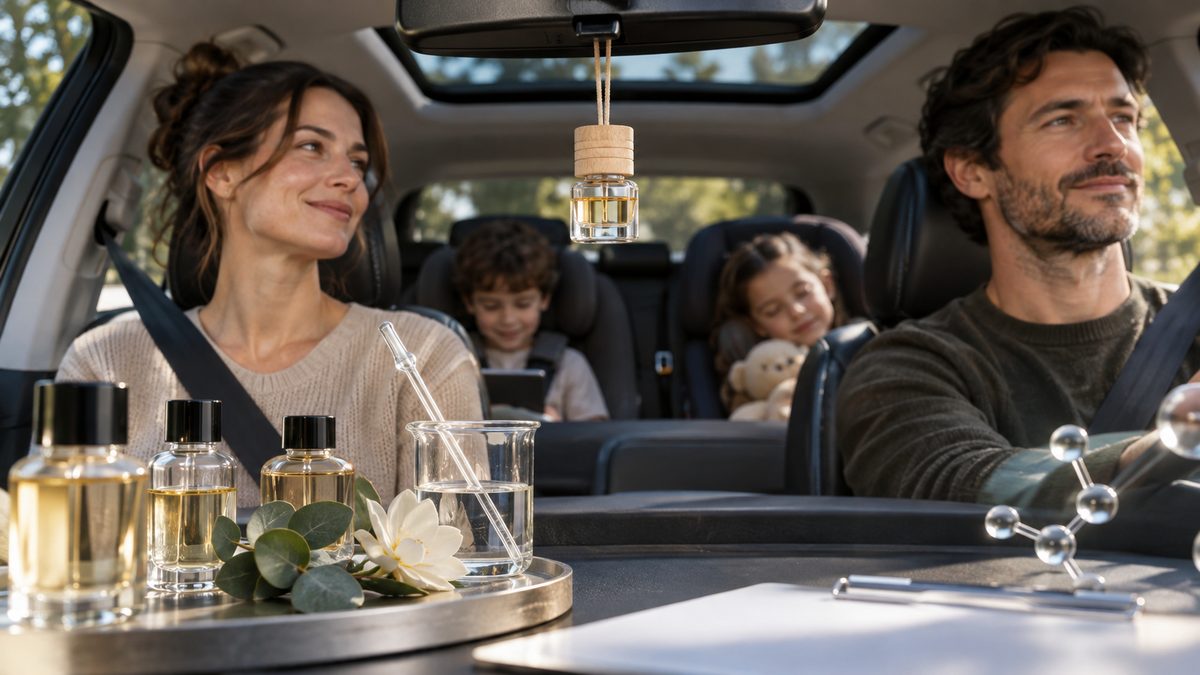
A car fragrance designed for a single adult driver ships into a family-vehicle channel and immediately hits problems the design never considered: the clip sits within a child's reach, the liquid reservoir weeps onto upholstery, and the scent itself raises questions a parent asks before a reviewer ever does.
This article covers the safety constraints a car fragrance must satisfy when the vehicle carries children and multiple occupants. It walks through child reach and small-part exposure, material and chemical concerns, leakage and staining, driver distraction, and the design checklist that keeps a family-vehicle product out of the complaints queue.
Table of Contents
- Why family vehicles impose different constraints
- Child reach and placement
- Chemical exposure and material choices
- Leakage and staining in family use
- Driver distraction and visibility
- Failure modes a family vehicle surfaces
- The family-vehicle design checklist
- Practical guide: designing for family vehicles
- Frequently asked questions
- Conclusion
Why family vehicles impose different constraints
A family vehicle is not just a car with children in it; it is a shared, frequently occupied space where a product lives next to small hands, food, toys and soft trim, and where the owner's tolerance for leaks, smells and clutter is far lower than a single driver's. The constraints are the same physical ones, but the consequences of getting them wrong are higher.
The occupant mix changes the exposure
An adult driver clips a fragrance where it is convenient; a child in a rear seat reaches, pulls and mouths whatever is within reach. The design has to assume the least careful occupant, not the most, and that assumption ripples through the placement, the closure, the materials and the size of every part.
Child reach and placement
The single highest-risk design decision in a family-vehicle fragrance is where the product can be mounted and whether its parts are reachable and detachable by a small child. A clip that sits on a rear vent or a low dashboard position puts the product directly into a child's reach envelope.
Designing for the reach envelope
Assume the product will be placed at the lowest realistic mounting point, because in a family vehicle it will be. The closure, the card, the clip and any detachable component must resist being pulled apart and must not present small parts that could be detached and mouthed.
Why retention strength is a design parameter
Retention is a specification, not a by-product. The force required to separate the card from the holder, and the force required to open the clip, should both be set to values an adult can operate but a young child cannot easily defeat, and tested on the finished product rather than assumed from the drawing.
Chemical exposure and material choices
A family-vehicle fragrance sits in a small, warm, enclosed space for hours, which concentrates whatever the product releases into the air. The chemical profile that is acceptable on an open retail shelf deserves more scrutiny when the occupants are children breathing the same cabin air.
What the fragrance blend should avoid
The blend and carrier should be reviewed against the restricted-substance and allergen expectations of the target market, and phthalate-containing carriers should be examined closely because of the scrutiny they attract in child-adjacent products. Retailers and distributors serving family vehicles increasingly ask for the safety data sheet, an allergen declaration and a restricted-substances statement before listing, so have these ready for the car fragrance format specifically.
| Document | What it covers | Why the channel asks |
|---|---|---|
| Safety data sheet | Blend hazard profile | Handling and exposure baseline |
| Allergen declaration | Fragrance allergens above thresholds | Child-adjacent exposure review |
| Restricted-substances statement | Compliance with market lists | Defensible sourcing position |
Leakage and staining in family use
Leakage is an annoyance in any car, but in a family vehicle it becomes a damage claim, because the leaked liquid or softened card lands on upholstery and trim that the owner cares about. A fragrance reservoir that weeps in a hot cabin is the fastest route to a negative review and a stain dispute.
The hot-cabin and handling test
Test the product through the cabin's daily heat cycle with the holder mounted at the angles a family vehicle will produce — including a rear vent clip knocked sideways by a child. The test must look for liquid weeping, card softening and dye transfer onto a fabric swatch, not just for mechanical breakage.
Driver distraction and visibility
A fragrance that hangs in the driver's sightline or swings on the rearview mirror is a distraction, and in a family vehicle the driver is already managing more than a single occupant. The placement guidance and the product's physical behaviour both affect whether it stays out of the driver's way.
Where not to mount, and keeping the product fixed
The label and the instructions should steer placement away from the driver's direct sightline and away from anything that swings into view on turns or braking. A hanging format that sways is more distracting than a fixed clip.
Failure modes a family vehicle surfaces
The failures are the same physical mechanisms as any car fragrance, but the family environment makes them visible faster and more expensive. The three that matter most are part detachment, heat-induced leakage and dye transfer, and each has a specific test that catches it early.
| Failure mode | How it appears | Test that catches it |
|---|---|---|
| Part detachment | Card or clip pulled apart by a child | Retention-force test on the holder |
| Heat-induced leakage | Liquid or softened card weeping | Heat-cycle test at mounting angles |
| Dye transfer | Colour staining light upholstery | Colourfast test on fabric at temperature |
| Falling holder | Vent clip releasing under vibration | Vibration and braking-force test |
Each of these is a design parameter that can be specified and verified, and none of them is visible in a room-temperature bench check. The family-vehicle channel is where the difference between a bench pass and a real-world pass shows up first.
The family-vehicle design checklist
A family-vehicle fragrance should be designed against an explicit checklist rather than against the same assumptions as a single-driver product. The checklist is short, and every item maps to a test and a specification value.
The items to lock down
Set the card retention force, the clip opening force, the closure integrity under heat, the colourfastness of the printed materials, and the chemical profile of the blend and carrier. Write each as a number or a pass criterion in the specification, and tie each to a test result on the finished product.
Where the decisions are made
The holder, card and material choices are settled at the product and customisation stages, and the chemical documentation comes from the blend's safety data. Our product range covers the car fragrance formats and their retention and material options, the customisation process page describes how a family-vehicle specification is fixed before sampling, and the contact page is where the chemical documentation is requested.
Practical guide: designing for family vehicles
Step 1 — Assume the lowest mounting point and the least careful occupant
Design for a rear vent or low dashboard position reached by a child, and set the product's behaviour for that environment rather than an adult's placement.
Step 2 — Set retention and opening forces
Specify the force required to separate the card from the holder and to open the clip, at values an adult can operate but a child cannot easily defeat.
Step 3 — Review the blend and carrier profile
Check the fragrance blend and carrier against restricted-substance and allergen expectations, and prepare the SDS, allergen declaration and restricted-substances statement.
Step 4 — Test leakage and colourfastness at temperature
Run a heat-cycle test at the realistic mounting angles and check for weeping, card softening and dye transfer onto a light fabric swatch.
Step 5 — Verify the holder stays fixed
Test the vent clip against vibration and braking force so the product does not rattle, fall or swing into the driver's sightline.
Step 6 — Write the placement guidance on the label
State where the product belongs and where it should not be mounted, so the driver is steered away from the sightline and the child's reach.
Frequently asked questions
What is private label car fragrance manufacturing?
It is the production of car fragrance products under your brand by a factory that supplies the fragrance, holder and card or cartridge, and handles finishing so the range carries your identity.
What is a typical minimum order quantity for car fragrance?
Minimums vary by format and fragrance, but a common starting point is a few thousand units per scent, with smaller runs available at a higher unit cost.
Why is a family vehicle a different design problem?
Because the product shares the space with children and multiple occupants, so the consequences of detachment, leakage, staining and distraction are higher, and the design must assume the least careful occupant.
How do I prevent a child detaching the fragrance card?
Set the card retention force and the clip opening force to values an adult can operate but a young child cannot easily defeat, and test those forces on the finished holder.
What chemical documentation does a family channel ask for?
The safety data sheet, an allergen declaration and a restricted-substances statement for the car fragrance format, with any "child-safe" wording supported by that documentation.
How do I stop the product staining the upholstery?
Specify colourfast printed materials and test for dye transfer onto a light fabric swatch at temperature, because the stain is the complaint even when the leak is small.
Where should a family-vehicle fragrance not be mounted?
Keep it out of the driver's direct sightline and away from anything that swings into view on turns or braking.
What tests catch family-vehicle failures early?
A retention-force test, a heat-cycle leakage test, a colourfastness test on fabric, and a vibration and braking-force test on the clip together cover the failures that show up first.
Conclusion
A family vehicle does not need a weaker fragrance; it needs a product designed for the reality of small hands, hot cabins, light upholstery and a driver with more than one thing to watch. The constraints are physical, and every one of them can be turned into a specification value and a test.
The brands that succeed in the family channel are the ones that design for the least careful occupant and prove it with retention-force, heat-cycle and colourfastness data. That evidence, plus a defensible chemical profile, is what converts a parent's first question into a repeat purchase.
Discuss your fragrance programme with our team:
WhatsApp: +86 17324762943
Email: adon@customperfumeoem.com
Website: customperfumeoem.com