Child-Appeal and Small-Part Rules in Car Fragrance Design
A brand launches a car fragrance shaped like a candy, clipped where a child can see and reach it, and the product sells until a buyer or an authority flags it. The design was meant to be cute; under the rules that govern child-appealing and
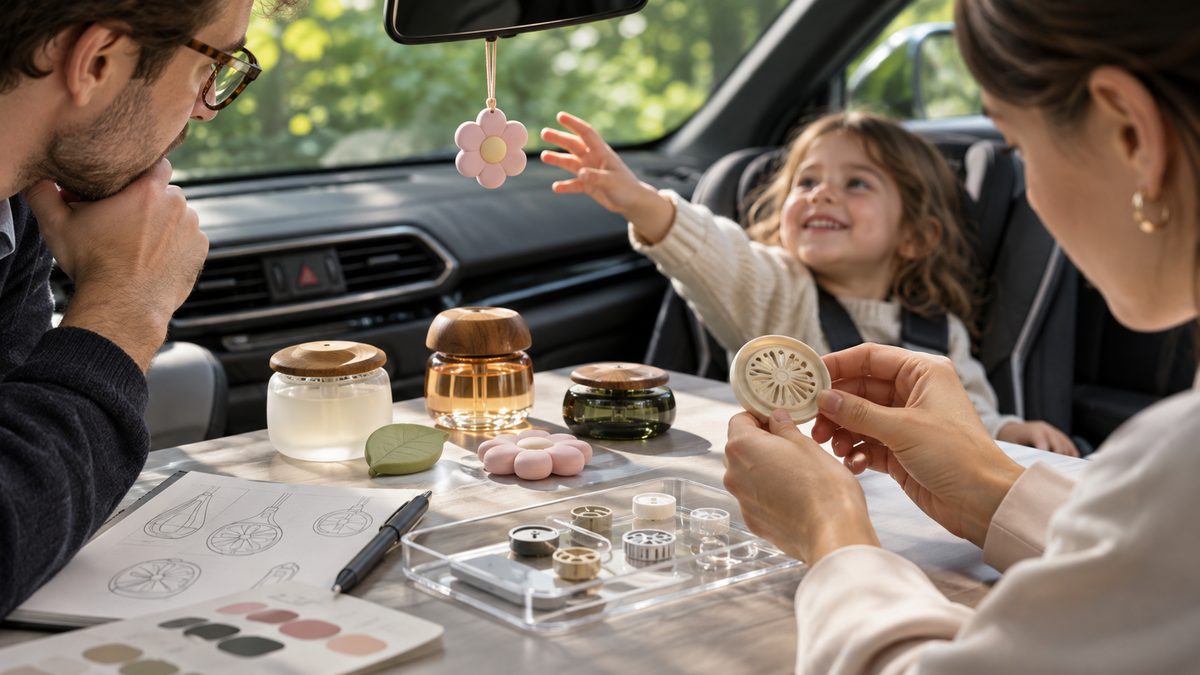
A brand launches a car fragrance shaped like a candy, clipped where a child can see and reach it, and the product sells until a buyer or an authority flags it. The design was meant to be cute; under the rules that govern child-appealing and small-part products, it may be something closer to a toy — with a toy's testing obligations.
This article explains how a car fragrance can drift into the child-appeal and small-part regime without anyone intending it to, what the small-parts test actually checks, and how novelty shapes and food-like fragrances raise the risk. It covers the classification logic, the testing paths, and the design alternatives that keep a product appealing to adults without inheriting a toy's obligations.
Table of Contents
- What child appeal means in product safety
- When a fragrance becomes a toy
- Small parts and the choking-hazard test
- Food-like and novelty designs
- Testing and certification paths
- Where the risk surfaces in practice
- Design alternatives that keep the appeal
- Practical guide: auditing child-appeal risk
- Frequently asked questions
- Conclusion
What child appeal means in product safety
Child appeal is a judgement about whether a product's appearance, shape, colour, scent or packaging makes it look like something a child would want to play with or put in their mouth. It is not a formal category a brand chooses; it is an assessment a regulator or a buyer can apply to a product that was never marketed to children.
The assessment looks at the whole product
The judgement weighs the object's form and colours, whether it resembles a toy or a food item, and whether the packaging and imagery reinforce that resemblance. A fragrance in a plain clip is unlikely to read as child-appealing; the same fragrance in a glossy, food-shaped shell with cartoon packaging may read very differently.
When a fragrance becomes a toy
A car fragrance is an air-care product when it looks like an air-care product. When its shape, colour and presentation make it look like a plaything, the same item can be treated as a toy, and the obligations that follow are the toy-safety obligations, not the fragrance ones.
The presentation test and its consequences
The deciding factor is whether a reasonable person would see the product as intended for play. A holder shaped like an animal with moveable parts, or a card that looks like a puzzle piece, pushes the product toward the toy classification.
Why the line is crossed by accident
Most brands do not set out to make a toy; they set out to make a product that stands out on a peg, and the standout choices — bright colours, a novelty shape, a food resemblance — are precisely the features the assessment weighs. The drift is gradual, and it is invisible until someone applies the test.
Small parts and the choking-hazard test
The small-parts requirement targets components that can detach and be swallowed or inhaled by a young child. The test is mechanical: a component is placed against a small-parts cylinder, and if it fits inside, it is a small part that must not be present in a product intended for children under a specified age.
What the cylinder measures
The test checks whether a detached part fits through an opening that approximates a young child's airway. The exact cylinder dimensions are set by the applicable standard and vary slightly by market, so confirm the current official specification for each destination.
Food-like and novelty designs
Food imitation is the sharpest child-appeal signal, because a product that looks and smells like food is uniquely attractive to a child who cannot yet distinguish it from something edible. A car fragrance shaped like a sweet or a biscuit, or scented like one, combines visual and olfactory cues that make ingestion more likely.
Why food resemblance raises the stakes
A child who encounters a food-shaped object is more likely to mouth it, which converts the choking risk from theoretical to probable. Some markets restrict or prohibit products that imitate food in a way that could mislead, and the fragrance's food-like scent amplifies the confusion.
| Design choice | Child-appeal signal | Safer alternative |
|---|---|---|
| Food-shaped shell | High — invites ingestion | Functional silhouette |
| Toy-like moving parts | High — invites play | No moving parts |
| Bright colour, plain shape | Low — stands out only | Keep, add finish |
| Cartoon packaging | High — reinforces play | Restrained imagery |
Testing and certification paths
If a product is going to be assessed as child-appealing or is deliberately marketed near children, the responsible path is to test it against the applicable toy-safety or childcare requirements before launch, rather than to discover the gap through an enforcement action.
What the testing covers
The testing looks at small parts, sharp edges and points, and the chemical and flammability limits that apply to the category the product has been drawn into. The exact standards depend on the market and the classification.
| Design feature | Risk signal | Likely consequence |
|---|---|---|
| Food-shaped shell or card | High | Ingestion likelihood, possible restriction |
| Toy-like character with moving parts | High | Toy classification and its tests |
| Bright novelty shape, not food-like | Medium | Assessment depends on presentation |
| Plain clip or card | Low | Normal air-care treatment |
The cost of testing is a known, budgetable number. The cost of an unplanned reclassification — a recall, a delisting, a redesigned mould — is larger and arrives at the worst possible time.
Where the risk surfaces in practice
The child-appeal risk tends to surface through three channels, each on a different timeline. Marketplaces flag listings, buyers run their own compliance screens, and authorities act on complaints or market surveillance.
Buyers and marketplaces act first
A retailer's buying team or a marketplace's compliance filter will often flag a food-shaped or toy-like fragrance before any authority sees it, because the listing copy and the product image are enough to raise the question. The fix at this stage is a product or listing change.
Authorities act later but harder
Market-surveillance or enforcement action moves slower but carries more severe remedies, and it is usually triggered by a complaint or a product that reached a market it should not have. Confirm the current official text for each destination, because the applicable rules and age thresholds vary by market and change over time.
Getting the assessment before launch
The cheapest point to answer the child-appeal question is before the mould is cut, when the shape, colour and packaging are still drawings. A compliance review at that stage costs a fraction of the redesign that follows a flagged product; our contact page is the channel for raising a child-appeal and small-part review before a design is committed.
Design alternatives that keep the appeal
The commercial goal behind a novelty design is differentiation, and that goal survives without the child-appeal risk when the design stands out through colour and finish rather than food resemblance.
Differentiating without the risk signals
Use colour, texture and finish to make the product distinctive on the shelf, and keep the silhouette functional rather than food- or toy-shaped. Avoid moving parts, avoid edible fragrance notes paired with food-like shapes, and keep the packaging imagery from reinforcing a playful or edible reading.
Where the design decisions are made
The shape, colour and packaging are fixed at the product and customisation stages, which is exactly where the child-appeal question should be answered. Our product range and customisation process pages describe how a design is reviewed for these signals before sampling begins.
Practical guide: auditing child-appeal risk
Step 1 — Review the silhouette against a food or toy reading
Look at the product's shape and colour and ask whether a reasonable person would see food or a plaything. If the answer is yes, treat the risk as real.
Step 2 — List every part that can separate
Identify the card, clip arm, cap and any glued component, and check each against the small-parts cylinder under a realistic pull and torque.
Step 3 — Check the packaging and imagery
Confirm the packaging and listing copy do not reinforce a playful or edible reading, because the assessment weighs the whole presentation.
Step 4 — Decide the classification before the mould
Determine whether the product as presented stays an air-care item or crosses into the toy or childcare regime, and get that decision in writing.
Step 5 — Test against the applicable standard
If the product is child-appealing or marketed near children, run the applicable mechanical, chemical and flammability tests and keep the reports keyed to the SKU.
Step 6 — Redesign the risk signals out
Replace food-like shapes and moving parts with colour, texture and finish, and add deliberate card retention so no small part detaches easily.
Frequently asked questions
What is private label car fragrance manufacturing?
It is the production of car fragrance products under your brand by a factory that supplies the fragrance, holder and card or cartridge, and handles finishing so the range carries your identity.
What is a typical minimum order quantity for car fragrance?
Minimums vary by format and fragrance, but a common starting point is a few thousand units per scent, with smaller runs available at a higher unit cost.
What does "child-appealing" mean for a car fragrance?
It means the product's appearance, shape, colour, scent or packaging makes it look like something a child would want to play with or mouth.
Can a car fragrance be treated as a toy?
Yes.
What is the small-parts cylinder test?
It checks whether a detached part fits through an opening approximating a young child's airway.
Why are food-shaped car fragrances the highest risk?
Because a food shape combined with a food-like scent makes ingestion more likely, and some markets restrict products that imitate food in a misleading way.
Does a glued-on part still count as detachable?
It can, if it comes off under a specified pull or torque test.
How do I differentiate my product without the child-appeal risk?
Use colour, texture and finish for shelf standout, keep the silhouette functional, and avoid moving parts and food-like shapes.
Conclusion
Child appeal is the compliance risk that a car fragrance brand acquires without intending to, through the very choices meant to make the product stand out. A food-shaped shell or a toy-like character converts a routine air-care item into something a regulator or a buyer can treat as a toy.
The safeguard is to answer the question at the drawing stage, before the mould exists: review the silhouette, list the detachable parts, check the packaging, and decide the classification in writing. Where the risk is real, colour and finish deliver the differentiation without the liability.
Discuss your fragrance programme with our team:
WhatsApp: +86 17324762943
Email: adon@customperfumeoem.com
Website: customperfumeoem.com