Cartridge Design: Sealing, Venting and Refill Mechanics
A car fragrance cartridge that leaks onto the dashboard in a summer heat soak, or dries out in the glovebox before it is opened, has failed at the design stage, not on the assembly line. The cartridge has to hold a liquid or gel, seal it ag
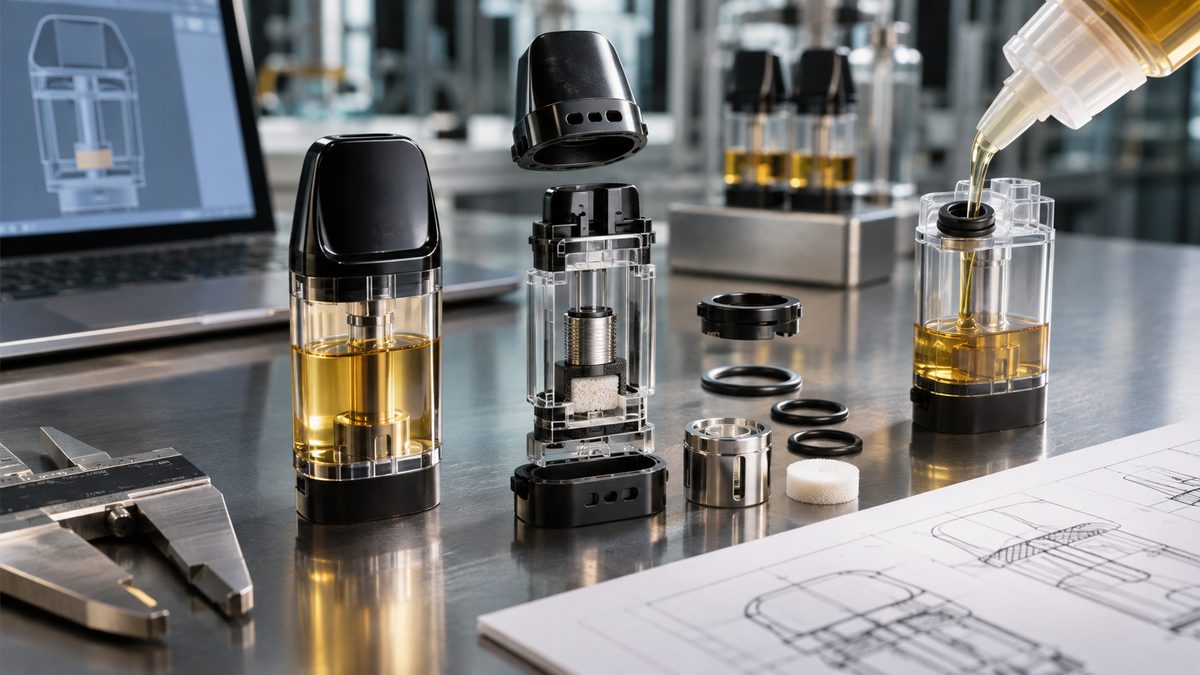
A car fragrance cartridge that leaks onto the dashboard in a summer heat soak, or dries out in the glovebox before it is opened, has failed at the design stage, not on the assembly line. The cartridge has to hold a liquid or gel, seal it against heat and pressure, vent just enough scent to be pleasant, and either refill cleanly or be cheap enough to throw away.
This article covers the four mechanical jobs a cartridge performs — holding, sealing, venting and refilling — and shows where each one fails. It explains membrane release, foil seals, snap rings and the heat-soak test, and it gives you a specification sequence for a cartridge that survives a parked car in summer.
Table of Contents
- The four jobs a cartridge must do
- Sealing: foil, snap ring and gasket
- Venting and metered release
- Refill mechanics: replaceable versus single-use
- Failure modes: heat leaks and drying out
- Matching the cartridge to the clip housing
- Practical guide: spec'ing a car fragrance cartridge
- Frequently asked questions
- Conclusion
The four jobs a cartridge must do
A cartridge is a small container that holds the fragrance, seals it until use, releases it at a controlled rate, and either refills or is replaced. Each job imposes a different requirement, and a design optimised for one of them often sacrifices another.
The jobs pull against each other
A cartridge that seals perfectly for a long shelf life tends to release poorly once opened, while one that vents freely tends to dry out in storage. Good cartridge design is a negotiated balance between the four jobs, not a maximisation of any single one.
Sealing: foil, snap ring and gasket
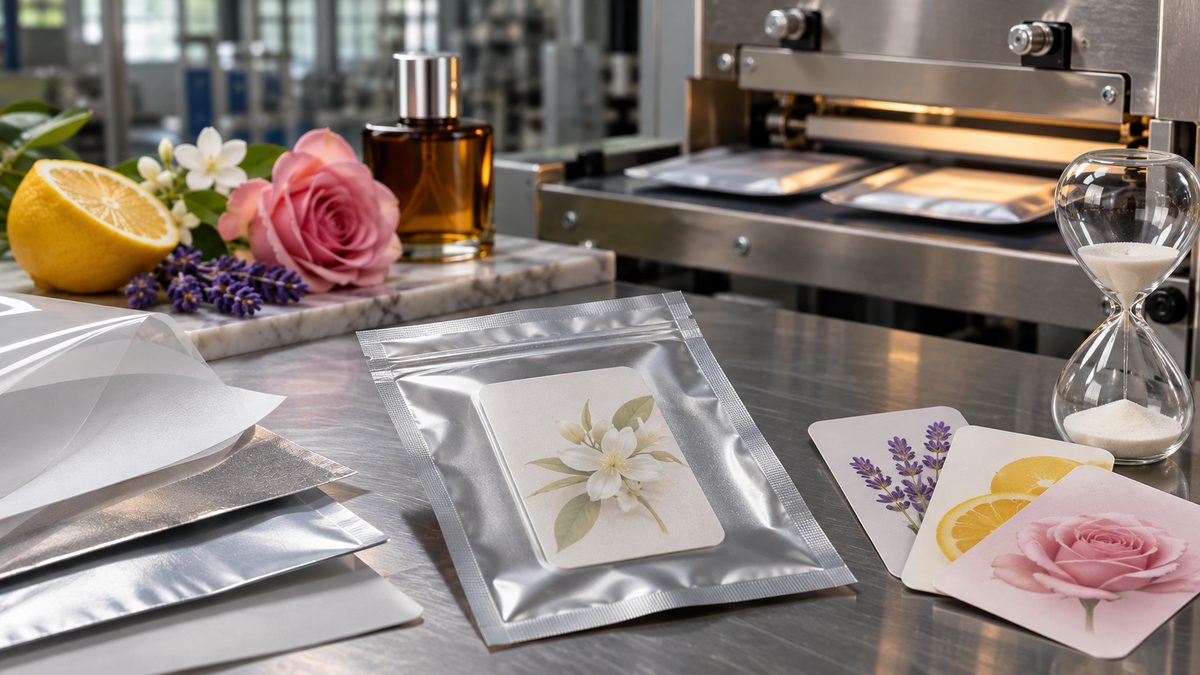
The seal is what keeps the fragrance in and the environment out during shipping and shelf life. A foil induction seal across the mouth is the strongest barrier, a snap ring or gasket seals the closure, and together they determine whether the cartridge survives a hot container or a cold warehouse.
Seal integrity is a shelf-life question
Test the seal by heat-cycling filled cartridges and weighing them before and after, because a tiny loss per unit over months is how a cartridge arrives half-empty. The seal has to hold not at room temperature but at the hottest and coldest points of the supply chain.
Venting and metered release
Once opened, the cartridge must release fragrance at a steady, controllable rate. That release is metered by the vent or membrane through which the vapour escapes, and the size and material of that opening set how strong the scent is and how long the cartridge lasts.
The vent is the intensity control
A larger vent releases faster and smells stronger but empties sooner; a smaller vent stretches the life but smells faint. The vent is the cheapest intensity control in the whole system, and it should be specified against the target release rate, not picked for appearance.
| Release method | Intensity | Life effect |
|---|---|---|
| Large open vent | Strong | Short |
| Small vent | Faint | Long |
| Membrane diffusion | Steady, moderate | Predictable |
Membrane release is diffusion, not a hole
A membrane cartridge releases fragrance by diffusion across a polymer film rather than through an open hole. The film's thickness and material set the permeation rate, which is steadier across temperatures than a plain vent but also slower and more sensitive to the film's chemistry.
Refill mechanics: replaceable versus single-use
A cartridge is either a sealed single-use unit or a refillable vessel. Refillable designs need a clean, leak-free way to replenish the fragrance without the customer touching the liquid, while single-use designs push the cost and disposal burden onto the refill purchase.
Refill is a repeat-purchase decision
A refillable system creates a recurring customer but demands a refill mechanism that cannot be misloaded. A single-use cartridge is simpler and safer but turns every renewal into a packaging cost. Choose the model early, because it shapes the clip housing and the pricing.
Failure modes: heat leaks and drying out
The two classic cartridge failures are opposite: leaking in heat and drying out in storage. Heat raises the internal pressure and pushes liquid past a weak seal, while a cartridge that is not fully sealed loses fragrance slowly until it is empty before first use.
Heat soak is the test that matters
A car interior can reach extreme temperatures in direct sun, and that is the condition the cartridge must survive. A heat-soak test at the worst expected temperature, repeated over days, exposes seal and material weaknesses that a room-temperature test never will.
Matching the cartridge to the clip housing
The cartridge does not work alone; it sits in a clip or holder that positions it in the airflow. The cartridge's dimensions, vent orientation and refill interface must match the housing, or the two parts will rattle, misalign or fail to engage.
| Requirement | Design element | Failure if ignored |
|---|---|---|
| Hold the fragrance | Vessel and fill level | Spill, under-fill |
| Seal until use | Foil seal, gasket | Leak in transit, drying out |
| Release at a rate | Vent or membrane | Too strong or too faint |
| Refill or replace | Refill interface | Misload, customer mess |
Practical guide: spec'ing a car fragrance cartridge
Step 1 — Choose single-use or refill first
Decide whether the customer replaces the whole cartridge or refills it, because that decision fixes the housing, the seal and the pricing before any other choice.
Step 2 — Define the dose and release rate
Set how strong the scent should be and how long the cartridge should last, and express it as a release-rate target the vent or membrane must meet.
Step 3 — Pick the vent or membrane
Select the opening or film that delivers the target rate, and remember the vent is your intensity control across the cartridge's life.
Step 4 — Specify the seal integrity
Choose the foil seal or gasket and define the mass-loss limit over the intended shelf life at the hottest and coldest points of the supply chain.
Step 5 — Run the heat-soak and leak test
Cycle filled cartridges through the worst expected temperature and check for leakage, pressure build-up and material failure before approving the design.
Step 6 — Set the replacement instructions
Write how the customer knows when to replace or refill the cartridge, so a dried-out unit is replaced on schedule rather than reported as a defect.
Frequently asked questions
What is a car fragrance cartridge?
A car fragrance cartridge is the replaceable or refillable vessel that holds the fragrance and releases it into the cabin, usually mounted in a vent clip or holder. It combines holding, sealing, venting and refill functions in one part.
What is a membrane in a fragrance cartridge?
A membrane is a polymer film through which fragrance diffuses instead of escaping through an open hole. It gives a steadier release across temperatures but is slower and depends on the film's chemistry and thickness.
What is a fragrance refill?
A refill is the replacement fragrance supply for a reusable cartridge or holder. It can be a sealed single-use cartridge or a liquid that replenishes a refillable vessel, and it is the mechanism that turns a one-off sale into a repeat purchase.
Why does my cartridge leak in summer?
Heat raises the pressure inside the cartridge and pushes the liquid past a weak seal. The fix is a stronger seal plus a heat-soak test at the worst expected temperature, because a room-temperature test will not catch the failure.
How long should a car fragrance cartridge last?
The life is set by the fill volume and the release rate, which the vent or membrane controls. Define the target life, then size the fill and the vent to deliver it, and state the life honestly on the packaging.
Can cartridges be refilled safely?
Yes, if the refill interface is designed so the customer can replenish the fragrance without touching the liquid and without misloading. A poorly designed refill leaks or spills, which is why single-use cartridges are often the safer default.
What vent size controls the scent intensity?
A larger vent releases more fragrance and smells stronger but empties faster, while a smaller vent stretches the life and smells fainter. Size the vent against the target release rate, not by eye.
How do I test a cartridge seal?
Heat-cycle filled cartridges through the expected temperature range and weigh them before and after to measure any loss. A seal that holds at room temperature can still fail in heat, so the test must include the worst case.
Conclusion
A car fragrance cartridge is four mechanical jobs in tension — holding, sealing, venting and refilling — and the design only works when the seal and the vent are specified together against the heat a parked car will actually impose.
Test with a heat soak, size the vent to the release-rate target, and decide the refill model before anything else. For the pack side of the decision, see our guide on planning car fragrance packs, review our packaging options, ask about custom cartridge design, or contact us to review your spec.
Discuss your fragrance programme with our team:
WhatsApp: +86 17324762943
Email: adon@customperfumeoem.com
Website: customperfumeoem.com