Car Fragrance Classification: Cosmetic, Chemical or Consumer Product?
A car fragrance sits on the border of several product regimes, and the same physical item can be treated as a cosmetic, a chemical mixture or a general consumer product depending on its claims, format and ingredients. Two suppliers give you
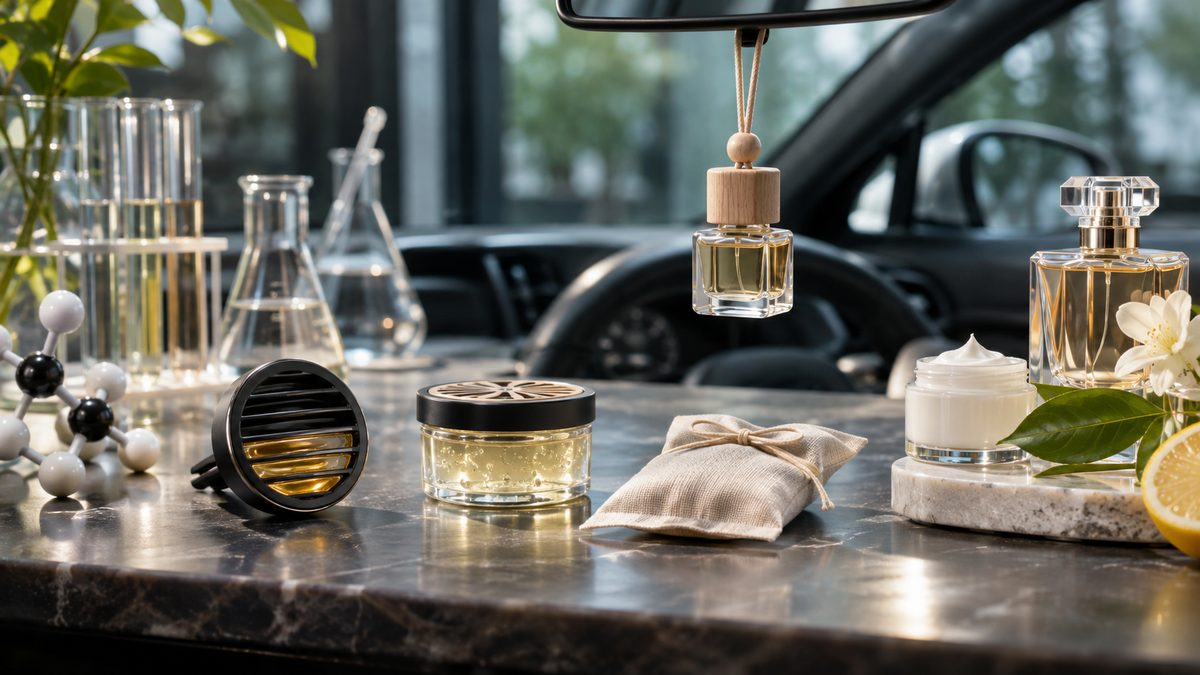
A car fragrance sits on the border of several product regimes, and the same physical item can be treated as a cosmetic, a chemical mixture or a general consumer product depending on its claims, format and ingredients. Two suppliers give you two different answers, and the wrong one means the label, the safety data sheet and the registration route are all built on the wrong foundation.
This article explains how a car fragrance is classified, what each classification controls, and how claims, format and ingredients move the product from one regime to another. It is written for private label buyers who need to fix the classification before they order, because every downstream document depends on it.
Table of Contents
- Why classification decides everything downstream
- The three candidate regimes
- How claims, format and ingredients change it
- What the classification controls
- Borderline cases and fixing it in the spec
- Practical guide: classifying a car fragrance correctly
- Frequently asked questions
- Conclusion
Why classification decides everything downstream
Classification is the first decision because it determines which rules apply, and every later document — label, safety data sheet, registration, transport — is a consequence of that first choice. Get the classification wrong and the entire compliance file is built on sand.
One product, several possible identities
The same scented item could be a cosmetic if it is applied to the body, an air care product if it scents a space, or a chemical mixture if its hazard profile dominates. The identity is not fixed by the product's name but by what it does and what it contains, and the cost of the wrong call usually surfaces at the border or in a retail review, after the label and SDS have already been produced.
The three candidate regimes
Car fragrances typically sit between three regimes: cosmetic rules, chemical classification and labelling rules, and general product safety rules.
Cosmetic rules apply when it touches the body
If the product is presented as being applied to the skin or hair — for example a scented oil meant to be dabbed on the wrist — it falls within cosmetic rules, and the obligations for safety assessment, labelling and responsible person follow from that.
Air freshener, chemical and biocide routes
A product that scents the cabin air rather than the body is generally an air freshener or general consumer product, governed by product safety obligations rather than cosmetic rules — unless its ingredients carry hazard classifications or the product makes a disinfecting or biocidal claim, which pulls it into the chemical mixture or biocide regime with heavier labelling and authorisation obligations.
Why "what it does" outweighs "what it is called"
The legal identity follows how the product is presented and formulated, not what the manufacturer privately intends. A liquid marketed for skin application is a cosmetic even if the same liquid sold as a cabin scent would not be.
How claims, format and ingredients change it
Three inputs decide the category, and each can flip the product from one regime to another.
Claims are often the deciding factor
A skin claim — "apply to pulse points" or "wear on the skin" — can reclassify the product as a cosmetic, while claims such as "kills odour-causing bacteria" can pull it into the biocide regime. A neutral scent claim keeps the product in the general consumer space, so the marketing copy and the label must be aligned.
Format and ingredients add their own weight
A liquid or gel fragrance is a chemical mixture and carries mixture classification and SDS obligations even when sold as a consumer air freshener, while a solid or card format may sit under lighter transport and labelling requirements. If a solvent or fragrance ingredient carries a hazard classification above its concentration threshold, the finished mixture must be classified accordingly.
What the classification controls
The classification sets off a cascade of documents and obligations, summarised below.
| Classification route | Key obligations | Typical trigger |
|---|---|---|
| Cosmetic | Safety assessment, responsible person, labelling | Presented for skin or hair use |
| Chemical mixture | SDS, CLP-style labelling, transport class | Hazardous ingredients above thresholds |
| General consumer product | Product safety, general labelling | Non-hazardous air freshener |
| Biocidal product | Authorisation, active substance approval | Disinfecting or biocidal claim |
The SDS and label must match the classification
Once the classification is set, the safety data sheet and the label must be consistent with it. A product classified as a hazardous mixture but labelled as a plain air freshener is internally inconsistent and will be flagged in review.
Borderline cases and fixing it in the spec
Many car fragrances sit near a boundary, and the resolution is to work from the claims, the format and the mixture classification in that order, then lock the result into the specification.
Work from the actual presentation
The classification follows how the product is presented and formulated, not what the buyer privately intends. If the marketing says "on skin" and the label says "cabin scent", the marketing claim can still decide the category, so the two must be aligned. The supplier should provide the finished mixture's classification and the SDS, so the buyer can see which regime the product actually falls into.
| Input | What to verify | Where it leads |
|---|---|---|
| Claims | Any skin, disinfecting or antibacterial wording | Cosmetic or biocide route |
| Format | Liquid, gel, solid or card | Mixture and transport obligations |
| Mixture classification | Hazard classes and thresholds | SDS and label requirements |
Lock the classification with the supplier
Decide the claims and format together with the formula, and ask for a written statement of the finished product's classification, the SDS where applicable, and the transport class, reconciled against the claims before production. This connects to the ingredient verification covered in our ingredient check guide, and our customisation process and the car fragrance pack planning guide let you fix these inputs early.
Practical guide: classifying a car fragrance correctly
Step 1 — Write down the actual claims
List every claim that will appear on the label and in marketing, and flag any that mention skin application, disinfection or antibacterial effects, because those change the category.
Step 2 — Confirm the format
Decide the physical format and note whether it is a free-flowing liquid, a gel, a solid or a card, since the format changes the mixture and transport picture.
Step 3 — Obtain the mixture classification
Get the finished mixture's classification and the safety data sheet from the supplier, based on the actual ingredients and concentrations.
Step 4 — Map the product to the regime
Use the claims, format and mixture classification to determine which regime applies, and record the reasoning so it can be shown to a reviewer.
Step 5 — Align the label and SDS
Make the label, safety data sheet and transport class consistent with the classification, and remove any claim that contradicts it.
Step 6 — Record and revisit on any change
File the classification decision with the product record, and re-run it whenever the claims, format or formula change, since any of the three can move the product to a different regime.
Frequently asked questions
What is a car fragrance classified as?
It depends on its claims, format and ingredients: it can be a cosmetic, a chemical mixture, a general consumer air freshener or a biocidal product, and the classification determines which rules apply.
Is a car air freshener a cosmetic?
Only if it is presented for application to the skin or hair. A product that scents the cabin air is generally a consumer air freshener rather than a cosmetic.
What makes a car fragrance a chemical mixture?
If its ingredients carry hazard classifications above the relevant concentration thresholds, the finished product is classified as a hazardous mixture and requires an SDS and appropriate labelling.
Do marketing claims affect the classification?
Yes. A claim of skin application can reclassify the product as a cosmetic, and a disinfecting or antibacterial claim can pull it into the biocide regime.
Does the format matter for classification?
Yes. A free-flowing liquid or gel is a chemical mixture with SDS obligations, while a solid or card format can sit under lighter transport and labelling requirements.
How do I find out my product's classification?
Ask the supplier for the finished mixture's classification and safety data sheet, computed from the actual ingredients and concentrations, and reconcile it with your claims.
What happens if the label contradicts the classification?
The product file becomes internally inconsistent and will be flagged in review, so the label, SDS and transport class must all match the established classification.
Where do I confirm the current classification rules?
Check the current official legal text for the target market, confirmed against the official source, rather than relying on a supplier's summary of the regimes.
Conclusion
Car fragrance classification is a decision made from three inputs — claims, format and mixture classification — and everything downstream hangs on it. The buyer who fixes those three before ordering builds a label, an SDS and a registration route that agree with each other.
Write down the claims, confirm the format, obtain the mixture classification, and map the product to its regime with the reasoning recorded. Revisit the decision whenever any input changes, and the classification stops being a surprise at the border and becomes a settled part of the product file.
Discuss your fragrance programme with our team:
WhatsApp: +86 17324762943
Email: adon@customperfumeoem.com
Website: customperfumeoem.com