
Why Car Fragrance Fails at 60°C: Heat, Plastic and Volatiles
Car interiors are the harshest environment in home fragrance. This article explains thermal acceleration, plastic migration, gel syneresis and clip fatigue, and how to specify a format that survives a summer dashboard.
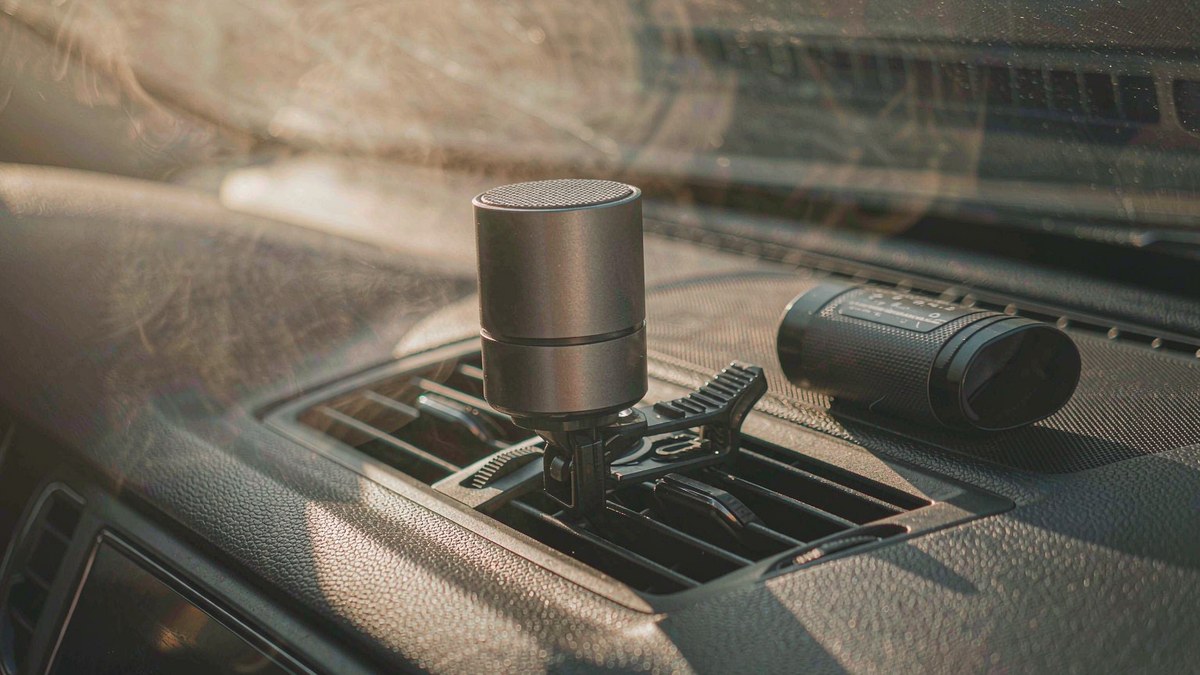
A car dashboard in summer is the most hostile environment in home fragrance. Surface temperatures of 70°C are routine, cabin air can exceed 60°C, and the product sits in direct sun for hours. Formats that perform beautifully on a shelf fail within weeks — and the failure is predictable once you know what heat does.
This article explains thermal acceleration, plastic migration, gel syneresis and clip fatigue, and how to specify a car format that survives a summer.
Table of Contents
- What heat actually does
- How each format fails
- Plastic and fragrance
- Gel behaviour
- Clip and holder fatigue
- Testing at temperature
- Practical guide: specifying for 60°C
- Frequently asked questions
- Conclusion
What heat actually does
It accelerates every reaction: evaporation, oxidation and the migration of fragrance into polymers. A fragrance designed for a three-month life at 20°C may deliver six weeks at 50°C — not because it is weaker, but because the release curve is compressed.
How each format fails
| Format | Typical failure at 60°C | Mitigation |
|---|---|---|
| Liquid bottle | Pressure build-up, weeping cap, colour drift | Vented cap, higher seal spec, dark glass |
| Gel | Syneresis, shrinkage, surface crusting | Gel former selection, sealed cup |
| EVA / polymer clip | Softening, deformation, oil bloom | Higher melting polymer, lower load |
| Hanging card | Rapid dry-out, curl | Laminated stock, barrier pack when stored |
Plastic and fragrance
Fragrance migrates into polymers, and heat increases the rate. The visible consequences are softening, swelling and stress cracking, plus loss of fragrance from the product. ABS and PC are the usual casualties; PP and PET resist better but are not immune at high load.
Gel behaviour
Gels lose water or solvent to the air — syneresis — and heat accelerates it. The result is a gel that shrinks away from the cup, then releases fragrance more slowly because the surface area has changed. A sealed cup with a controlled vent is the usual fix.
Clip and holder fatigue
A clip is a spring. Repeated heating and cooling relaxes the polymer, and after a summer the clip no longer grips the vent vane. Testing ten insertions at room temperature does not predict this; testing ten cycles at 60°C does.
Testing at temperature
Run an eight-week test at 60°C in the intended pack, with weekly checks of weight loss, colour, deformation and odour. Then run a transport simulation: vibration plus heat, cartons stacked as they will ship.
Practical guide: specifying for 60°C
Step 1 — Name the worst case
Dashboard in direct sun, not ambient air. Specify the test temperature from that.
Step 2 — Choose the format for the heat
Gels and sealed cartridges resist better than open liquids.
Step 3 — Specify polymer grades, not just materials
"ABS" is not a specification; the grade and the load matter.
Step 4 — Test the closure under pressure
Venting, seal material and torque at 60°C.
Step 5 — Cycle the clip
Ten insertions at temperature, then check grip.
Step 6 — Record weight loss weekly
It is the simplest proxy for release rate and seal integrity.
Frequently asked questions
How hot does a car interior get?
Air temperature can exceed 60°C and dark surfaces much higher. Design for the dashboard, not the weather forecast.
Does heat make the fragrance stronger or weaker?
Stronger at first, then weaker sooner. The total delivered scent is usually lower.
Why did my vent clip stop clipping?
Polymer relaxation from thermal cycling. Test insertion at 60°C, not at room temperature.
Is a liquid bottle worse than a gel in heat?
For leakage and pressure, usually yes. For initial impact, liquid is stronger.
Can I use the same fragrance as my candle?
The accord, yes; the balance usually needs adjusting for a small, hot volume.
What causes oil bloom on the plastic?
Fragrance migrating into the polymer and exuding at the surface, accelerated by heat and load.
Does packaging help?
Yes. A carton or blister protects the product before sale, when it is most exposed in transit.
What is the shortest credible heat test?
Four weeks at 60°C for screening, eight weeks for a decision. Shorter tests miss the deformation stage.
Conclusion
Car fragrance fails on a schedule set by temperature, and the failures are mechanical as often as chemical. The format, the polymer grade and the seal decide survival.
Design for the dashboard, test at 60°C, cycle the clip and watch weight loss. A car product that passes at room temperature has not been tested.
We invite you to explore our capabilities and discuss your next product line.
You can reach us directly via WhatsApp +86 17324762943
Email: adon@customperfumeoem.com
Website: customperfumeoem.com


