
Water-Containing Fragrance: Preservation and Microbial Risk
Most alcoholic perfumes need no preservative because the ethanol does the work. A water-based mist or room spray has no such protection. This article covers where water comes from, how preservation systems are selected, and what testing actually proves.
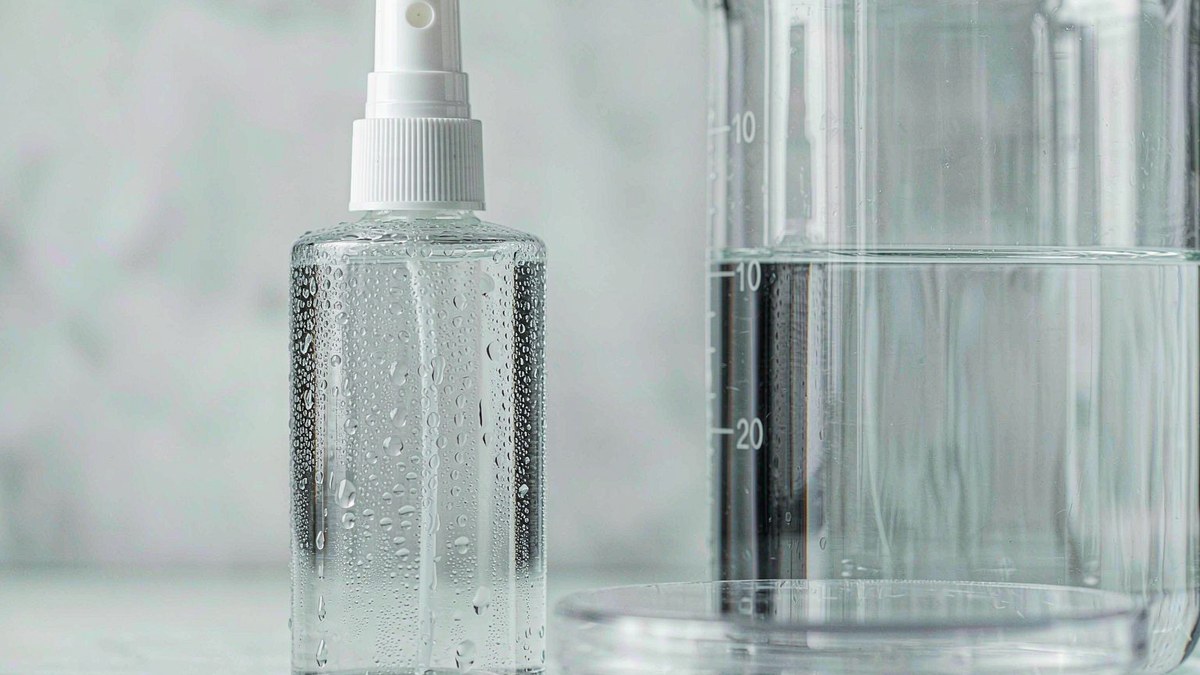
Most alcohol-based perfumes need no preservative, because the ethanol does the work. The moment a formula contains water and little or no alcohol — a linen mist, a room spray, a water-based body mist, a gel diffuser — that assumption disappears, and a microbiological question arrives with it.
This article explains where water enters a fragrance formula, why it changes the preservation requirement, what a challenge test actually shows, and how to avoid the two failures that matter: a spoiled batch and an unpreserved product on a shelf.
Table of Contents
- Where water comes from
- Why water changes the risk
- Preservative systems for fragrance
- The challenge test
- Preservative-free claims
- Manufacturing controls
- Practical guide: formulating a water-containing fragrance
- Frequently asked questions
- Testing regime: what to run and when
- Consumer use and dilution risk
- Market rules that differ
- Conclusion
Where water comes from
Water is rarely an intended ingredient in a home-fragrance formula, and it is frequently present anyway. It arrives through botanical extracts and hydrosols, through a supplier's alcohol specification, through condensate in a stainless vessel, and through the consumer adding tap water to a diffuser.
The last case is the one brands forget: a reed diffuser sold as a concentrate that the consumer dilutes is a product whose final composition is partly outside the factory's control. That has to be addressed in the instructions and in the safety assessment.
Why water changes the risk
Micro-organisms need water to multiply. Alcohol at perfumery strength suppresses them; glycols suppress them partially; a water-based formula at neutral pH with a nutrient load — botanical extracts, proteins, sugars — supports them. Fragrance oils themselves are generally hostile to microbial growth, but the aqueous phase around them is not.
The consequences are visible: cloudiness, a sour or musty note, mould at the air interface, and in the worst case a spoiled batch discovered after filling.
Preservative systems for fragrance
| System | Typical use | Constraint |
|---|---|---|
| Alcohol at reduced strength | Room and linen sprays | Flammability and transport classification |
| Glycol-based preservation | Water-based mists | Partial efficacy; odour and viscosity impact |
| Broad-spectrum preservative blends | Water-containing cosmetics | Restricted lists, pH range, allergen declaration |
| Chelators plus preservative | Improved efficacy at lower dose | Requires formulation testing |
Two constraints shape the choice. Preservatives are among the most heavily restricted materials in cosmetics, with maximum levels and, in some markets, specific labelling. And a preservative must be compatible with the fragrance: some systems lose efficacy in the presence of certain fragrance materials, which is why the test is run on the finished product rather than on the water phase.
The challenge test
A challenge test inoculates the finished product with defined organisms at a known level and measures whether the preservative system reduces them over time. It is performed on the product as sold, in its packaging, at its intended pH.
What it shows: whether the system controls microbial growth under a defined challenge. What it does not show: whether the factory is hygienic. A product that passes a challenge test and is filled into a contaminated vessel still spoils.
Preservative-free claims
"Preservative-free" is a marketing claim with a technical condition attached: the product must still be microbiologically safe. That is achievable in anhydrous formats and in high-alcohol products, and difficult in water-containing formulas unless the water activity is controlled by another means, such as a high glycol or sugar content.
A claim made without a challenge test or a documented water-activity justification is a claim waiting to be tested by a customer complaint.
Manufacturing controls
- Water quality: purified, monitored, with a specification
- Vessel and line cleaning validation, especially after a botanical-containing batch
- Fill temperature and headspace control
- Batch-level microbiological testing at release
- Retained samples held for the shelf life
Testing regime: what to run and when
Water-containing fragrance needs three test streams, and they run on different clocks.
Preservative efficacy is the challenge test: inoculation with defined organisms, measurement over days and weeks, and a judgement on whether the system controls growth. It needs the final formula and, ideally, the final pack.
Product microbiology is release testing: a batch-level check that what was filled is what was intended. It is fast relative to the challenge test but still measured in days, which affects shipping schedules.
Stability runs alongside and covers the physical and chemical behaviour over the declared shelf life, including microbial stability at the end of it rather than only at the start.
Sequencing that avoids rework
- Fix the formula before commissioning the challenge test; a preservative change restarts it
- Run the challenge test in the intended pack, because headspace and closure affect the result
- Start stability at the same time, not after approval
- Keep a retained sample per batch for the full declared life
The common failure is to test a laboratory sample and then change the preservative level for cost, which invalidates the result without anyone noticing until a complaint arrives.
Consumer use and dilution risk
A product's microbiological risk includes what the consumer does with it. A room spray used once is different from a diffuser topped up with tap water, or a mist kept in a bathroom for a year.
Where dilution is part of the use, the instructions become part of the safety case. Specify the water to be used, the volume, and the interval between changes. Where the product is a concentrate, state clearly that it is not to be diluted with anything other than the specified base.
Three practical controls
- Design the pack so that refilling is easy to do correctly and hard to do wrongly
- Put the dilution instruction where it will be read — on the vessel, not only in a leaflet
- Avoid formulations that rely on the consumer maintaining hygiene they cannot see
None of this removes the need for a preserved formula. It reduces the number of ways a correct formula can become an incorrect product in a customer's home.
Practical guide: formulating a water-containing fragrance
Step 1 — Decide whether water is really needed
Many formulas use water for cost or clarity. If it is not needed, removing it removes the risk.
Step 2 — Quantify water from all sources
Including extracts, alcohol and process. State it in the specification.
Step 3 — Choose the preservation route
Alcohol, glycol, preservative blend or controlled water activity, with the reason documented.
Step 4 — Run a challenge test on the finished product
In the final packaging, at the intended pH.
Step 5 — Validate cleaning after botanical batches
Residues feed micro-organisms; cleaning validation is part of the control.
Step 6 — Address consumer dilution
If the product is diluted in use, instructions and the assessment must reflect it.
Frequently asked questions
Does a room spray need a preservative?
If it contains water and little alcohol, it needs a preservation strategy and evidence. A high-alcohol spray may not.
Is a challenge test mandatory?
It is the standard evidence for a preserved water-containing cosmetic, and a safety assessor will normally require it. Requirements vary by market.
Can fragrance oil itself preserve a product?
Some materials are antimicrobial, but they are not a reliable preservation system. Rely on a designed system, not on incidental activity.
Why did my water-based mist turn cloudy?
Possibly microbial growth, possibly a phase or solubility issue. Test both before assuming.
Can I claim preservative-free?
Only with evidence that the product is microbiologically safe without one — typically anhydrous or high-alcohol formats, or controlled water activity.
Does a diffuser need preservation?
A water-free diffuser liquid generally does not. A water-based one does, and consumer dilution changes the equation.
What water should be used?
Purified water with a documented specification, monitored for microbial counts and conductivity.
How long do microbiological results take?
Days to weeks depending on the test. This is one reason water-containing formulas need earlier planning.
Market rules that differ
Water-containing fragrance often stops being a cosmetic and becomes a mixture, which changes the applicable rules entirely. A water-based body mist is a cosmetic; a water-based room spray is generally not.
For the mixture, the obligations are chemical classification and labelling, plus the general product safety rules of the market. For the cosmetic, they are the safety report, the responsible person and notification. Getting the class wrong means preparing the wrong file, which is both expensive and slow to correct.
Where the boundary blurs
- A "linen and body mist" sold as one product — the claim determines the class
- A pillow spray positioned for sleep — a therapeutic claim changes everything
- A diffuser concentrate the consumer dilutes — the diluted product's class may differ from the concentrate's
The practical rule is to classify by use and claim, then design the formula and the label to match, rather than designing a product and choosing a category afterwards. Our ten-market classification guide sets out the distinctions market by market.
Conclusion
Water is the variable that converts a simple fragrance into a microbiological project. The risk is manageable — with a quantified water content, a deliberate preservation route, a challenge test on the finished product and manufacturing controls that match.
Decide whether the water is necessary, choose the system deliberately and test the product as sold. A preserved formula is a design decision; an unpreserved one is a bet.
We invite you to explore our capabilities and discuss your next product line.
You can reach us directly via WhatsApp +86 17324762943
Email: adon@customperfumeoem.com
Website: customperfumeoem.com


