
Vanilla Browning: Antioxidants and Colour Stability in Fragrance
Vanilla discolouration is predictable chemistry with a predictable set of controls. This article explains why vanillin and its relatives brown, how antioxidants and chelators intervene, and how to test colour stability against a standard rather than by eye.
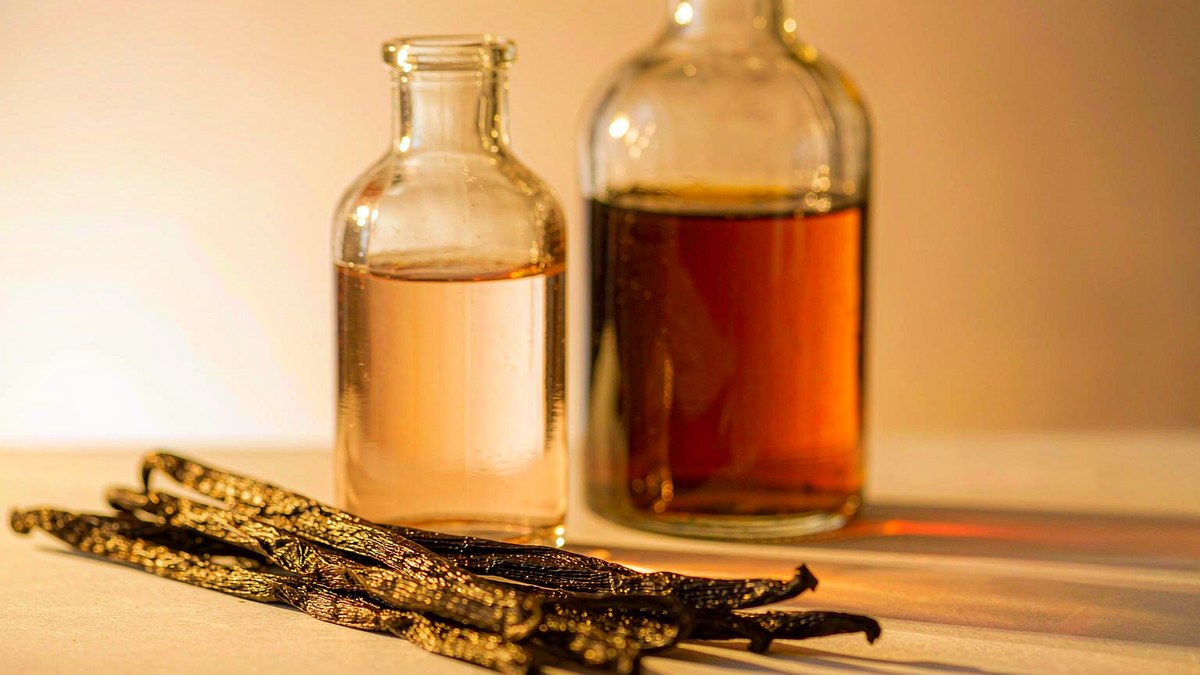
A vanilla perfume that was pale at approval is amber six months later, and a white candle has developed a brown ring at the wick. Neither is contamination. Both are chemistry: vanillin and its relatives oxidise and react, and the rate depends on light, oxygen, temperature and the base they sit in.
This article explains why vanilla-type materials discolour, how antioxidants and chelators intervene, and how to design a product whose colour is still acceptable at the end of its shelf life.
Table of Contents
- Why vanillin browns
- The four accelerators
- Antioxidants and chelators
- Format-specific behaviour
- Masking versus preventing
- Testing colour stability
- Practical guide: designing for colour stability
- Frequently asked questions
- Conclusion
Why vanillin browns
Vanillin is an aromatic aldehyde with a phenolic group. In the presence of oxygen, light and trace metals — particularly iron — it undergoes oxidation and can form coloured products. Ethyl vanillin behaves similarly and is often more intense in both scent and colour development.
The reaction is slow and cumulative, which is why a fresh sample looks stable and a six-month-old unit does not.
The four accelerators
| Factor | Effect | Control |
|---|---|---|
| Light, especially UV | Accelerates oxidation | Amber or opaque packaging, carton |
| Oxygen | Drives the oxidation pathway | Fill height, headspace, closure seal |
| Trace metals | Catalyse the reaction at parts per million | Chelating agent, metal-free handling |
| Temperature | Increases reaction rate | Storage control, transport routing |
Trace metals deserve emphasis: iron contamination from a pump component or a mixing vessel can produce discolouration that no antioxidant will stop.
Antioxidants and chelators
Antioxidants interrupt the oxidation chain; chelators bind metal ions so they cannot catalyse it. They are complementary, and using one without the other often disappoints.
- Common antioxidants are phenolic compounds used at low percentages
- Chelators are typically used at trace levels and are effective against metal-driven discolouration
- Both must be checked against the formula's solubility and against local regulations
- Neither reverses colour that has already formed
Format-specific behaviour
In alcohol-based perfume, the risk is a gradual shift from pale to amber, visible in clear glass. In candles, vanillin discolours wax and can stain the wick; a coloured vessel hides it, a white one does not. In reed diffusers, the liquid darkens and the colour concentrates as the carrier evaporates. In car fragrance, heat accelerates everything.
This means the same formula can be acceptable in an amber bottle and unacceptable in clear glass, and the packaging decision is therefore part of the colour strategy.
Masking versus preventing
Coloured glass, opaque coating, a carton and a shrink sleeve all hide discolouration. They are legitimate solutions if the product is never seen in clear form. The problem arises when a brand markets a "crystal clear" perfume and discovers the claim is only true for ninety days.
Testing colour stability
Accelerated testing at elevated temperature with light exposure is the standard approach: 40-45°C for four and eight weeks, plus a light-exposure arm, measured against a colour standard rather than by eye. Keep an unexposed control. Record the measurement method, because "slightly darker" is not a specification.
Practical guide: designing for colour stability
Step 1 — Decide the colour tolerance at the start
A specification with a reference standard, not an adjective.
Step 2 — Choose packaging that supports the claim
Amber glass, coating or carton if the formula will darken.
Step 3 — Add antioxidant and chelator together
One without the other leaves half the pathway open.
Step 4 — Control metal contact
Pump components, vessels and tooling. Iron at trace levels is enough.
Step 5 — Test with light and heat
Two arms, plus an unexposed control, measured against a standard.
Step 6 — Re-test on reformulation
Changing the vanilla load or the base changes the rate.
Frequently asked questions
Why did my vanilla perfume turn brown?
Oxidation of vanillin, usually accelerated by light, oxygen and trace metals. It is expected behaviour, not a defect in itself.
Can antioxidants stop it completely?
No. They slow it. Packaging and metal control do as much work as the additive.
Is discolouration a safety issue?
Generally not, but it is a quality and consistency issue and can indicate a formula outside specification.
Does brown vanilla smell different?
Often slightly, because the same oxidation changes the aroma profile. This is why colour and odour are tracked together.
Why does my white candle turn brown at the wick?
Vanillin migrating and oxidising at the hottest point. Wick choice and fragrance load affect the rate.
Do chelators work on their own?
They address metal-catalysed discolouration only. Without an antioxidant, the oxygen pathway continues.
How long should a colour stability test run?
Long enough to cover the declared shelf life through accelerated conditions: typically eight weeks at 45°C plus a light arm.
Can I use a coloured bottle and still claim clarity?
Only if the product is genuinely clear when poured. The claim is about the liquid, not the package.
Conclusion
Vanilla browning is predictable chemistry with a predictable set of controls: light, oxygen, metals and heat. A formula does not have to be colour-stable forever; it has to be acceptable for its declared life in its actual package.
Set a colour standard, choose packaging that supports it, use antioxidant and chelator together, control metal contact and test with light and heat. Then the six-month unit matches the sample.
We invite you to explore our capabilities and discuss your next product line.
You can reach us directly via WhatsApp +86 17324762943
Email: adon@customperfumeoem.com
Website: customperfumeoem.com


