
Solid Perfume: Balm, Stick and Wax Formats in Practice
Solid perfume has moved from craft fairs to private-label programmes. This article covers the four solid formats, how a solid is built from carrier, structurant and modifier, the load limits set by texture, and the failures that show up after months on a shelf.
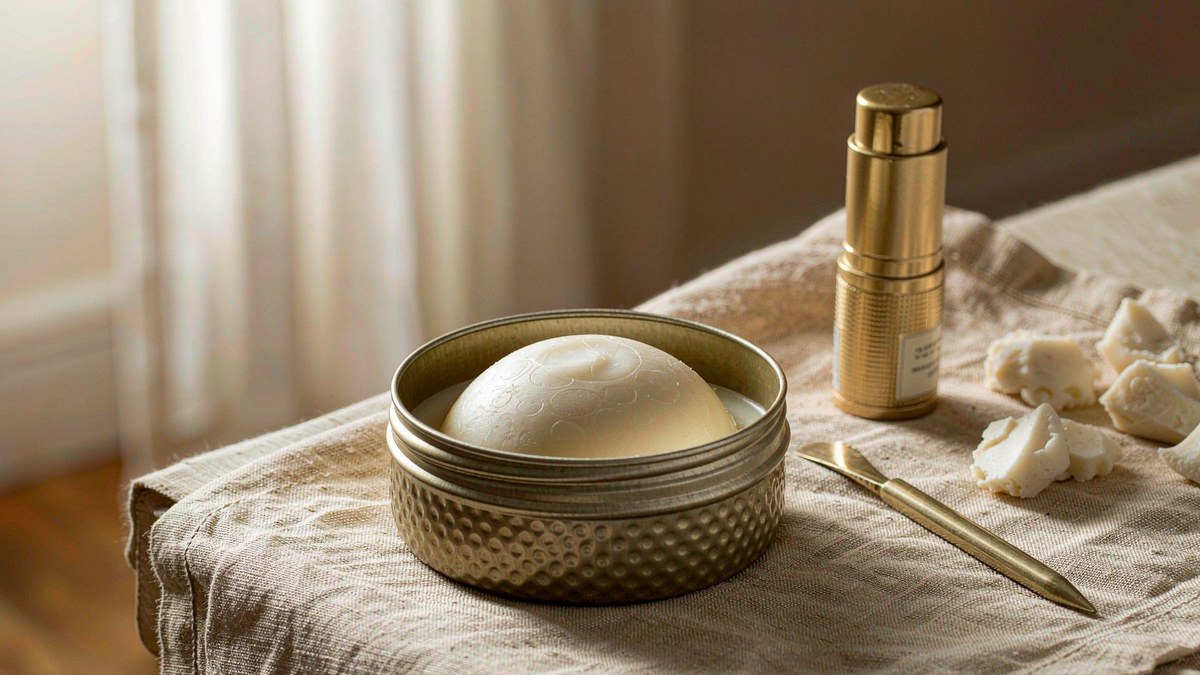
Solid perfume used to be a niche format sold in tins at craft fairs. It is now a serious private-label category: balms, solid sticks and wax-based compacts suit travel, gifting and markets where liquid alcohol is awkward. The formulation is simple in principle and unforgiving in practice, because a solid is judged on texture and glide as much as on scent.
This article covers the structural options for solid fragrance, the materials that carry them, and the failure modes that appear after a few months on a shelf.
Table of Contents
- Four solid formats
- How a solid is built
- Carrier and structurant materials
- Fragrance load and stability
- Five failure modes
- Packaging and application
- Practical guide: developing a solid format
- Frequently asked questions
- Fragrance performance in solids
- Making a solid: pour, cool, cure
- Cost structure of a solid format
- Conclusion
Four solid formats
| Format | Structure | Typical use | Main challenge |
|---|---|---|---|
| Balm in a tin | Oil and wax matrix | Fingertip application | Softening in heat, greasy feel |
| Solid stick | Firmer wax matrix | Direct application like a deodorant | Structural strength, glide |
| Wax melt | High wax, high load, no skin contact | Home fragrance | Not a cosmetic; different release |
| Pressed compact | Powder or wax-bound solid | Gifting, travel | Press strength, crumbling |
How a solid is built
Every solid is a balance of three functions: a carrier that dissolves the fragrance, a structurant that holds the shape, and a modifier that adjusts feel. Change one and the other two need attention.
A typical balm uses a liquid oil or ester as carrier, a wax or butter as structurant, and a small amount of a texture agent. The fragrance load sits on top of that, and it is the variable that most often breaks the structure: too much oil softens the solid, too little leaves the scent weak.
Carrier and structurant materials
- Carriers: esters, fractionated oils, glycols. Choice affects spread, absorption and how the fragrance blooms.
- Structurants: beeswax and synthetic waxes, shea and cocoa butter, fatty alcohols. Each gives a different melt point and surface.
- Modifiers: silica, clays and powders to reduce greasiness; small amounts of silicone alternatives to improve glide.
Vegan claims affect the structurant choice immediately, since beeswax is the traditional option. Synthetic waxes and plant butters can replace it, with different texture outcomes.
Fragrance load and stability
Solid formats tolerate high fragrance loads — often 15-25% — which is one reason they smell stronger than an eau de toilette at the same compound cost. The load also softens the matrix, so the practical limit is set by the texture requirement rather than by the scent.
Stability is the harder question. A balm that is firm at 20°C can slump at 35°C in a handbag, and a stick that glides well in winter can drag in summer. Test at the temperatures the product will actually meet, including a car interior, and test for six months rather than six weeks.
Five failure modes
- Slumping in heat, from an insufficient structurant or an excessive load
- Grittiness from butter crystallisation or an unstable wax blend
- Oil syneresis, where liquid separates and pools on the surface
- Colour migration from a printed tin liner into the balm
- Odour drift from oxidation in a high-oil, high-surface-area product
Packaging and application
The pack is part of the product. A tin needs a liner that does not interact with the balm; a stick needs a mechanism that advances smoothly without binding; a compact needs a press that survives transport. Metal tins are common and bring their own questions: coating compatibility, corrosion at the seam, and recyclability.
Application instructions matter for compliance too. A solid applied with a fingertip has a different exposure pattern from one applied directly, which changes the safety assessment.
Fragrance performance in solids
A solid has almost no top-note bloom. The fragrance is trapped in a matrix that releases slowly at skin temperature, so the opening is quieter and the heart arrives later. That is a feature for some briefs and a problem for others.
Two consequences follow for formula selection. First, accords built on volatile citrus and aldehydes underperform; the same money spent on heart and base materials returns more. Second, projection is lower than an eau de parfum at the same concentration, which is why solids are usually described as intimate rather than diffusive.
What to evaluate
- Intensity at application, at one hour and at four hours on skin
- Whether the accord keeps its identity without the top notes
- Residue and colour transfer on fabric and skin
- How the fragrance behaves as the matrix warms and softens
The evaluation is not "does it smell good on a blotter" but "does it still read as this fragrance after the matrix has done its work".
Making a solid: pour, cool, cure
Solid production is closer to confectionery than to perfumery. The melt is prepared at a controlled temperature, the fragrance is added below the point where volatiles are lost, the product is poured or pressed, and then it cools under conditions that determine both texture and surface.
The three stages that decide quality
Pour temperature controls crystallisation. Too hot and the surface sets glassy and uneven; too cool and the mass thickens before filling, leaving voids.
Cooling rate controls crystal structure. Rapid cooling gives a smoother, sometimes glossier surface; slow cooling can produce the grainy texture that consumers read as a defect.
Curing is the stage most often skipped. A solid that is packed the same day can sweat or deform in transit; allowing a controlled rest period before capping reduces both.
None of these are difficult, and all of them are invisible on a specification sheet. That is why a first production run of solids should be attended, or at least sampled across the batch rather than from the top of one tray.
Practical guide: developing a solid format
Step 1 — Choose the format from the use case
Travel, gifting, home. Each implies a different structure and pack.
Step 2 — Fix the texture target first
Firmness, glide and residue. The fragrance load then follows.
Step 3 — Test at the temperatures of use
35°C minimum, plus a car-interior case if the product travels.
Step 4 — Check for syneresis at six months
Oil pooling is common and appears late.
Step 5 — Test the pack as a system
Liner, coating, mechanism. A good balm in a bad tin fails.
Step 6 — Confirm the regulatory class
Skin-applied solid is a cosmetic; a wax melt is not.
Frequently asked questions
Is solid perfume a cosmetic?
If it is applied to skin for scent, yes, and it needs a safety assessment and compliant labelling. Wax melts and home solids are not cosmetics.
Why does my balm feel gritty?
Usually butter crystallisation or an unstable wax blend. Cooling rate and blend selection are the controls.
How much fragrance can a solid hold?
Often 15-25%, but the texture sets the ceiling. A higher load softens the matrix and can cause syneresis.
Can I make a vegan solid?
Yes. Replace beeswax with plant or synthetic waxes and adjust the texture target; the feel will differ.
Why does the balm slump in summer?
Insufficient structurant or an excessive load for the ambient temperature. Test at 35°C and above.
Do solid formats avoid alcohol regulations?
They avoid alcohol-related transport classification, but they still face cosmetic rules and, for some compositions, flammability questions.
What packaging works best?
Metal tins for balms, mechanism sticks for direct application, and compacts for gifting. Each needs compatibility testing with the formula.
How long should stability testing run?
At least six months at ambient plus accelerated arms, because the failure modes are slow.
Cost structure of a solid format
A solid looks cheaper than a spray because it does not need an alcohol base or a heavy bottle. The arithmetic is more interesting than that.
Fragrance is the largest variable cost, and solids carry a high load — 15-25% is normal. At the same compound price, a solid therefore costs more in fragrance per unit than an eau de toilette at 8-12%. What it saves is the alcohol, the heavy glass and the spray mechanism.
The pack decides the outcome. A printed tin with a simple liner is inexpensive; a compact with a metal hinge, an insert and a mirror is not, and it can cost more than a basic perfume bottle. A stick mechanism falls in between.
Where the margin usually hides
- Fill weight: a 15 g balm feels generous and uses little material
- Pack simplicity: a well-designed tin outperforms a complicated case on both cost and durability
- Freight: light and compact compared with glass, so cost per unit delivered is favourable
- Assembly labour: filling a tin is slower than filling a bottle, which affects high-volume pricing
The format is most competitive in travel and gifting sizes, where a small fill weight and a simple pack combine with a premium retail price.
Conclusion
A solid is a texture problem with a fragrance inside it. The load sets the scent, the structurant sets the shape, and the pack decides whether either survives the journey.
Fix the texture target, test at the temperatures of use, watch for syneresis and treat the pack as part of the product. Then a solid format behaves like the premium object it is meant to be.
We invite you to explore our capabilities and discuss your next product line.
You can reach us directly via WhatsApp +86 17324762943
Email: adon@customperfumeoem.com
Website: customperfumeoem.com


