
The Sampling Economy: Validating a Scent Before You Commit to MOQ
Almost every fragrance programme loses its schedule between approval and the first sample. This article treats sampling as a commercial process: the rounds, their real cost, the brief failures that cause extra rounds, and how to validate with consumers before committing to a thousand pieces.
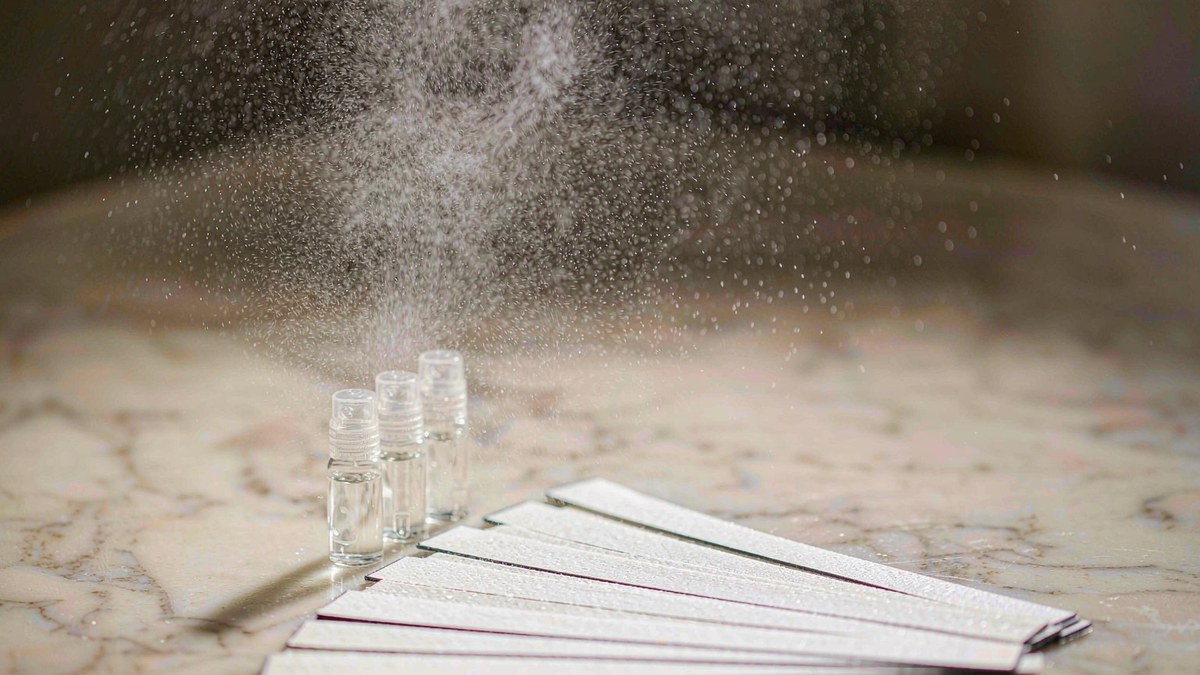
Almost every fragrance programme loses its schedule in the same place: the gap between "we like it" and "we have approved a formula". Sampling looks cheap on a quote — a few vials, a courier fee — yet it is where four to twelve weeks disappear, where a brand falls out of love with its own idea, and where a factory learns whether the buyer can actually make a decision.
This article treats sampling as a commercial process rather than a creative one: how many rounds a normal programme needs, what each round should settle, what a sample costs in time as well as money, and how consumer validation fits before a brand commits to a thousand pieces.
Table of Contents
- What a sample actually costs
- The rounds, and what each one settles
- The brief quality problem
- Validating with consumers before MOQ
- Five ways sampling fails
- Practical guide: running a sampling programme
- Frequently asked questions
- Conclusion
What a sample actually costs
The invoice for a sample is small. The cost is in the calendar. A round typically consumes two weeks: one to compound and macerate, one to ship and evaluate. If a round is spent on the wrong question — testing three accords when the decision was about strength, or evaluating on paper when the product is a candle — the calendar cost is paid and nothing is learned.
The three costs
- Compounding time. A perfumer's hours, plus maceration, which cannot be compressed without changing the result.
- Shipping and duty. Small parcels cross borders slowly, and alcohol-based samples may be restricted by air carriers.
- Decision latency. The interval between receipt and feedback, which is usually longer than either of the first two and entirely within the buyer's control.
The rounds, and what each one settles
| Round | Purpose | Output | Typical duration |
|---|---|---|---|
| Direction | Choose a fragrance family and a reference | Two or three directions on paper or in a simple base | 2 weeks |
| Modification | Adjust strength, sweetness, dryness, longevity | Modified submissions against the chosen direction | 1-2 weeks |
| Application | Test in the actual product and pack | Samples in the intended base, wick, vessel or card | 2-3 weeks |
| Stability and approval | Confirm it survives and is legal | Stability data, allergen calculation, sign-off | 4-8 weeks, runs in parallel |
Three rounds is a normal programme. Two is possible when the brief is unusually precise. Five is usually a symptom of an unclear decision-maker rather than of a difficult fragrance.
The brief quality problem
Most extra rounds trace back to the brief. "Fresh but warm, like a luxury hotel, but not like the one everyone uses" is not a brief; it is an aspiration. A workable brief names a reference product or two, states the family, the intended intensity, the surface it will be evaluated on, the price ceiling for the compound, and the market where it will be sold.
What belongs in the brief
- Product format, dosage and base — alcohol, oil, wax, water, paper
- Two or three reference fragrances, with what you like and dislike in each
- Target consumer, climate and occasion
- Cost ceiling per kilogram of compound, stated honestly
- Restrictions: allergens to avoid, materials excluded by brand policy, market limits
- Decision-maker and decision date
The cost ceiling is the field buyers omit most often, and it is the one that wastes the most perfumer time. A beautiful submission at twice the budget is not a success; it is a round lost.
Validating with consumers before MOQ
A brand team of four is not a market. Before committing to tooling and a production run, a structured test with thirty to fifty target users will surface the failures that internal enthusiasm hides: the scent that reads as "soap", the candle that smells strong cold and weak when lit, the diffuser that is pleasant in week one and invisible by week three.
A cheap protocol that works
Blind-code three candidates plus one control. Test in the format of use — on skin, lit in a room, in a car — and ask for preference, intensity and purchase intent rather than adjectives. Record the answers before discussing them. One afternoon and a modest incentive budget usually prevent a five-figure mistake.
Five ways sampling fails
- Testing on paper only. Paper shows the accord; it does not show performance in wax, alcohol or gel.
- Approving a hand sample. A laboratory sample is not a production batch. Approve the first production run separately.
- Changing two variables at once. A stronger scent and a different base cannot be evaluated together.
- No named decision-maker. Feedback arrives as a committee opinion, and the perfumer cannot act on it.
- Skipping stability. A formula that passes the nose test and fails at 45°C will fail after the packaging is printed.
Practical guide: running a sampling programme
Step 1 — Write the brief with a cost ceiling
Format, dosage, references, restrictions, decision date. One page, agreed by everyone who will judge the result.
Step 2 — Run direction and modification in one block
Ask for two directions and their modifications in a single shipment where possible; it saves a courier cycle.
Step 3 — Move to the real base early
Once the direction is fixed, evaluate in the actual wax, alcohol or oil rather than in a neutral diluent.
Step 4 — Start stability in parallel
Do not wait for the final approval to begin accelerated testing. It is the longest task in the chain.
Step 5 — Test with real users before tooling
Thirty to fifty people, blind-coded, in the format of use. Decide with data, not with the loudest opinion.
Step 6 — Approve a production sample, not a lab sample
Sign off the first article off the line, with the intended components, before mass production begins.
Frequently asked questions
How many sample rounds should I budget for?
Three: direction, modification, application. Add a fourth only if the brief changes materially or the decision-maker changes.
Are samples free?
Rarely beyond the first round. Paid samples are usually closer to production standard and come with a clearer specification, which is worth more than the fee.
Why does my sample smell different from the production batch?
Because a lab sample is compounded in small quantities and often evaluated before full maceration. Approving a production sample from the first run closes that gap.
Can I test a scent on paper before deciding?
For direction, yes. For performance — throw, longevity, interaction with wax or alcohol — no. Paper cannot show how a fragrance behaves in a product.
How long does a modification round take?
Typically one to two weeks including shipping, depending on the change and on how quickly feedback is given.
What is a realistic cost ceiling for a fragrance compound?
It depends on the market position, but the ceiling must be stated in the brief. A perfumer can work to a price; a perfumer cannot guess one.
Should I run a consumer test before ordering?
For a first range, yes. It is the cheapest way to find out that a scent reads as functional rather than luxurious before you commit to packaging.
Do samples need to be declared for shipping?
Alcohol-based samples may be restricted by air carriers and require a dangerous-goods determination. Small quantity does not automatically mean exempt.
Conclusion
Sampling is not a creative interlude between the brief and the purchase order; it is the schedule. Every avoidable round costs two weeks and a decision, and most avoidable rounds are caused by a brief that never named the format, the budget or the person who decides.
Write the brief properly, run three rounds with one variable each, start stability early, and test with real users before tooling. The scent that survives that process is the one worth printing on a box.
We invite you to explore our capabilities and discuss your next product line.
You can reach us directly via WhatsApp +86 17324762943
Email: adon@customperfumeoem.com
Website: customperfumeoem.com


