
Safety Assessment for Oil-Based and Alcohol-Free Perfume Formats
An alcohol-free perfume oil looks simpler to assess and is often the opposite: higher exposure per application, microbiological questions if water is present, and packaging compatibility that is harder to demonstrate. This article covers what changes and where submissions fall short.
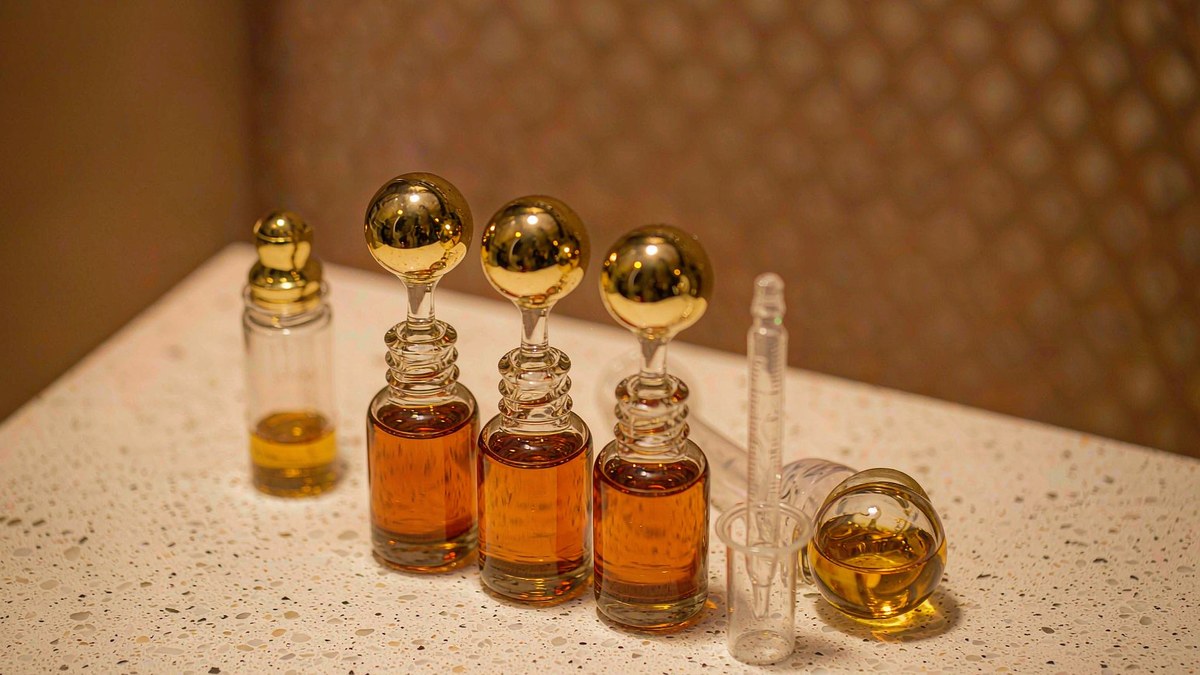
An alcohol-free perfume oil looks simpler to assess than an eau de parfum: no ethanol, no flammability, no spray. In a safety report it is often the opposite. Without alcohol, the formula relies on oils, esters and glycols; the skin exposure per application is higher because the product stays where it is dabbed; and if any water is present, microbiological risk arrives with it.
This article explains what changes in a cosmetic product safety report when the format is oil-based, balm or glycol-based rather than alcoholic, and where submissions most often fall short.
Table of Contents
- Why the format changes the assessment
- Exposure: dose and site
- Water and microbiological risk
- Packaging compatibility with oils
- Allergen arithmetic in a concentrate
- The evidence set
- Practical guide: preparing an oil-based submission
- Frequently asked questions
- Stability and shelf life in oil formats
- Labelling differences for oil formats
- What the assessment costs in time
- Conclusion
Why the format changes the assessment
A safety assessment weighs exposure against hazard. Change the carrier and both sides move. Alcohol evaporates quickly and carries fragrance onto the skin; an oil stays, spreads less, and delivers a higher concentration to a smaller area for longer. A balm adds a wax matrix that must be assessed as part of the product's behaviour, not just as packaging.
The result is that the same fragrance compound, at the same percentage, can produce a different margin of safety in an oil format than in an alcoholic one.
Exposure: dose and site
| Format | Typical application | Exposure driver |
|---|---|---|
| Eau de parfum | Spray, pulse points or larger area | Spray pattern, evaporation, area covered |
| Perfume oil (roll-on) | Dabbed, small area, repeated | Concentration at the site, occlusion under clothing |
| Solid balm | Rubbed, small area | Layer thickness, wax matrix, skin temperature |
| Body oil | Spread over a wider area | Area covered, occlusive effect |
Two of these are frequently under-assessed. A roll-on applied to the wrists and neck several times a day delivers a much higher local dose than a single spray, and a body oil covers an area that changes the calculation entirely. The label instruction is part of the exposure case: "apply generously" and "dab on pulse points" describe different products.
Water and microbiological risk
Alcohol at perfumery concentration is itself antimicrobial, which is why many alcoholic perfumes need no preservative system. Remove it and the preservative question returns in full. If the formula contains any water — including water carried in by a botanical extract — a preservation strategy and a challenge test become part of the file.
Anhydrous products are not automatically exempt: water can arrive through raw materials, through condensate in a manufacturing vessel, or through consumer use. The assessor needs a statement of water content and a justification for the preservation position.
Packaging compatibility with oils
Oils migrate into plastics and can soften, swell or discolour them. A roll-on ball housing, a dropper bulb or a soft-touch coating that performs with an alcoholic perfume may fail with an oil. The assessment needs evidence of compatibility over the declared shelf life, not a short-term observation.
The failure modes are specific: leakage at the ball housing, tackiness on a coated surface, and colour migration from a printed label into the oil.
Allergen arithmetic in a concentrate
An oil format often uses a higher fragrance concentration than an eau de toilette, and it sits on skin rather than flashing off. Both facts push allergens past the declaration thresholds more easily. The calculation still uses the finished product, but the finished product is more concentrated, so a compound that declared cleanly at 12% may need a longer declaration at 25%.
The same arithmetic drives the IFRA evaluation: a category change from a spray to an oil can change which restriction applies. Our classification guide covers the thresholds and the market differences.
The evidence set
- Full formula with carrier composition and any water content
- Finished-product allergen concentrations at the intended dose
- Preservation strategy and challenge test, where water is present
- Stability data including phase behaviour over time and temperature
- Packaging compatibility data for every contact part
- Intended use and application instructions, stated precisely
Stability and shelf life in oil formats
Oil and balm formats fail differently from alcoholic perfumes. Instead of colour drift and top-note loss, the typical failures are phase behaviour and rancidity.
Phase behaviour covers clouding at low temperature, crystallisation of a waxy component, and separation of a carrier from the fragrance. All three appear in transit or in a cold warehouse rather than in the laboratory, which is why the test must include a cold arm.
Rancidity affects carriers containing unsaturated oils. It presents as an off-note at the base, often described as waxy or cardboard, and it accelerates at elevated temperature. Antioxidant strategy and carrier selection are the levers; the assessment simply records that the strategy exists and that data supports the declared life.
A stability protocol that fits the format
- Ambient and 40°C arms for four and twelve weeks
- A cold arm at 4°C, held long enough for crystallisation, then returned to ambient
- Freeze-thaw cycling if the product will ship in winter markets
- Assessment of colour, odour, phase and pack compatibility at each interval
The output is a declared shelf life with a justification, not a single pass or fail. That is what an assessor needs to put a number in the report.
Labelling differences for oil formats
An oil format's label differs from a spray in three places, and each has a compliance consequence.
Application instructions define the exposure case. "Dab on pulse points" and "apply generously to the body" describe different products and require different assessments. Writing instructions for marketing reasons and then assessing the product is the wrong order.
Quantity and format claims such as "concentrated" or "long-lasting" are claims that need a basis, particularly where they imply a performance comparison with an eau de parfum.
Warnings may differ. Flammability warnings belong to alcoholic products; an oil may need different cautions, such as avoiding broken skin or eye contact, depending on the formula.
The practical sequence
Fix the instructions first, assess against them, then design the label so the mandatory information fits without shrinking the type below legibility. Doing it in that order avoids the common outcome where a finished design has no space for an allergen declaration that turned out to be necessary.
Practical guide: preparing an oil-based submission
Step 1 — State the application precisely
Roll-on, dab, body application. The exposure case follows.
Step 2 — Declare the water content
Including water carried by raw materials, and the preservation position that follows.
Step 3 — Calculate allergens at the actual dose
Oil formats run concentrated; thresholds arrive sooner.
Step 4 — Test compatibility with every contact part
Ball housing, dropper, liner, coating. Over the declared life.
Step 5 — Confirm the IFRA category
An oil applied to skin is not the same category as a spray.
Step 6 — Test phase behaviour
Oils can cloud, crystallise or separate at low temperature.
Frequently asked questions
Is an oil-based perfume easier to comply with?
Not necessarily. It avoids alcohol-related transport issues but raises exposure and microbiological questions, and packaging compatibility is harder.
Does an anhydrous product need a preservative?
Usually not, but the assessor needs evidence that water is absent or controlled, including from raw materials and during use.
Do allergen thresholds change for oils?
The thresholds are the same; the concentration in the finished product is higher, so more substances exceed them.
Is the IFRA category different for a roll-on?
It can be, because the category reflects application and exposure. Confirm the category rather than assuming the spray category applies.
Why does my roll-on leak?
Usually a ball housing incompatibility with the oil, or a closure that was specified for an alcoholic product. Test with the actual formula.
Can I use the same CPSR for an oil and an EDP with the same fragrance?
No. Different carrier, exposure and packaging mean a different assessment, even if the fragrance compound is identical.
Does a solid balm need its own assessment?
Yes. The wax matrix changes both release and application, and the packaging is different.
What stability issues are specific to oils?
Phase separation, clouding at low temperature, and rancidity where the carrier contains unsaturated oils.
What the assessment costs in time
An assessor's fee is rarely the constraint; the calendar is. Four inputs dominate it, and three of them are tests.
Stability for an oil format runs longer than for an alcoholic one, because the failure modes are slower. Compatibility with the roll-on housing or dropper needs the actual component, which may not exist until tooling is done. A challenge test, if water is present, adds days to weeks. And the allergen recalculation depends on the fragrance house returning data, which is outside anyone's control.
A realistic plan starts testing at the point the formula and pack are fixed and expects eight to twelve weeks before a report can be signed. Brands that start after the packaging is printed pay for the delay twice: once in freight, once in a reprint if the declaration grows.
Where to compress
Compression belongs in preparation, not in testing. Send the assessor the formula, the pack specification and the intended instructions together, in one package, with the allergen table already calculated at the finished-product dose. Half of the queries an assessor raises exist because one of those four was missing or ambiguous.
Conclusion
Removing alcohol does not simplify the file; it shifts the difficulty from flammability to exposure, microbiology and compatibility. The assessor needs the same rigour applied to a different set of risks.
State the application, declare the water, calculate at the real dose, test every contact part and confirm the category. An oil format is a different product, and it deserves a different report.
We invite you to explore our capabilities and discuss your next product line.
You can reach us directly via WhatsApp +86 17324762943
Email: adon@customperfumeoem.com
Website: customperfumeoem.com


