
Retailers Are Buying Fragrance Direct From Factories: What It Changes for Brands
Retail private-label programmes increasingly bypass the distributor and reach the factory directly. This article sets out the economics of each route, what it does to brand owners and factories, and how to build a range that survives being replicated.
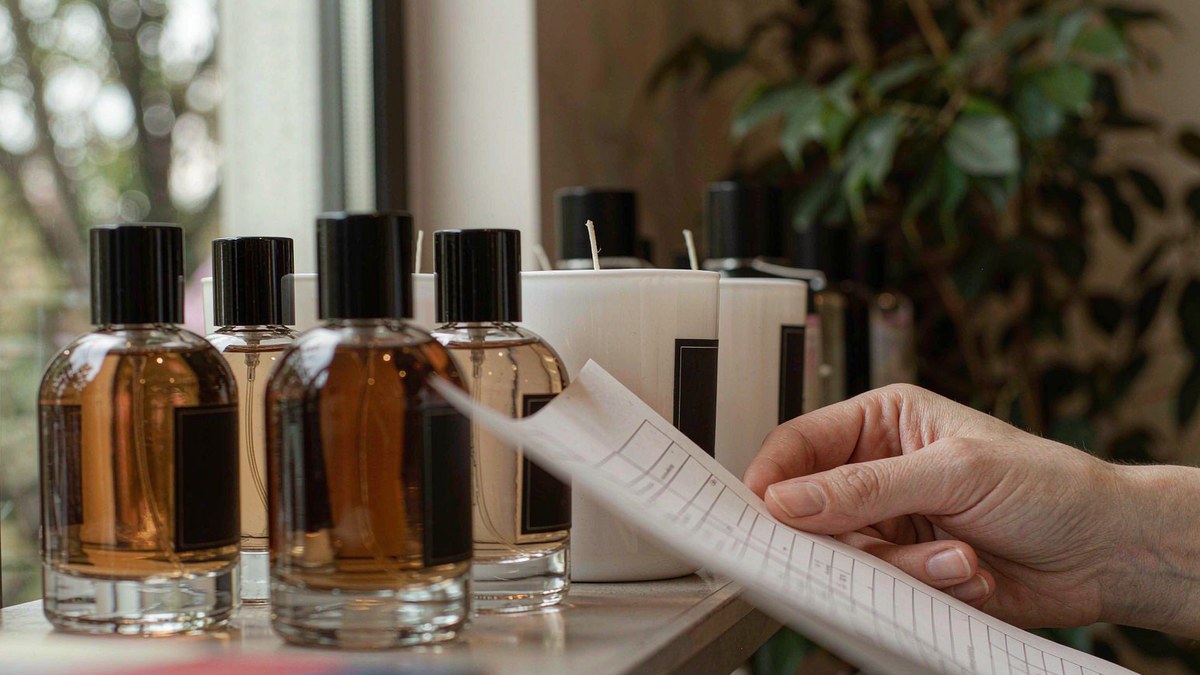
A European grocery chain launches a 12-strong home fragrance range. Five years ago that brief went to a distributor, who took a margin, managed the factory and carried the risk. Today the same brief is more likely to reach the factory directly — through a sourcing platform, a private-label agent, or a category manager who has learned the FOB price of a 200 ml reed diffuser to the cent.
That shift is changing what an OEM is expected to provide, what a brand owner is competing against, and who holds the compliance file. This article looks at the mechanics of direct retail sourcing in fragrance, the economics that drive it, and how both brand owners and factories should respond. It is written from the factory floor outward, because that is where the change lands first.
Table of Contents
- What actually changed
- Why retailers moved to direct sourcing
- The economics: distributor, direct, marketplace
- What it means for brand owners
- What it means for factories
- How to position a range that survives the squeeze
- Practical guide: buying or selling without a middle layer
- Frequently asked questions
- Conclusion
What actually changed
Three things moved at once, and they reinforced each other. Retail buyers became fluent in cost structure: a category manager who has quoted cartons, bottles and fragrance oil separately can no longer be sold a black-box price. Sourcing infrastructure matured: platforms and agents now audit factories, handle deposits, and consolidate shipments for buyers who never visit a plant. And factories learned to sell: the same OEM that once answered only to trading companies now runs an English-language site, a sampling pipeline and a documentation pack.
From programme to tender
The practical form this takes is a tender. A retailer issues a specification — volume, wax type, fragrance direction, packaging format, certification requirements, delivery window — and invites three to six factories to quote. The winner is often not the cheapest; it is the one whose documentation was complete and whose sampling loop was fastest. Buyers have learned that a cheap quote from a factory that cannot produce an IFRA file or a CPSR costs more in the end.
The middle layer has not disappeared
It has moved. Distributors still exist where they add real value: regulatory ownership in a market the factory does not know, inventory holding, small-order consolidation, and design. What has gone is the distributor who added nothing but a purchase order. If your only function is to relay documents, the market is pricing that at close to zero.
Why retailers moved to direct sourcing
Retail private label has been growing because it converts a known cost into a known margin. In fragrance the arithmetic is unusually favourable: the liquid is a small share of the retail price, the bottle is visible value, and the brand can be invented in a season. A retailer that controls the specification controls the margin.
Four drivers
- Transparency of cost. Once a retailer knows that fragrance compound is typically a modest fraction of a diffuser's cost and glass is a large one, it can negotiate the parts separately.
- Speed to shelf. Direct factory contact removes a translation step between marketing intent and production reality, which shortens the sampling loop.
- Compliance ownership. Retailers increasingly want the responsible person, the CPSR and the notification to sit with a named party, not to arrive second-hand through a trader.
- Range discipline. A retailer running 40 stores needs 8 SKUs, not 80. Factories that can run small, frequent programmes profit from that; distributors built on container-load economics do not.
The economics: distributor, direct, marketplace
The table below is a structural comparison rather than a quote. The point is where cost and risk sit, not the numbers on any single programme.
| Route | Who owns the compliance file | Typical order size | Where the cost sits | Main risk |
|---|---|---|---|---|
| Distributor / trader | Usually the distributor, sometimes nominally the factory | Mixed pallets, low MOQ | Margin on goods plus service fees | Documentation stops when the relationship does |
| Direct to factory | Brand or importer, with factory evidence | From one MOQ upward | Tooling, artwork, testing, freight | Brand carries regulatory duty it may not understand |
| Marketplace sourcing | Usually unclear | Very small, trial orders | Platform fee, quality variance | Specification drift between orders |
| Private-label agent | Negotiated case by case | Mid-volume, multi-SKU | Commission, usually 3-8% | Agent loyalty sits with whoever pays fastest |
The hidden cost in every route is the same: the compliance file. A retailer buying direct from a factory in another jurisdiction has to know which entity holds the CPSR, who is the responsible person, and who answers a market surveillance letter eighteen months later. Factories that answer this question clearly win tenders they did not quote lowest on.
What it means for brand owners
The uncomfortable part first: your supplier is now also your competitor's supplier, and possibly your customer's supplier. That is not new in fragrance, but direct sourcing makes it visible and fast. A retailer can take your best-selling format to the same factory and ask for it at a 30% lower price with a simpler cap.
Where differentiation still holds
Not in the bottle, which is stock mould and available to anyone. Not in the fragrance oil at a given price point, which is a commodity accord. Differentiation now sits in three places: a proprietary accord with an exclusivity clause, a packaging construction that requires tooling someone else has not paid for, and a brand story a retailer cannot replicate because it belongs to you rather than to the factory.
What to write into the contract
Fragrance exclusivity for a defined period and territory, tooling ownership with a named holder, a restriction on selling your exact specification to a defined competitor list, and a change-control clause requiring notice before the factory reformulates. Without these, a direct-sourcing market will erode a good range within two seasons.
What it means for factories
Direct retail work is better margin and worse cash flow. Retail payment terms are long, approval cycles are formal, and a specification change after tooling is expensive and usually absorbed by the supplier. The factories that do well have made four changes.
Four operational shifts
- Documentation as a product. IFRA conformity, SDS, COA per batch, GMP evidence and a CPSR pathway are quoted as part of the offer, not promised later.
- Sampling as a service. A two-week sampling loop with a named contact beats a three-week loop with a shared inbox.
- Small-run capability. Quick changeover on filling, short print runs, and a stock-component library that avoids new moulds for a first order.
- Regulatory literacy. Knowing the difference between a cosmetic and a CLP mixture, and being able to say so in writing, is now a sales function.
How to position a range that survives the squeeze
Assume a retailer will eventually source your best format directly. Design a range that still works when that happens. Three rules do most of the work: keep one format that requires tooling you own; keep one accord that is contractually exclusive; and keep the brand experience — the copy, the ritual, the unboxing — in territory a factory cannot copy.
For the underlying compliance split between personal perfume and home fragrance, which is what most retail tenders get wrong, see our ten-market classification guide. For the formats a retailer is most likely to tender, see reed diffusers, scented candles and private-label perfume.
Practical guide: buying or selling without a middle layer
Step 1 — Write the specification before the tender
Volume, fill, fragrance direction, wax or base, vessel, closure, carton, certification, delivery window. A tender without a specification produces quotes that cannot be compared.
Step 2 — Ask who holds the file
Responsible person, CPSR, notification, IFRA conformity, SDS, batch COA. Get a named entity, not "we will provide".
Step 3 — Cost the parts separately
Liquid, component, decoration, carton, testing, freight. Separate quotes reveal where a price is really coming from and give you something to negotiate.
Step 4 — Run a paid sample, not a free one
Free samples are rarely the production standard. A paid sample round with the intended components surfaces the problems while they are still cheap.
Step 5 — Fix the change-control terms
Formula, component and origin changes require notice and re-approval. Without this, your specification drifts between the first and third order.
Step 6 — Audit once, then monitor
A factory audit is a snapshot. Pair it with batch-level COAs and periodic re-checks; the documents tell you what the audit cannot.
Frequently asked questions
Is buying direct from a factory cheaper?
Usually, on the goods. Often not, on the total cost, once tooling, testing, artwork, freight and the internal time to manage a compliance file are counted. The saving is real at volume and thin at first order.
Who is responsible for compliance when a retailer buys direct?
In most markets the entity placing the product on the market is responsible — typically the retailer or its importer, with the factory supplying evidence. That allocation should be written into the contract rather than assumed.
Can a factory sell my formula to someone else?
Only if your contract allows it. Fragrance formulas are protected by exclusivity clauses and trade secrets, not by the act of buying a sample. Without a written restriction, a factory may legally supply a similar accord to another buyer.
Do retailers require a CPSR?
For cosmetic products in the EU and UK, yes — a cosmetic product safety report is a legal requirement and a retailer will ask for the reference. For home fragrance, they will ask for CLP classification and SDS instead.
What is a typical MOQ for a retail private-label programme?
It depends on the component. With stock moulds and stock cartons, 500 to 1,000 pieces is common for candles and diffusers; a custom bottle or a printed rigid box moves the floor to 3,000 or more.
Why do direct factory quotes vary so much?
Because they are not quoting the same thing. Differences usually sit in fragrance load, wax or base quality, component weight, decoration method, carton grade and whether testing is included.
Should a brand owner worry about disintermediation?
Yes, but not by hiding the factory. Protect the range with exclusivity, tooling and brand assets, and assume the format will be replicated rather than that it will stay secret.
How long does a direct retail programme take from brief to shelf?
Sixteen to twenty-four weeks is realistic: two to four weeks of brief and sampling, two to three for component and artwork approval, four to six for production and testing, and the balance for freight and retail intake.
Conclusion
Direct sourcing did not remove a layer so much as redistribute it. Retailers took control of specification and cost; factories took on documentation and sampling as sales functions; brand owners lost the protection of opacity and gained a shorter route to production.
The winners in that arrangement are the parties who can answer three questions without hesitation: who holds the compliance file, what changes between the first and third order, and what stops a competitor from buying the same thing. Answer those in writing, and the missing middle layer stops mattering.
We invite you to explore our capabilities and discuss your next product line.
You can reach us directly via WhatsApp +86 17324762943
Email: adon@customperfumeoem.com
Website: customperfumeoem.com


