
REACH SVHC and SCIP for Fragrance Packaging: What Importers Must Declare
A retail questionnaire asks about SVHC and SCIP, and neither is about the liquid. This article explains the article obligation, how the threshold is calculated per component, and what a supplier declaration must contain to survive a technical review.
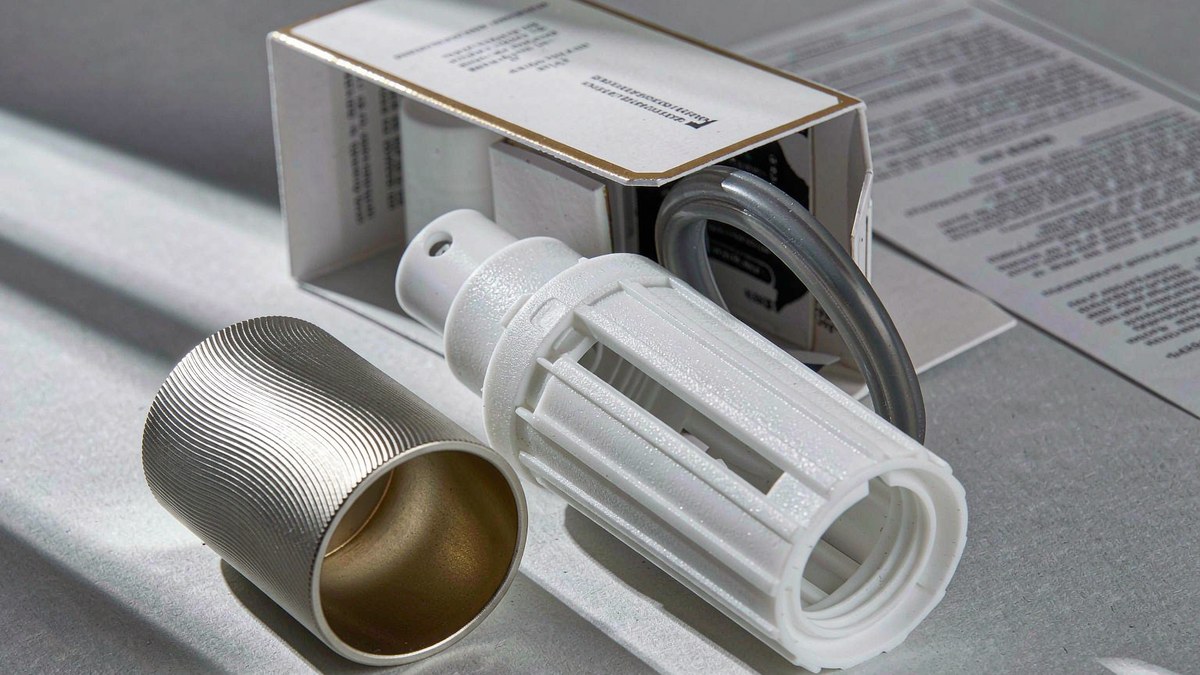
A fragrance importer receives a supplier questionnaire with a section headed "SVHC" and another headed "SCIP". Both ask about the same regulation, neither is about the liquid, and both are about the packaging. Answering them incorrectly is one of the quieter ways a European retail listing stalls.
This article explains what REACH's candidate list means for a fragrance product, when a SCIP notification is required, what has to be declared, and how to build an answer that survives a technical review.
Table of Contents
- SVHC, candidate list and SCIP
- Who has the obligation
- What counts as an article
- The 0.1% threshold
- Where fragrance packaging is exposed
- Building the declaration
- Practical guide: answering an SVHC questionnaire
- Frequently asked questions
- What a usable supplier declaration contains
- SCIP in practice
- Timing: when to start the work
- Conclusion
SVHC, candidate list and SCIP
Under REACH, substances of very high concern are placed on a candidate list, which is updated periodically. Once a substance is on that list, obligations attach to articles containing it above a concentration threshold: communication of safe use information down the supply chain, notification to consumers on request, and — for articles placed on the EU market — a SCIP notification to ECHA.
SCIP stands for Substances of Concern In articles, as such or in complex objects (Products). It is a database, not an approval, and notification is made by the supplier of the article.
Who has the obligation
The obligation sits with the EU supplier of the article: the manufacturer established in the EU, the importer, or the distributor placing it on the market. A brand importing bottles from Asia and filling them in the EU is normally the importer of the bottle and therefore the party with the obligation.
That is the first thing to establish, because the answer determines who has to file and who only has to answer questions.
What counts as an article
An article is an object which during production is given a special shape, surface or design determining its function to a greater degree than its chemical composition. A perfume bottle is an article. A cap is an article. A printed carton is an article. The liquid inside is a mixture, governed by different provisions.
This distinction explains why an SVHC questionnaire asks about the pack and not the perfume: the cosmetic or chemical obligations cover the liquid, and REACH article obligations cover the packaging.
The 0.1% threshold
The communication and notification obligations apply where a candidate list substance is present in an article above 0.1% by weight. The calculation is per article, not per product, and not per homogeneous material in most interpretations — which means a small component with a high concentration can trigger the obligation even if the whole product is well below the threshold.
| Component | Typical exposure | What to ask the supplier |
|---|---|---|
| Glass bottle | Low, but coatings and decals may contain substances | Material declaration, coating chemistry |
| Pump and sprayer | Moderate: plastics, seals, springs | Full material declaration per part |
| Cap or collar | Moderate, especially metal and plated parts | Alloy composition, plating chemistry |
| Label and adhesive | Low but non-zero | Adhesive chemistry, ink system |
| Carton and insert | Low, unless inks or coatings are unusual | Ink and varnish declaration |
Where fragrance packaging is exposed
Three areas recur. Plated metal parts on caps can contain substances that appear on the candidate list. Soft-touch coatings and certain plasticisers in seals are another. Printed inks and adhesives occasionally carry substances of concern, particularly in specialised effects.
The practical lesson is that a bottle is not "just glass": the parts around it, and the treatments on it, are where the declaration work sits.
Building the declaration
A defensible answer has four elements: the candidate list version used, the components assessed, the concentration basis, and the outcome per component with a note of the SCIP reference where one exists. Without a version date, the declaration is unfalsifiable and will be rejected by a careful buyer.
For the wider document set a European buyer will request, see our note on the retail supplier onboarding pack.
What a usable supplier declaration contains
Most supplier letters say the same thing: "our products comply with REACH". That sentence is not a declaration, because it does not identify what was assessed, against which version of the list, or at what concentration.
A declaration that a buyer can work with has five elements.
- Scope: the exact part numbers or article descriptions covered
- Version: the candidate list version and date used for the assessment
- Composition basis: whether the concentration is per article, per homogeneous material, or per component
- Result per part: above or below 0.1% by weight, and the substance named where it is above
- Signature and date: a named person at the supplier, not a department
Where a supplier cannot disclose a substance by name, it can still confirm the threshold result and provide the safe use information. What it cannot do is leave the brand to assume that no substance is present.
The per-part question
A bottle assembly is several articles: the body, the collar, the pump, the dip tube, the cap, the liner. A single declaration covering "the bottle" hides which part carries the substance, and that is exactly what a technical buyer will ask. Ask for the breakdown by part and keep it with the specification.
SCIP in practice
A SCIP notification is a structured dossier: the article identity, the substances present above the threshold, the concentration range, the safe use information and the location of the component within the article. It is filed in ECHA's database and referenced by a number.
Three practical points follow. The first is that the notification belongs to the article, not to the cosmetic product, so one bottle used across ten fragrances needs one dossier rather than ten. The second is that a change of supplier may require a new dossier, because the article is different even if the drawing is the same. The third is that the number should be recorded in the supplier file, because buyers ask for it and a lost reference is expensive to rebuild.
What an auditor asks for
Usually three things: the declaration by part, the SCIP reference where applicable, and the date both were established. A brand that can produce those in one email closes the topic; one that has to go back to three suppliers takes weeks.
Practical guide: answering an SVHC questionnaire
Step 1 — Identify the article supplier
Importer of the bottle and closure, not the brand's marketing entity.
Step 2 — Get per-component material declarations
Not a blanket "REACH compliant" letter. Per part, per material.
Step 3 — Fix the candidate list version
State the date and version the assessment used.
Step 4 — Calculate per article
Concentration in each article, not in the finished product as a whole.
Step 5 — File SCIP where required
And record the reference so it can be quoted in the answer.
Step 6 — Re-run when the list updates
The candidate list changes twice a year in practice. A stale declaration is a liability.
Frequently asked questions
Does SVHC apply to the fragrance liquid?
The liquid is a mixture, governed by different REACH provisions. The article obligations — communication and SCIP — apply to the packaging components.
Is SCIP notification mandatory?
Yes, for articles placed on the EU market containing a candidate list substance above 0.1% by weight, with limited exemptions.
Who files the SCIP notification?
The EU supplier of the article: manufacturer, importer or distributor placing it on the market.
Can I rely on my factory's "REACH compliant" statement?
Only as a starting point. A buyer will want per-component declarations and the candidate list version used.
Does a glass bottle itself contain SVHCs?
Bare glass usually does not, but coatings, decals, plated parts and seals can. The declaration has to cover those parts.
What if a supplier refuses to disclose?
Then you cannot make a defensible declaration, and the exposure sits with you as the importer. Change supplier or change component.
How often does the candidate list change?
Twice a year in practice. Diarise the updates rather than reacting to a questionnaire.
Does this apply to home fragrance packaging too?
Yes. The article obligations are material-based, not product-category based.
Timing: when to start the work
The work is small but depends on other people, which is what makes it slow. A component supplier's declaration may take two weeks to obtain and four to correct; a SCIP dossier requires data that a factory may not have collected.
The practical sequence starts at the component selection stage, not at the retail listing. When a bottle and closure are specified, ask for the material declarations then — the answers influence the choice, and a component with a cleaner declaration is worth a small premium over one that requires a difficult dossier.
The second timing point is the annual candidate list update. Diarise it, re-run the declarations against the new version, and record the date. A brand that answers questionnaires from a three-year-old file is exposed on every substance added since.
A short calendar that works
- At component selection: request per-part declarations
- Before the first order: confirm SCIP position and record references
- At each annual list update: re-run and re-date
- At any component change: treat as a new article
Follow that and the questionnaire becomes a copy-and-send rather than a project.
Conclusion
SVHC and SCIP are not about the perfume; they are about the bottle, the pump, the cap and the carton. The obligation sits with whoever places those articles on the EU market, and the evidence has to come from the component suppliers.
Get per-part declarations, fix the list version, calculate per article and record the SCIP reference. A questionnaire answered that way closes in a day rather than a quarter.
We invite you to explore our capabilities and discuss your next product line.
You can reach us directly via WhatsApp +86 17324762943
Email: adon@customperfumeoem.com
Website: customperfumeoem.com


