
Alcohol, Oil or Water: What the Carrier Does to a Perfume
The same accord behaves differently in alcohol, oil and water. This article compares the three carriers on projection, wear, stability and regulatory route, and shows why the carrier is a formulation decision rather than a packaging one.
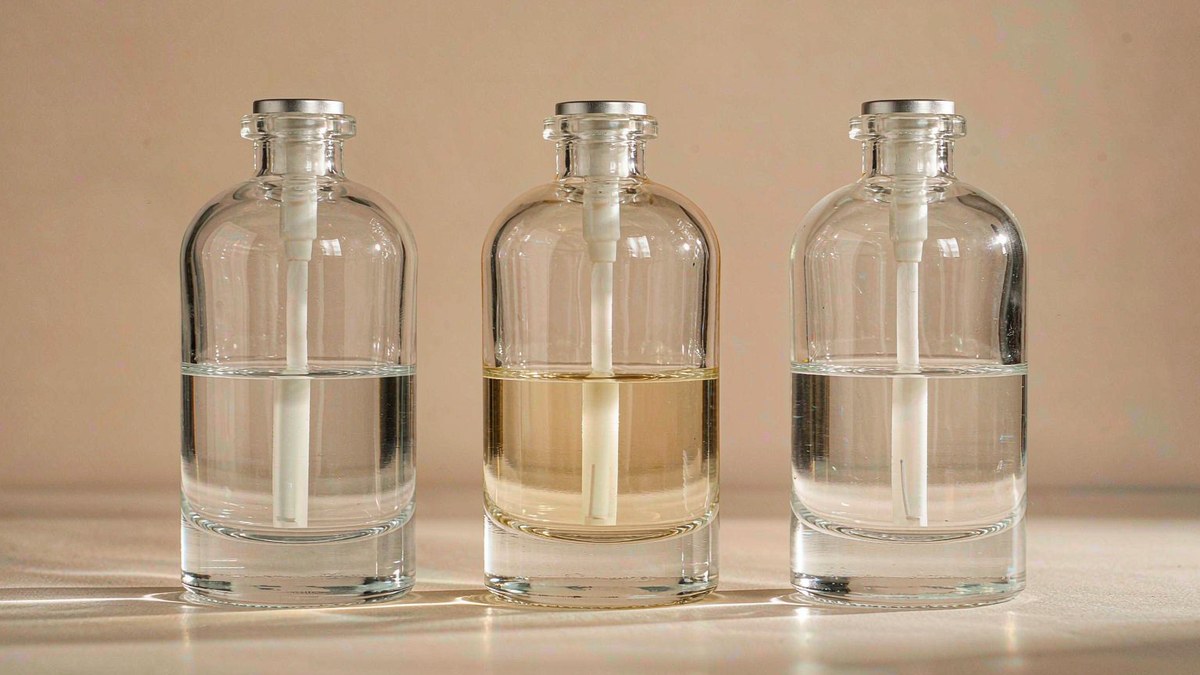
Two perfumes can share an accord and behave like different products. One projects across a room and dies in three hours; the other sits close and lasts all day. The variable is not the fragrance — it is the carrier: alcohol, oil or water.
This article compares the three carriers on projection, wear, stability and the compliance route each one triggers, because the carrier is a formulation decision that quietly determines the file you need.
Table of Contents
- Three carriers, three behaviours
- Alcohol: projection and speed
- Oil: concentration and wear
- Water: the hardest base
- Stability differences
- What each carrier triggers
- Practical guide: choosing a carrier
- Frequently asked questions
- Conclusion
Three carriers, three behaviours
| Property | Alcohol | Oil | Water |
|---|---|---|---|
| Projection | High | Low, close | Medium with solubiliser |
| Wear time | Moderate | Long | Short to moderate |
| Skin feel | Dry, cooling | Rich, occlusive | Light, wet initially |
| Clarity risk | Low | Low | High |
| Microbial risk | Low | Low | High |
Alcohol: projection and speed
Ethanol evaporates quickly and carries fragrance with it, which produces the lift consumers read as "perfume". It also flashes off the top notes fast, which is why an alcoholic perfume changes character within twenty minutes. Alcohol at perfumery strength is hostile to micro-organisms, so preservation is rarely the issue — flammability is.
Oil: concentration and wear
An oil base does not evaporate; it sits on skin and releases slowly. That gives long wear and low projection, and it allows a higher fragrance concentration without the harshness alcohol brings. The trade-off is skin feel and the fact that oil migrates into packaging, so closures and droppers need compatibility testing.
Water: the hardest base
Water requires a solubiliser to hold fragrance, a preservative to hold the product, and careful control of the alcohol-to-water ratio to avoid haze. It is the cheapest carrier per litre and the most expensive to get right, because the failure modes are visible — clouding, separation, microbial growth.
Stability differences
Alcohol-based products fail by colour drift and top-note loss. Oil-based products fail by phase change — clouding at low temperature or crystallising — and by rancidity in unsaturated carriers. Water-based products fail by haze, separation and, if preservation is inadequate, by spoilage. Each failure needs a different stability protocol.
What each carrier triggers
Alcohol brings transport classification and excise treatment. Oil brings packaging migration and, in some markets, different IFRA category treatment. Water brings preservation and microbiological testing. All three remain cosmetic if the product is applied to skin for scent.
Practical guide: choosing a carrier
Step 1 — Decide the sensory target first
Projection and wear are set by the carrier, not fixed afterwards.
Step 2 — Check the market's transport rules
Alcohol content changes dangerous-goods status and freight cost.
Step 3 — Match the fragrance to the base
Top-heavy accords suit alcohol; heavy bases suit oil.
Step 4 — Test compatibility with the pack
Oil attacks some plastics and liners; alcohol attacks some coatings.
Step 5 — Plan the stability protocol per carrier
Different failures, different tests.
Step 6 — Re-calculate allergens at the real dosage
Concentration changes with the carrier, and so does the declaration.
Frequently asked questions
Is an oil perfume stronger than an eau de parfum?
Usually not in projection, but often in wear. It reads closer and lasts longer.
Why does my alcohol-free mist smell weaker?
Water and glycol do not carry fragrance the way ethanol does. The accord usually needs rebuilding, not just redosing.
Does alcohol-free avoid all regulation?
No. It avoids alcohol-related transport issues but remains a cosmetic, and water-based versions add preservation requirements.
Which carrier is cheapest?
Water per litre, alcohol per unit at scale, oil usually the most expensive to formulate well.
Can I use the same fragrance in all three?
The same accord, yes, but the dosage, balance and sometimes the materials change.
Does the carrier affect shelf life?
Significantly. Oil and water bases have failure modes that alcohol does not.
Is oil suitable for hot climates?
It performs well at wear, but the pack must resist heat and leakage. Test at 45–50°C.
What decides projection most?
Carrier volatility first, then fragrance composition, then application amount.
Conclusion
The carrier is not packaging; it is the mechanism by which a fragrance reaches a nose. Choose it for the sensory result you want, then accept the stability and regulatory consequences.
Decide the target, check transport rules, match the accord to the base and test the pack. The same juice in a different carrier is a different product.
We invite you to explore our capabilities and discuss your next product line.
You can reach us directly via WhatsApp +86 17324762943
Email: adon@customperfumeoem.com
Website: customperfumeoem.com


