
Paper-Sponge-Paper: How a Scent Card Holds and Releases Fragrance
A scent card is a reservoir, not a printed sheet. This article compares single-layer and laminated constructions, explains how load per card translates to days of scent, and why sealing matters more than the fragrance itself.
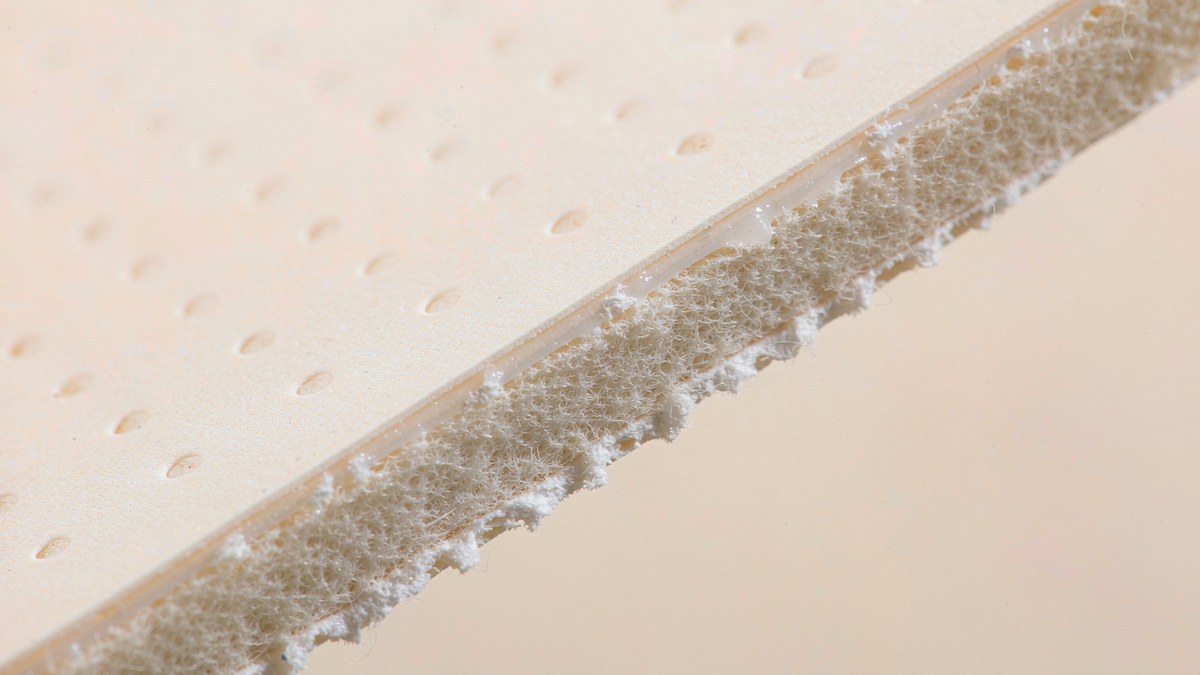
A scent card looks like printed paper. Functionally it is a small reservoir: a substrate that absorbs fragrance, holds it, and releases it slowly through a large surface area. How that reservoir is built decides whether the card smells for two weeks or two months.
This article compares single-layer and laminated constructions, explains the load arithmetic, and shows why the seal matters more than the fragrance choice.
Table of Contents
- Two constructions
- Single-layer card
- Paper-sponge-paper
- Load per card and days of scent
- Release curve
- Sealing and shelf life
- Practical guide: choosing a construction
- Frequently asked questions
- Conclusion
Two constructions
| Property | Single layer | Paper-sponge-paper |
|---|---|---|
| Load capacity | Low | 3–5× higher |
| Release | Fast, front-heavy | Slower, more even |
| Print quality | Direct on absorbent stock | Print on outer paper, unaffected by oil |
| Staining risk | Higher | Lower |
| Cost | Lowest | Moderate |
Single-layer card
A single sheet is impregnated or sprayed. It is cheap and fast to make, and it suits promotional use where the card is expected to live for days. Its weakness is capacity: the same fibre that holds oil also wicks it to the surface, where it marks the print.
Paper-sponge-paper
Two printed outer sheets with a fragrance-holding layer between them. The sponge stores a much higher load, the outer surfaces stay dry enough to print on, and release is mediated by the laminate rather than by the fibre alone. This is the construction behind most retail scent cards.
Load per card and days of scent
Load is expressed in grams per card. A typical hanging card carries 1–3 g; a laminated retail card can carry more. Days of scent follow from load divided by release rate, and release rate depends on surface area, airflow and temperature.
As a planning rule: doubling load roughly doubles life, but only if the construction can hold it without staining.
Release curve
All cards are front-heavy: the first three days deliver more than the next three weeks. Lamination flattens the curve, which is why a laminated card can feel weaker on day one and stronger on day twenty.
Sealing and shelf life
Fragrance migrates through paper and most films. Without a barrier pack — metallised film or a coated pouch — the card is at its best on the day it is packed. The seal is the difference between a twelve-month shelf life and a three-month one.
Practical guide: choosing a construction
Step 1 — Decide the intended life
Days for a promotional card, weeks for a retail SKU.
Step 2 — Match construction to load
Single layer for low load, laminated for anything above about 1.5 g.
Step 3 — Test stain resistance on the printed surface
At 40°C, for a week, on the actual stock.
Step 4 — Specify the barrier pack
Film or pouch, with a seal integrity check.
Step 5 — Measure release at fixed intervals
Day 1, 7, 14, 28, in the same room.
Step 6 — Keep a sealed reference
To compare later production against the approved standard.
Frequently asked questions
How long does a scent card last?
Two to six weeks once opened, depending on load and construction. Sealed, up to twelve months.
Why does my card stain?
Load above what the substrate can hold, or a single-layer construction used for a high load.
Is a thicker card better?
Not necessarily. Thickness helps presentation; capacity comes from the fragrance-holding layer.
Can I print on the scented layer?
On a laminated construction the print sits on outer sheets, so print quality is unaffected.
Does the fragrance need to be different for paper?
Usually yes — top-heavy and diffusive accords perform better on a large passive surface.
What packaging preserves it best?
A metallised film or coated pouch, sealed, with minimal headspace.
Are scent cards recyclable?
Mixed constructions are harder to recycle. Check what the local stream accepts before making a claim.
How do I compare two suppliers' cards?
Same room, same distance, weighed at intervals. Load declarations alone are not comparable.
Conclusion
A scent card is a reservoir with a release curve, and the construction sets both. Single layer is a promotional tool; laminated is a retail product.
Decide the life, match the construction, test staining, specify the barrier pack and measure release at intervals. The fragrance only performs as well as the reservoir holds it.
We invite you to explore our capabilities and discuss your next product line.
You can reach us directly via WhatsApp +86 17324762943
Email: adon@customperfumeoem.com
Website: customperfumeoem.com


