
IFRA Conformity vs Market Compliance: Building a Certificate File Buyers Accept
An IFRA certificate is filed and the compliance question is assumed closed. It is not. This article separates what IFRA conformity proves from what market compliance requires, and sets out the four-layer file that survives a technical review.
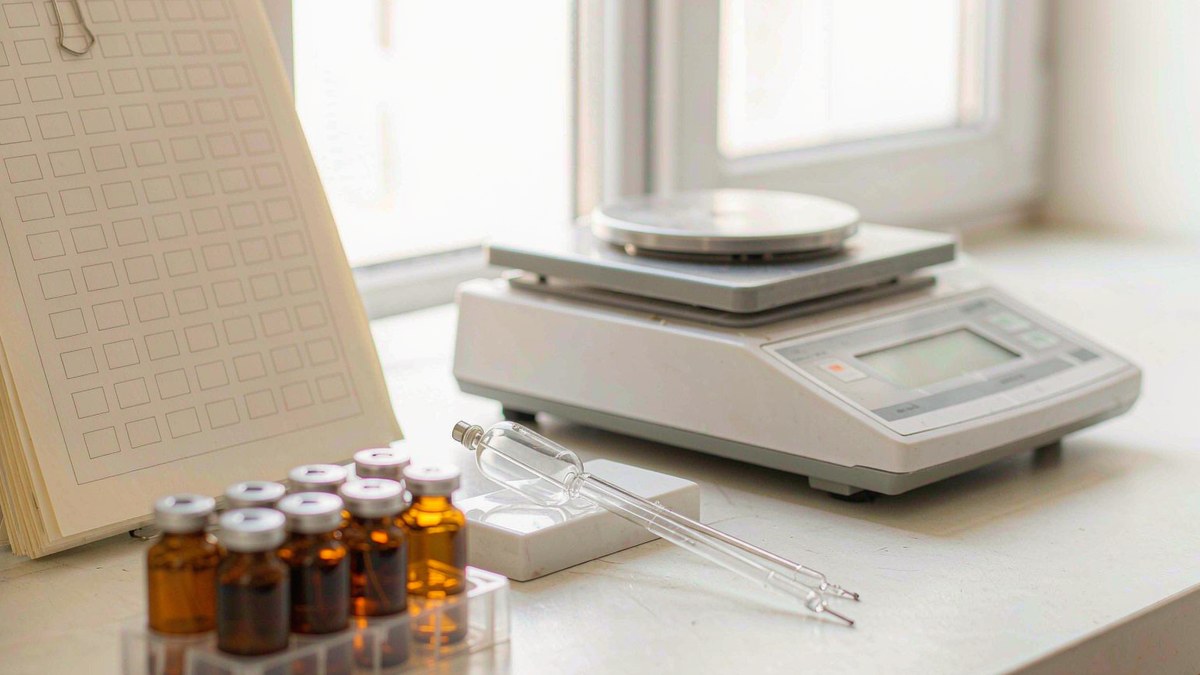
An IFRA certificate arrives with a fragrance order and is filed. The buyer believes the compliance question is closed. Six months later a retailer's technical team asks a different question: does the finished product, at the dose actually used, in the pack actually shipped, meet the allergen declaration rules and the restriction limits of the market it is sold in? The certificate does not answer that, and it was never meant to.
This article explains what IFRA conformity actually covers, where it stops, and how to build a certificate file that a technical buyer, a retailer or a notified body will accept without a second round of questions.
Table of Contents
- What IFRA conformity is
- Where it stops
- The five gaps buyers find
- Building a file that survives review
- What to write on a spec sheet
- Practical guide: assembling a certificate file
- Frequently asked questions
- Conclusion
What IFRA conformity is
IFRA standards are industry self-regulation. A fragrance house assesses a compound against the restrictions applicable to its use category — the category depends on where the product is applied and how much exposure it creates — and issues a certificate stating that the compound, used within a stated dosage, conforms.
That is genuinely valuable. It is the only industry-wide system that quantifies exposure and restricts materials per category, and it gives a brand evidence that a perfumer considered phototoxicity, sensitisation and systemic exposure. It is simply not a legal compliance document for any market.
Where it stops
IFRA conformity does not establish that a product may be sold. Four things sit outside it.
- Market-specific restrictions. The EU annexes, the Canadian Hotlist, Korean restrictions and Chinese requirements differ from the IFRA list, and a compound compliant with one may breach another.
- Labelling. Allergen declaration thresholds, hazard statements, warnings and language requirements are national law, not IFRA.
- Product classification. IFRA says nothing about whether a product is a cosmetic, a mixture or a consumer chemical, and therefore nothing about which regime applies.
- Safety assessment. A cosmetic product safety report considers the finished product — packaging, exposure, microbiological quality — not only the fragrance.
The five gaps buyers find
| Gap | What is missing | What closes it |
|---|---|---|
| Certificate against the wrong category | Assessment for a candle, product is a body mist | Re-issue against the correct IFRA category and dosage |
| Concentrate percentages | Allergens stated in the compound, not the finished product | Recalculated declaration at actual dosage |
| Outdated amendment | Certificate predates the current IFRA amendment | Current version, dated after the last reformulation |
| Formula drift | Supplier reformulated without notice | Change-control clause and version tracking |
| No finished-product safety report | Fragrance assessed, product not | CPSR for cosmetics, CLP for mixtures |
The first gap is the most common and the easiest to prevent: a certificate is only meaningful for the use category and dosage it names. A candle certificate used to support a body mist is not an error of judgement by the buyer; it is a missing question by the seller.
Building a file that survives review
A complete file has four layers, and each answers a different question.
Layer 1 — What is in it
Full formulation with CAS and INCI, allergen concentrations in the finished product, restricted substance levels, and the version of the formula the documents refer to.
Layer 2 — Why it is allowed
IFRA conformity certificate for the correct category and dosage, plus a market-by-market check against the restriction lists of the destinations you actually sell into.
Layer 3 — Why it is safe
A cosmetic product safety report for cosmetic products, prepared by a qualified assessor, with exposure calculation and packaging considered. For mixtures, a CLP classification with the hazard label it produces.
Layer 4 — What was actually made
Batch COA, manufacturing date, batch code and the traceability link from batch to formula version. This is the layer that auditors ask for and sellers most often lack.
What to write on a spec sheet
Avoid the phrase "IFRA certified". Nothing is certified in that sense; the correct formulation is "IFRA conformity certificate available for category X at dosage Y, issued against the current amendment". Precision here prevents a buyer from assuming a legal guarantee that does not exist.
For the classification question that decides which of these layers applies to a given SKU, see our ten-market classification guide. For notification mechanics, see what a CPNP record proves.
Practical guide: assembling a certificate file
Step 1 — Fix the category and dosage first
Write them into the purchase specification. Everything in the file depends on those two facts.
Step 2 — Request the finished-product allergen table
Concentrations at the dose used, not percentages in the compound.
Step 3 — Check the amendment date
The certificate must post-date the last reformulation and reflect the current standard.
Step 4 — Map to each destination
A short table: market, restriction list checked, allergen rule, label consequence.
Step 5 — Add the safety report
CPSR for cosmetics, CLP classification for mixtures. Different professionals, different documents.
Step 6 — Link batch to version
Batch code, formula version, COA. Without this, the file describes a product that may not be the one in the box.
Frequently asked questions
Is an IFRA certificate enough to sell perfume in the EU?
No. You also need a responsible person, a cosmetic product safety report, a product information file, CPNP notification and compliant labelling. IFRA covers the fragrance's use restrictions only.
Does IFRA replace REACH or CLP?
No. REACH and CLP are law; IFRA is industry self-regulation. For home fragrance, CLP classification and hazard labelling apply regardless of IFRA conformity.
What is an IFRA category?
A use class that reflects where a product is applied and how much exposure it creates. The same compound can be compliant in one category and not in another, which is why the certificate must name the category.
Why does the certificate name a dosage?
Because restrictions are exposure-based. A compound compliant at 15% may exceed a limit at 25%, so the certificate is only valid at or below the stated dose.
Do I need a new certificate when the fragrance is reformulated?
Yes. Reformulation invalidates the previous assessment, and the new certificate should be dated after the change.
Can a supplier refuse to give the full formulation?
Suppliers often disclose to a safety assessor or a responsible person under confidentiality rather than to the brand directly. That is normal, but the information must reach whoever prepares the safety report.
Is an allergen declaration required for candles?
Not under cosmetic rules, because a candle is not a cosmetic. The obligations come from chemical classification, consumer product safety and any voluntary retail standard instead.
How long should the file be kept?
For cosmetics in the EU, the product information file is kept for ten years after the last batch is placed on the market. Other documents follow local retention rules, and retailers often impose their own.
Conclusion
An IFRA certificate answers one question well: was this compound assessed against industry restrictions for this use? It does not answer whether the product may be sold, labelled as it is, in the market it is going to.
Build the file in four layers — contents, permission, safety, batch — and keep the category and dosage explicit. That is what turns a certificate into a compliance file a technical buyer will accept on first review.
We invite you to explore our capabilities and discuss your next product line.
You can reach us directly via WhatsApp +86 17324762943
Email: adon@customperfumeoem.com
Website: customperfumeoem.com


