
Gulf Fragrance Demand: What Saudi and UAE Buyers Require From an OEM Partner
The Gulf buys fragrance differently: oil formats, generous diffusers, gifting logic and a religious calendar. This guide covers the formats that sell, the compliance gates, heat testing and how to plan capacity around Ramadan.
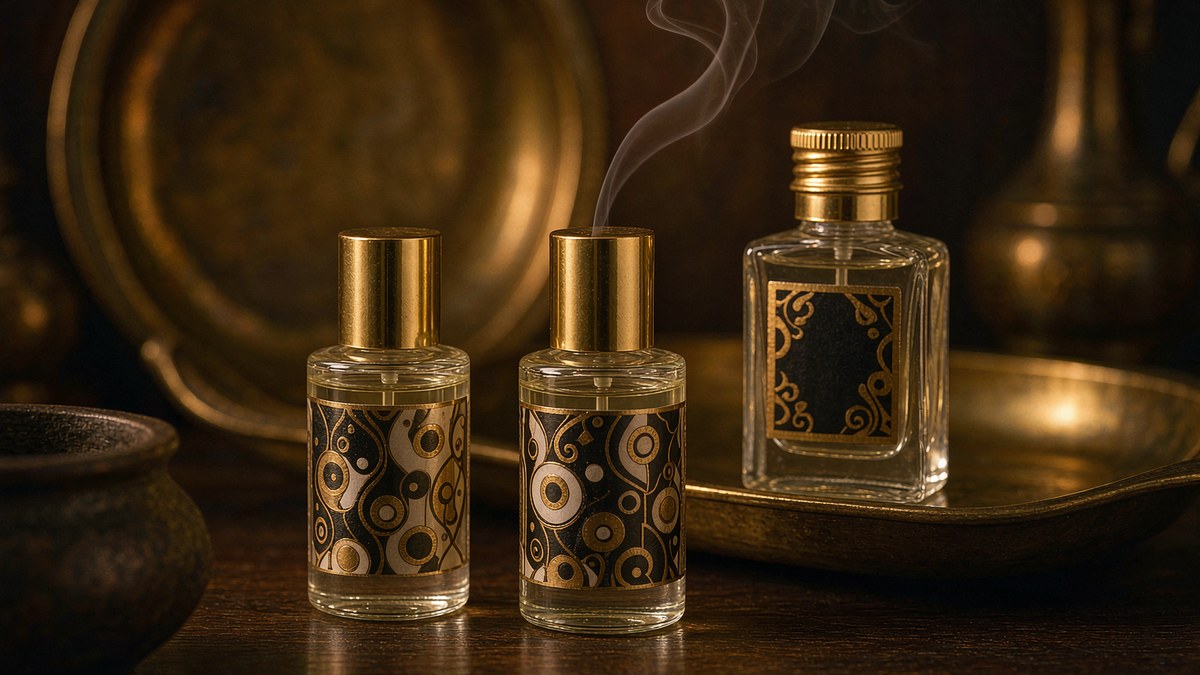
A buyer in Riyadh is not shopping for the same product as a buyer in Hamburg. The fragrance may share a family — oud, amber, rose — but the format, the alcohol content, the pack, the gifting logic and the regulatory gate are different, and a factory that treats the Gulf as "Europe with Arabic labels" will lose the order in the sampling round.
This article sets out what Saudi and UAE buyers now expect from an OEM partner: the product forms that sell, the compliance steps that must exist before a shipment lands, what heat does to a fragrance in transit and on a shelf, and how the Ramadan and Eid calendar reshapes a production year. The regulatory detail is dated to official sources reviewed on 7 November 2026 and should be re-confirmed per shipment.
Table of Contents
- Why the Gulf behaves differently
- Formats that sell, and why
- The compliance gates
- Heat: the constraint nobody quotes for
- The Ramadan and Eid calendar
- Saudi Arabia and the UAE compared
- Practical guide: preparing a Gulf-ready range
- Frequently asked questions
- Conclusion
Why the Gulf behaves differently
Fragrance in the Gulf is used socially and domestically in ways that European market categories do not capture. It is applied to guests, to clothing, to the home before visitors arrive, and given as a gift at religious and family occasions. Consumption is frequent, formats are generous, and presentation carries as much weight as the scent itself.
Three consequences follow for an OEM. First, oil-based and alcohol-free formats matter far more than in Europe, because they suit skin, fabric and long wear in heat. Second, home fragrance is a hosting product, not a wellness product, which changes both the pack and the copy. Third, gifting is structural rather than seasonal — a boxed set is a normal SKU, not a December promotion.
Formats that sell, and why
The range a Gulf buyer asks for usually includes formats that a European catalogue treats as niche. Concentrated perfume oils, attar-style roll-ons, incense and bukhoor, and generous home diffusers all sit in the mainstream.
| Format | Why it works in the Gulf | OEM implication |
|---|---|---|
| Perfume oil / attar roll-on | Long wear without alcohol, applied to skin and clothing | Oil base selection, viscosity, glass roll-on quality, leak-proof closure |
| Eau de parfum, high concentration | Acclimatised to strong projection and oud-forward accords | Stability at 18-20% concentration in high ambient temperature |
| Home diffuser, 200-500 ml | Hosting and majlis scenting; refills are normal | Larger vessels, higher fragrance load, heat-stable base |
| Bukhoor / incense | Cultural, daily use, gifting | Different production line and regulatory class from liquid fragrance |
| Gift sets | Occasion-driven, presentation-led | Rigid boxes, inserts, foil, multi-SKU kitting |
The mistake brands make is to take a European eau de parfum, relabel it, and expect it to perform. In 45°C ambient heat, top notes flash off faster, the perceived projection changes, and a formula tuned for a temperate market reads as thin. Reformulating for the climate is a technical exercise, not a marketing one — the same reason a candle wick is chosen for the wax and the vessel rather than for the brand.
The compliance gates
Both markets treat skin-applied fragrance as a cosmetic, but the route to shelf differs. In Saudi Arabia, SFDA administers cosmetics, a licensed local importer handles product listing through GHAD and the shipment application through FASEH, and Arabic labelling is required. In the UAE, federal standards, the emirate authority and the sales channel all apply together, and Dubai uses the Montaji system for consumer product evaluation and registration, with separate import and re-export permitting.
What the file must contain
- Full formulation with allergen concentrations in the finished product
- Manufacturer information, GMP evidence and batch coding
- Arabic label artwork with product name, ingredients and warnings as required
- Conformity documentation for the specific consignment, confirmed with the importer
- Safety data sheet, and a dangerous-goods determination for alcohol-based lines
Do not assume a conformity certificate is mandatory for every product, or that a Dubai registration covers the other emirates. Both questions are answered per product and per authority, and the importer is the party who confirms it. Our ten-market compliance guide sets out the wider framework, including how a therapeutic claim converts a perfume into a drug.
Heat: the constraint nobody quotes for
A container sitting on a Jebel Ali quay in August, or a carton in the back of a delivery van in Riyadh, will exceed 50°C. That temperature does three things to a fragrance product: it accelerates degradation of citrus and aldehyde top notes, it softens some waxes and deforms candles, and it raises pressure inside any sealed vessel, which is where leaks and weeping caps come from.
What to test before quoting
Run accelerated stability at 45°C and 50°C for four and eight weeks, in the actual pack, and check colour, odour and viscosity. Then run a transport simulation: vibration plus heat, cartons stacked, closures torqued to specification. A diffuser that passes in a 22°C lab and leaks in a 48°C container is a recall waiting for a shipping season.
Design responses that cost little
- Choose closures with a proven seal at temperature, not the cheapest cap in the catalogue
- Specify a higher melting point wax for candles sold in the Gulf
- Avoid glass shapes with thin shoulders that stress under thermal cycling
- Use cartons and inserts that hold the vessel vertically rather than allowing it to lie on its side
The Ramadan and Eid calendar
Gulf retail demand is not flat. It peaks before Ramadan and again before Eid al-Fitr and Eid al-Adha, with gifting concentrated in the last two weeks before each. Working backwards from a shelf date of ten days before Ramadan, production must land four to six weeks earlier, sampling must finish two months before that, and the brief must be settled before the previous season's sell-through is even clear.
Two practical consequences. First, capacity in the eight weeks before Ramadan is the scarcest resource in the industry; buyers who book late pay for air freight. Second, artwork approval is the usual bottleneck, because Arabic copy and layout review adds a round trip that European programmes do not have budgeted.
Saudi Arabia and the UAE compared
| Item | Saudi Arabia | UAE |
|---|---|---|
| Regulator | SFDA | Federal standards plus emirate authority (Dubai Municipality for Montaji) |
| Local entity | Licensed importer required | Licensed importer, emirate-specific processes |
| Product listing | GHAD; shipment via FASEH | Montaji registration for consumer products in Dubai |
| Label language | Arabic required | Arabic required, plus channel requirements |
| Alcohol-based lines | Confirm licensing and transport requirements early | Same, with additional emirate-level considerations |
| Typical first order | Often larger, gifting-led | Often broader assortment, tourism-led |
Practical guide: preparing a Gulf-ready range
Step 1 — Reformulate for climate, not for translation
Test the accord at 45-50°C in the final pack. Adjust top-note load and fixative balance rather than adding more fragrance.
Step 2 — Choose the format mix deliberately
Oil and alcohol-free formats for skin, generous diffusers for the home, boxed sets for gifting. Do not port a European range unchanged.
Step 3 — Fix the label in Arabic early
Commission the Arabic artwork at the sampling stage. Layout and copy review is the most common cause of a missed season.
Step 4 — Confirm the listing route with the importer
GHAD and FASEH in Saudi Arabia; Montaji in Dubai; separate confirmation for other emirates. Get the sequence in writing before production.
Step 5 — Validate the closure at temperature
Leak testing at 50°C plus transport simulation. A leaking cap destroys a gifting range faster than a wrong note.
Step 6 — Book capacity against the religious calendar
Reserve production slots three months before Ramadan. Late bookings convert margin into air freight.
Frequently asked questions
Is perfume a cosmetic in Saudi Arabia and the UAE?
Skin-applied fragrance is generally treated as a cosmetic in both. Claims of therapeutic benefit, such as helping sleep, can reclassify the product as a drug, which changes the entire approval route.
Do I need Arabic labelling?
Yes for both markets, and the label must carry the information the authority requires for the specific product. Arabic artwork should be approved before production, not applied at the port.
Can I ship alcohol-based perfume to the Gulf?
It is possible, but licensing, storage, fire-safety, airline and carrier requirements must be confirmed before booking. Many brands choose alcohol-free oil formats partly to avoid that complexity.
Does a Dubai registration cover Saudi Arabia?
No. Each market has its own authority, listing route and documentation. A Dubai registration is not recognised in Saudi Arabia, and other emirates do not automatically follow Dubai's process.
Why does my perfume smell different after shipping to the Gulf?
Heat exposure during transit and storage accelerates degradation of volatile top notes and can shift the perceived balance. Accelerated stability testing at 45-50°C in the final pack is the standard preventive measure.
What fragrance families perform best?
Oud, amber, rose, musk and resinous accords dominate, with a strong preference for long wear. Fresh citrus-led compositions exist in the market but are usually built with a heavier base than their European equivalents.
When should I start a Ramadan launch?
Work backwards: shelf ten days before Ramadan means production four to six weeks earlier, sampling two months before that, and a settled brief before that. In practice a Ramadan range is planned in the previous season.
Are gift sets treated differently from single products?
They are kitted assemblies, so the components each need their own compliance position, and the set may classify differently for tariff purposes. Plan the kitting line and the box artwork together.
Conclusion
The Gulf rewards factories that treat it as a climate and a calendar, not as a translation task. Reformulate for heat, choose formats that match how fragrance is actually used, get Arabic artwork approved before production, and book capacity against Ramadan rather than against your own planning cycle.
None of that is exotic. It is the same discipline a serious OEM applies in any market, applied to a different set of constraints. The brands that win here are the ones whose supplier asked about the container temperature before quoting the fragrance.
We invite you to explore our capabilities and discuss your next product line.
You can reach us directly via WhatsApp +86 17324762943
Email: adon@customperfumeoem.com
Website: customperfumeoem.com


