
Freight and Container Economics for Fragrance Liquids in 2026
Fragrance is one of the least freight-efficient categories in consumer goods: heavy, fragile and often classified as dangerous goods. This article explains what determines weight versus volume limits, what UN 1266 adds to cost, and how to budget per unit.
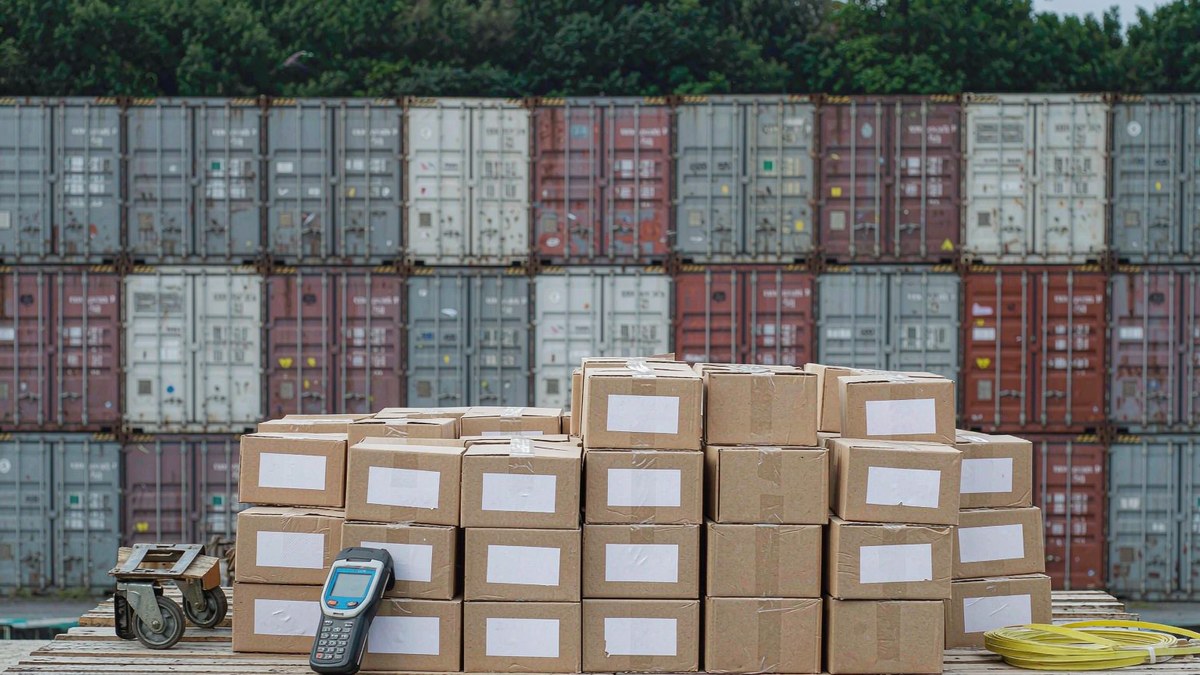
Fragrance is one of the least freight-efficient categories in consumer goods. It is heavy, it is fragile, and a meaningful share of it is classified as dangerous goods. A pallet of candles weighs more than a pallet of apparel, a container of glass bottles can cube out at half its payload, and an alcohol-based perfume booked as general cargo can be refused at the terminal on the morning of loading.
This article sets out the commercial mechanics of moving fragrance liquids and home fragrance in 2026: what determines whether a shipment is weight-limited or volume-limited, what the dangerous-goods status adds to cost, how pallet and carton design changes the arithmetic, and how to build a freight budget that holds when rates move. It is written for brand owners and buyers who sign the freight invoice, not for forwarders.
Table of Contents
- The physics that set your cost
- Weight-limited versus volume-limited
- What dangerous goods add to a shipment
- Breakage and the cost of a bad carton
- Sea, air and rail compared
- Building a freight budget that holds
- Practical guide: planning a fragrance shipment
- Frequently asked questions
- Conclusion
The physics that set your cost
Three numbers govern nearly every quote: gross weight, cubic volume, and dangerous-goods status. Glass bottles and wax are dense, so the mass piles up quickly; cartons with void fill inflate volume; and alcohol-based liquids trigger a class 3 entry. A 40-foot high-cube container has roughly 76 cubic metres of internal volume and a payload in the region of 26 tonnes. Fragrance programmes usually hit the weight limit before the volume limit — the opposite of most consumer goods.
The break-even density
Sea freight is quoted per container or per cubic metre, but road legs are frequently limited by weight. The practical break-even is around 250 to 300 kg per cubic metre: above that, you pay for weight; below that, you pay for air. A carton of 100 ml glass bottles is far above the line; a carton of gift boxes with inserts is far below it.
Weight-limited versus volume-limited
| Product | Typical carton density | What limits the load | Where cost hides |
|---|---|---|---|
| 50-100 ml glass perfume | Very high | Weight | Glass weight, carton count, pallet height |
| 200-500 ml diffuser | High | Weight plus breakage risk | Void fill, secondary packaging, pallet stacking |
| Scented candle in glass | High | Weight | Vessel weight, lid, protective insert |
| Scent cards and sachets | Low | Volume | Carton oversize, air pillows, pallet cube |
| Gift sets with rigid boxes | Low to mid | Volume | Box construction, insert material, e-commerce oversize rules |
The commercial consequence is that a lighter bottle can save more in freight than the same saving applied to fragrance. Brands tend to negotiate the liquid and accept the glass; the freight invoice is usually driven by the glass.
What dangerous goods add to a shipment
Alcohol-based perfume may be class 3 flammable liquid under UN 1266, with a packing group set by flash point and boiling point. It is not automatically so — low-alcohol and alcohol-free formats frequently carry no transport hazard — but when it applies, four cost lines appear.
- Documentation. A dangerous goods declaration prepared by a trained signatory, plus the SDS in the required format.
- Packing and marking. UN-certified packaging, hazard labels and, where applicable, limited-quantity marking.
- Carrier surcharge. Sea and air both price dangerous goods above general cargo, and air is materially stricter.
- Slot restrictions. Some carriers limit volume per vessel or per flight, which turns a routing decision into a scheduling one.
Limited-quantity provisions can reduce the cost substantially but depend on package size, inner packaging and mode. A consignment acceptable under limited quantity by sea may be refused by an airline, so the determination has to be made per mode rather than once per product. Our export documentation guide covers the paperwork side in more detail.
Breakage and the cost of a bad carton
Glass plus vibration plus a poorly designed insert equals breakage, and breakage is rarely just the value of a bottle. A leaking unit contaminates neighbouring cartons, triggers a claim, and can make an entire pallet unsaleable. The economics are asymmetric: a stronger insert costs cents, a rejected pallet costs the pallet plus the freight plus the schedule.
Three design rules
- No two glass surfaces in direct contact; corrugated dividers or moulded pulp between units
- Carton compression strength rated for stacking four high, not for single-layer storage
- Vessels stored upright, because a diffuser lying on its side will find the weakest seal
Sea, air and rail compared
| Mode | Best for | Typical lead time | Cost profile | Constraint |
|---|---|---|---|---|
| Sea FCL | Full container programmes | Long, port-dependent | Lowest per unit | Weight limit, DG slot limits |
| Sea LCL | First orders, mixed SKUs | Longer, consolidation dependent | Moderate, with handling fees | More handling, more damage exposure |
| Air | Launch samples, replenishment | Days | Highest | DG restrictions are strictest |
| Rail (Eurasia) | Mid-volume to inland Europe | Weeks | Between sea and air | Routing and DG acceptance vary |
Air freight is rarely the base case for fragrance liquids, but it is frequently the rescue case. A launch that slips two weeks because artwork was approved late converts a sea shipment into an air shipment, and the air premium usually exceeds the value of the delay. That is a planning failure, not a freight one.
Building a freight budget that holds
Three habits keep a budget honest. Quote per unit rather than per container, because the container is a moving variable. Model two scenarios — weight-limited and volume-limited — for each SKU family. And separate the fixed accessorials (documentation, DG surcharge, terminal handling) from the variable base rate, so a rate movement does not look like a costing error.
Practical guide: planning a fragrance shipment
Step 1 — Get the dangerous-goods determination first
Based on the SDS and flash point, per mode, in writing. Everything else follows from this.
Step 2 — Measure density, not just weight
Gross weight per cubic metre tells you whether you are buying space or mass, and therefore which lever to pull.
Step 3 — Design the carton for stacking and vibration
Compression rating and dividers, tested with a transport simulation rather than assumed.
Step 4 — Compare FCL against LCL honestly
Include handling, damage exposure and the time cost of consolidation, not just the published rate.
Step 5 — Reserve DG slots early
Space for dangerous goods is allocated, not guaranteed. Book before production completes.
Step 6 — Keep a per-unit freight figure in the product costing
It is the only number that stays comparable when rates, carton counts or pallet configurations change.
Frequently asked questions
Why is my perfume shipment weight-limited?
Because glass and liquid are dense. A container of 100 ml bottles reaches its payload limit long before it runs out of volume, so you pay for mass rather than space.
Is all perfume dangerous goods for shipping?
No. Classification depends on flash point, formulation and mode. Many alcohol-based perfumes fall under UN 1266 class 3, but alcohol-free and low-alcohol products often do not carry that entry at all.
Can I use limited quantity for air freight?
Sometimes, but the provisions differ between air and sea, and carrier restrictions can be stricter than the regulations. Confirm per mode with the carrier rather than assuming one determination covers both.
Is air freight ever justified for candles?
For samples and urgent replenishment, yes. For full orders, the weight makes it uneconomic unless the retail price absorbs it.
How much does a dangerous-goods surcharge add?
It varies by carrier, mode and volume, and it is usually a combination of a documentation fee and a rate premium. Ask for both elements separately so you can compare quotes.
Why do my cartons arrive crushed?
Usually a compression-strength problem combined with pallet stacking above specification. Cartons rated for four-high stacking survive; those rated for single-layer storage do not.
Should I ship gift sets assembled or flat-packed?
Flat-packed saves volume and costs assembly at destination. Assembled sets protect the presentation but cube out early. The decision belongs in the landed-cost model, not in the warehouse.
How do I compare two freight quotes?
Convert both to cost per unit delivered, including accessorials, insurance and expected damage. Base rates alone are not comparable.
Conclusion
Fragrance freight is decided by density, classification and carton design, in that order. The liquid is rarely the problem; the glass, the void fill and the dangerous-goods status are.
Get the classification in writing, measure density per SKU family, design the carton for the journey rather than the warehouse, and keep a per-unit freight number inside the product cost. Do that and a rate movement becomes a variance to manage instead of a margin event.
We invite you to explore our capabilities and discuss your next product line.
You can reach us directly via WhatsApp +86 17324762943
Email: adon@customperfumeoem.com
Website: customperfumeoem.com


