
Fragrance Oil Is Sold Three Ways and Buyers Keep Confusing Them
Most first-time fragrance buyers compare quotes that are not for the same thing. This article separates compound, prepared oil and finished goods, shows how each is priced and quoted, and explains the arithmetic error that follows a confusion.
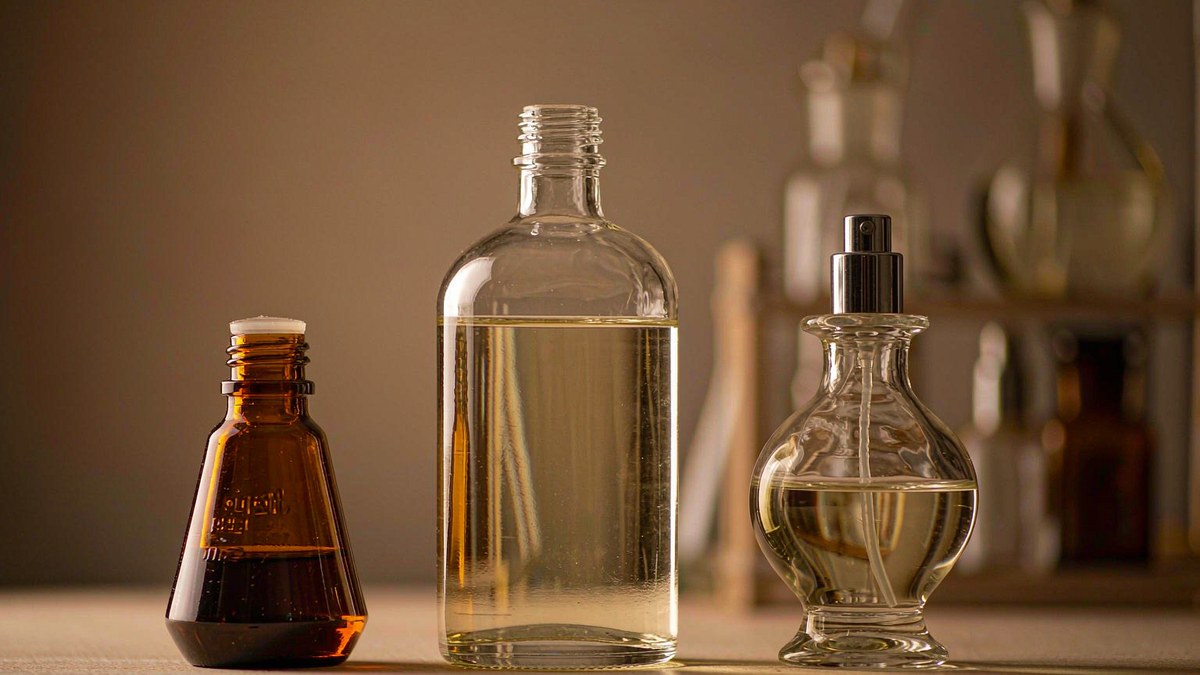
A founder collects three quotes for "private label perfume oil" and compares them per kilogram. The spread is enormous — a factor of four — and one quote looks like an obvious bargain until the supplier asks how the oil will be used. Two of the three quotes were never for the same product.
Fragrance is sold at three distinct stages: a compound, a prepared oil, and a finished product. Each has a different unit, a different minimum, and a different set of obligations. Confusing them costs weeks and, occasionally, an entire production run.
Table of Contents
- The three products behind one word
- Compound: the concentrated material
- Prepared oil: concentrate plus carrier
- Finished product: filled and labelled
- The arithmetic error that follows
- How the MOQ changes at each stage
- Practical guide: buying the right stage
- Frequently asked questions
- Conclusion
The three products behind one word
| Stage | What it is | Sold by | Typical minimum |
|---|---|---|---|
| Compound | Concentrated aromatic mixture, no carrier | Kilogram | 1–25 kg per scent |
| Prepared oil | Compound already diluted in a carrier | Kilogram or litre | 25–100 kg |
| Finished product | Filled, closed, labelled, packed | Unit | 500–3,000 units |
Compound: the concentrated material
A compound is the perfumer's work: dozens of materials, no solvent. It is bought by mass and dosed into a base by whoever fills the product. Its IFRA certificate names a category and a maximum dosage, and that dosage is the number that governs everything downstream.
The buyer of a compound needs a filler, a base and a filling line. A brand without those is buying an ingredient it cannot use.
Prepared oil: concentrate plus carrier
A prepared oil has already been diluted — in alcohol for a perfume, in a glycol ether for a diffuser, in a carrier for a car format. Its concentration is fixed by the supplier, which is convenient and constraining: you cannot change the strength without changing the product.
This is the stage where most "fragrance oil" quotes actually sit, and where the arithmetic goes wrong. A prepared oil at 20% concentration dosed at 100% into a diffuser contains far more fragrance than a compound dosed at 20%.
Finished product: filled and labelled
A finished product carries the label, the batch code, the compliance file and the retail carton. It is the only stage where a brand can ship without owning production. It is also the only stage where the MOQ is expressed in units rather than kilograms, which is why it feels more expensive per gram.
The arithmetic error that follows
If a supplier quotes a prepared oil at a given percentage, that percentage already includes the carrier. Treating it as a compound and applying a further dilution produces a product a fraction of the intended strength.
The correct calculation starts from the compound fraction in the finished product: compound share × dosage = fragrance level. A 30% prepared oil used at 50% of the formula delivers 15% fragrance, not 50%.
How the MOQ changes at each stage
Compound minimums are set by the fragrance house's batch size and can be as small as a kilogram. Prepared oil minimums reflect the dilution tank. Finished-product minimums are set by components, decoration and filling, which is why a 1 kg oil order and a 500-unit filled order can be quoted by the same factory at very different prices.
Practical guide: buying the right stage
Step 1 — Decide who fills
If you fill, buy a compound or a prepared oil. If you do not, buy finished goods.
Step 2 — Ask what the percentage refers to
Compound content, or oil content including carrier. The two differ by the dilution factor.
Step 3 — Confirm the IFRA category on the certificate
It must match the product you are making, not the oil's previous use.
Step 4 — Check whether the minimum is per scent or pooled
Three scents at 1 kg each is not the same purchase as 3 kg of one scent.
Step 5 — Add the compliance cost to the oil price
A cheap oil without documents is not cheaper once testing is added.
Step 6 — Lock the specification in writing
Concentration, carrier, allergen declaration and shelf life, per version.
Frequently asked questions
Is fragrance oil the same as perfume oil?
Not necessarily. "Fragrance oil" usually means a compound or a prepared oil; "perfume oil" often means a finished oil-based product. Ask what stage the quote covers.
Why is a prepared oil cheaper per kilogram than a compound?
Because most of its mass is carrier. Compare the fragrance content per kilogram, not the price per kilogram.
Can I buy a compound and dilute it myself?
Yes, if you control the base, the filling and the compliance. Otherwise the dilution is part of the service you should be buying.
Does the MOQ apply per scent?
Usually yes for compounds and prepared oils. Confirm whether multiple scents can pool into one minimum.
What documents come with a compound?
An IFRA conformity certificate for the category, an allergen declaration, an SDS and a COA per batch.
Can one oil be used across perfume, candle and diffuser?
The same accord can, but the dosage and often the carrier differ, and the IFRA category changes. Expect three specifications, not one.
How do I convert kilograms to units?
Divide the usable oil mass by the oil mass per unit, after allowing for trials, retention samples and filling losses.
What if the supplier will not state the concentration?
Then you cannot calculate the finished-product level, and the product cannot be assessed. That is a disqualifying answer.
Conclusion
One word covers three products. The quote you accept should name the stage, the unit, the concentration basis and the category.
Ask what the percentage refers to, confirm the minimum is per scent, and put the specification in writing. The cheapest per kilogram is usually the one with the most carrier in it.
We invite you to explore our capabilities and discuss your next product line.
You can reach us directly via WhatsApp +86 17324762943
Email: adon@customperfumeoem.com
Website: customperfumeoem.com


