
Fixatives: What Actually Holds a Fragrance Together
Fixatives decide whether a perfume is still recognisable at hour six, and they are the first thing cut when a compound has to hit a price. This article explains the mechanisms, the families and how to tell whether a formula has a spine or merely a heavy base.
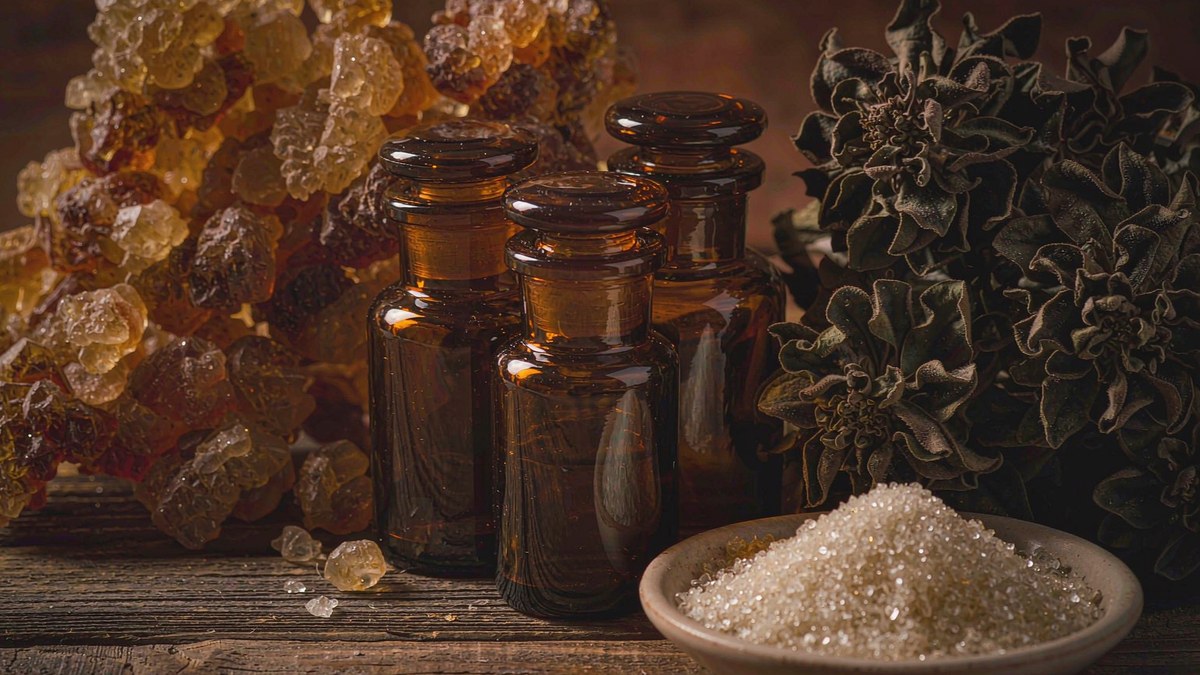
A fragrance without fixatives is a sentence without punctuation. It opens, it says something, and it stops. Fixatives are the materials that slow evaporation, bind the structure and decide whether a perfume is still recognisable at hour six — and they are the first thing cut when a compound has to hit a price.
This article explains how fixatives work, the families available, what each contributes perceptually, and how to tell whether a formula has a fixative spine or merely a heavy base.
Table of Contents
- How fixation actually works
- The fixative families
- What each family does perceptually
- Fixation in candles, diffusers and car fragrance
- Diagnosing a weak tail
- Cost and restriction pressure
- Practical guide: specifying fixation
- Frequently asked questions
- Conclusion
How fixation actually works
Fixation is not a single mechanism. Some materials are simply heavy and evaporate slowly, providing a persistent background. Others interact with the substrate — skin, wax, paper — and release slowly from it. Others act as solvents or coupling agents that hold volatile materials in a matrix and release them over time.
The practical consequence is that "adding a fixative" is not a single action. A musk extends the tail; a resin rounds the transition; a woody amber adds projection and persistence together.
The fixative families
| Family | Examples | Main effect | Typical share |
|---|---|---|---|
| Macrocyclic and polycyclic musks | Various synthetic musks | Persistence, skin-like warmth | 5-15% |
| Woody ambers | Amberwood-type materials | Projection and longevity | 3-10% |
| Resins and balsams | Labdanum, benzoin, opopanax | Rounds transitions, adds depth | 2-8% |
| Vanilla-type materials | Vanillin, ethyl vanillin | Sweet persistence, can dominate | 1-5% |
| Animalic substitutes | Synthetic civet and castoreum types | Tenacity, skin association | Trace to 2% |
| Natural absolutes | Oakmoss, labdanum, patchouli | Complexity plus tenacity | 1-5% |
What each family does perceptually
Musks are the most versatile and the most abused: they extend everything and smell of almost nothing on their own, until too much of them makes a fragrance read as laundry. Woody ambers add the diffuse glow that consumers interpret as quality, and they are also among the first materials to be restricted by cost and by regulation. Resins give transitions a curve instead of a cliff. Vanilla-type materials persist so strongly that they can swallow the middle if overused.
Fixation in candles, diffusers and car fragrance
Fixation in home fragrance is not the same problem as on skin. In a candle, the wax and the wick govern release: the fragrance must be volatile enough to be released at the melt pool temperature and stable enough not to evaporate from the cold wax. In a reed diffuser, the carrier solvent and the reed govern release, and a base that is too heavy starves the wick. In car fragrance, heat accelerates everything, so fixation tuned for 22°C behaves differently at 50°C.
This is why a perfume formula cannot simply be dropped into a candle at 8% and expected to perform. The fixative balance has to be rebuilt for the release mechanism.
Diagnosing a weak tail
- Strong first impression, flat at one hour: insufficient musk or resin
- Sharp transition from top to base: no middle support
- Pleasant but invisible after two hours: fixative present but underdosed
- Heavy and dull throughout: too much fixative, top suppressed
Cost and restriction pressure
Fixatives are expensive relative to top notes, which is why a compound under price pressure loses them first. The result is a fragrance that smells correct in the sample room and disappointing in use — and the buyer usually blames the fragrance house rather than the cost target.
Restriction pressure matters too: some musks are under scrutiny, and relying on a single fixation strategy creates a reformulation risk. A formula with two independent fixation mechanisms survives a restriction better than one built on a single material.
Practical guide: specifying fixation
Step 1 — State the target longevity in the brief
Hours on skin, or days in a diffuser. Longevity is a design target, not an outcome.
Step 2 — Ask which fixation mechanism is used
Musk, woody amber, resin or a combination. One mechanism is a single point of failure.
Step 3 — Evaluate at six hours, not at ten minutes
The tail is where the fixative either worked or did not.
Step 4 — Check the fixative share against the cost ceiling
If the ceiling cannot carry a proper spine, the brief needs to change, not the formula.
Step 5 — Rebalance for the format
Candle, diffuser and car formats need different volatility profiles from skin perfume.
Step 6 — Test at elevated temperature
Fixation that holds at 22°C can fail at 45°C, which is the condition many products actually live in.
Frequently asked questions
Are fixatives the same as base notes?
They overlap but are not identical. Base notes are the last thing perceived; fixatives are materials whose function is to slow and bind. Many base materials are also fixatives.
Does more fixative always mean longer lasting?
No. Beyond a point it suppresses the opening and flattens the whole composition. The useful range is narrower than buyers expect.
Why does my candle smell strong cold but weak when lit?
Cold throw comes from fragrance at the wax surface; hot throw depends on how the fragrance volatilises at melt-pool temperature and on wick size. Fixative balance affects both differently.
Can natural materials fix a fragrance?
Yes — resins, oakmoss, labdanum and patchouli are traditional fixatives. They bring complexity and variability, and some are restricted.
Why do musks sometimes smell like laundry?
Because high doses of certain musks read as clean and functional rather than perfumistic. The dose and the choice of musk determine which effect appears.
Is fixation relevant to car fragrance?
Acutely. Heat accelerates evaporation, so a formula that holds at room temperature may flash off in a parked car. Test at 45-50°C.
How do I know how much fixative is enough?
By testing at the target time point in the intended base. The number is empirical, not a rule of thumb.
Do fixatives change the allergen profile?
They can, because some are declarable substances. Any change to the fixative structure requires a recalculation.
Conclusion
Fixatives are structure. They decide whether the opening has something to land on and whether the dry-down exists at all, and they are the first casualty of a cost target set too low.
Set longevity as a target, ask which mechanism achieves it, evaluate at six hours and test at temperature. A fragrance with a proper spine is a product; one without is a first impression.
We invite you to explore our capabilities and discuss your next product line.
You can reach us directly via WhatsApp +86 17324762943
Email: adon@customperfumeoem.com
Website: customperfumeoem.com


