
Filling Trials and the First Production Run: What to Approve, and When
The lab made 500 grams on a bench; the line will make 5,000 units with a different pump and a different operator. This article explains what a filling trial establishes, the five approvals before mass production, and the failures that appear only on a real line.
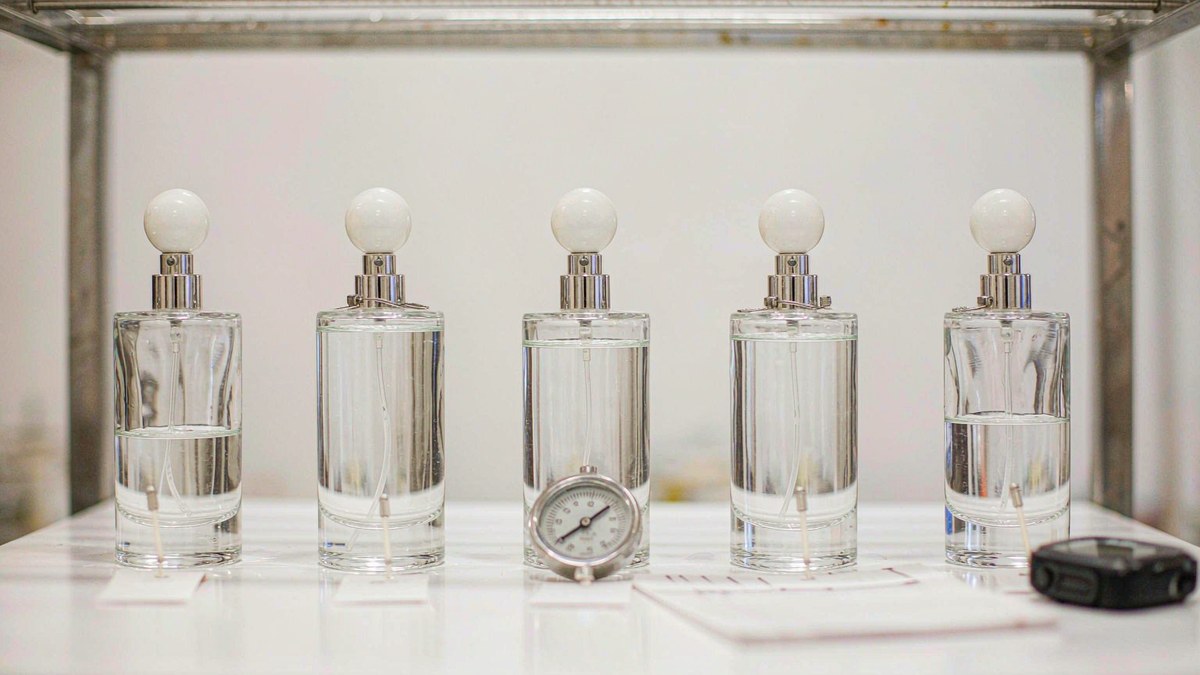
Approving a laboratory sample is not approving a product. The lab made 500 grams on a bench; the line will make 5,000 units at a fill rate of forty a minute, with a different pump, a different operator and a different ambient temperature. The gap between those two events is where most first-run failures live.
This article explains what a filling trial is for, what to approve before mass production, and the five checks that decide whether the first production run is a launch or a rework.
Table of Contents
- Why a bench sample proves little
- What a filling trial should establish
- The five approvals before mass production
- Managing the first production run
- Five first-run failures
- Practical guide: running the trial and the first run
- Frequently asked questions
- Conclusion
Why a bench sample proves little
Three variables change between bench and line. Scale changes mixing behaviour, so an emulsion or a gel that was uniform in a beaker may separate in a 500-litre tank. Equipment changes fill accuracy, so the 200 ml declared on the label may be delivered as 197 or 204 depending on the nozzle. And time changes the product, because the first unit filled and the last unit filled may be hours apart in a warm room.
A filling trial exists to expose those three variables before they are multiplied by five thousand.
What a filling trial should establish
- Fill accuracy across the run, first unit to last, against the declared net content
- Closure performance: torque, seal integrity, leak at temperature
- Label placement and adhesion on the actual surface, including decorated glass
- Behaviour of the product at line temperature and at the end of the run
- Cartoning and case pack integrity, including drop and compression
The five approvals before mass production
| Approval | What it confirms | Who signs |
|---|---|---|
| Production sample off the line | The real product matches the approved standard | Brand |
| Label version check | The artwork on the line is the approved version | Brand and factory QC |
| Fill and net content data | The declaration on the label is achievable | Factory QC |
| Closure and leak test | The pack survives transport and use | Factory QC |
| Stability confirmation | The product holds for the declared shelf life | Assessor or QC |
The label version check looks trivial and is the most common cause of a rejected run. A retired artwork file and an active one often sit in the same folder.
Managing the first production run
Attend it, or send someone who can decide. The first run is where judgement is needed — whether a slightly darker batch is acceptable, whether a cap that torques at the lower end of the range is a risk, whether the line speed should drop. A factory will make those decisions if nobody else does, and it will make them in favour of throughput.
Ask for the first off, the middle and the last off to be set aside and labelled with the time. That sample set tells you more about the process than any single approval sample.
Five first-run failures
- Fill drift. The nozzle fouls over the run and volumes fall; without in-line checks nobody notices until the net content audit.
- Label misalignment on decorated glass. A coating changes surface energy and adhesive behaviour.
- Leak at the shoulder. A closure that seals on a lab bench fails after cartoning and vibration.
- Odour carryover. Insufficient changeover cleaning from the previous product.
- Colour mismatch between batches. A dye lot difference that was invisible in a beaker.
Practical guide: running the trial and the first run
Step 1 — Book the trial as a separate event
Not folded into the production run. The point is to learn before committing volume.
Step 2 — Bring the real components
Actual bottle, actual closure, actual label stock. Substitutes invalidate the trial.
Step 3 — Measure fill across the run
First, middle, last, plus a sample every few hundred units.
Step 4 — Test the closure properly
Torque range, plus a leak test at 45-50°C and a vibration simulation.
Step 5 — Sign off a production sample
From the line, not from the sample room, and keep it as the reference.
Step 6 — Attend the first mass run
Or send a decision-maker. Judgement calls during the run are cheaper than rework afterwards.
Frequently asked questions
Is a filling trial always necessary?
For a new pack, a new formula or a new line, yes. For a repeat order of an unchanged specification, in-line checks are sufficient.
Who pays for the trial?
Usually the brand, sometimes shared. It consumes line time and materials, so it is normally quoted separately.
What is a reasonable fill tolerance?
It depends on the format and the declaration rules, but the tolerance must be stated in the specification and achievable on the line. A tolerance that the line cannot hold is a specification error.
Can I approve a sample from the lab and skip the line sample?
You can, and it is the single most common reason a first run is rejected. The lab sample and the line output are different products in practice.
Why does my label wrinkle on decorated bottles?
Surface energy differs on coated glass, and adhesive selection matters. Test on the actual decorated surface, not on clear glass.
How long should the trial take?
Typically one day on the line, plus a week for tests and approvals afterwards.
What if the first run fails?
The production sample and the time-stamped samples establish whether the failure is systemic or a single batch. That determines whether it is rework or a process change.
Should stability finish before the first run?
Ideally yes for a new formula. At minimum, accelerated data should show no failure before the run is committed.
Conclusion
A bench sample is a promise; the line is the delivery. The filling trial is the only point where the gap between them can be closed cheaply.
Run the trial with real components, measure fill across the run, test the closure at temperature, approve a line sample and attend the first mass run. That sequence turns a first run into a launch rather than a lesson.
We invite you to explore our capabilities and discuss your next product line.
You can reach us directly via WhatsApp +86 17324762943
Email: adon@customperfumeoem.com
Website: customperfumeoem.com


