
Ethanol Grades and Denaturation: Odour, Colour and Tax Consequences
Buyers compare fragrance cost per kilogram and bottle weight per gram, then accept whatever alcohol the factory uses. This article explains grades, denaturation, odour and colour impact, flash point and the duty treatment that follows the choice.
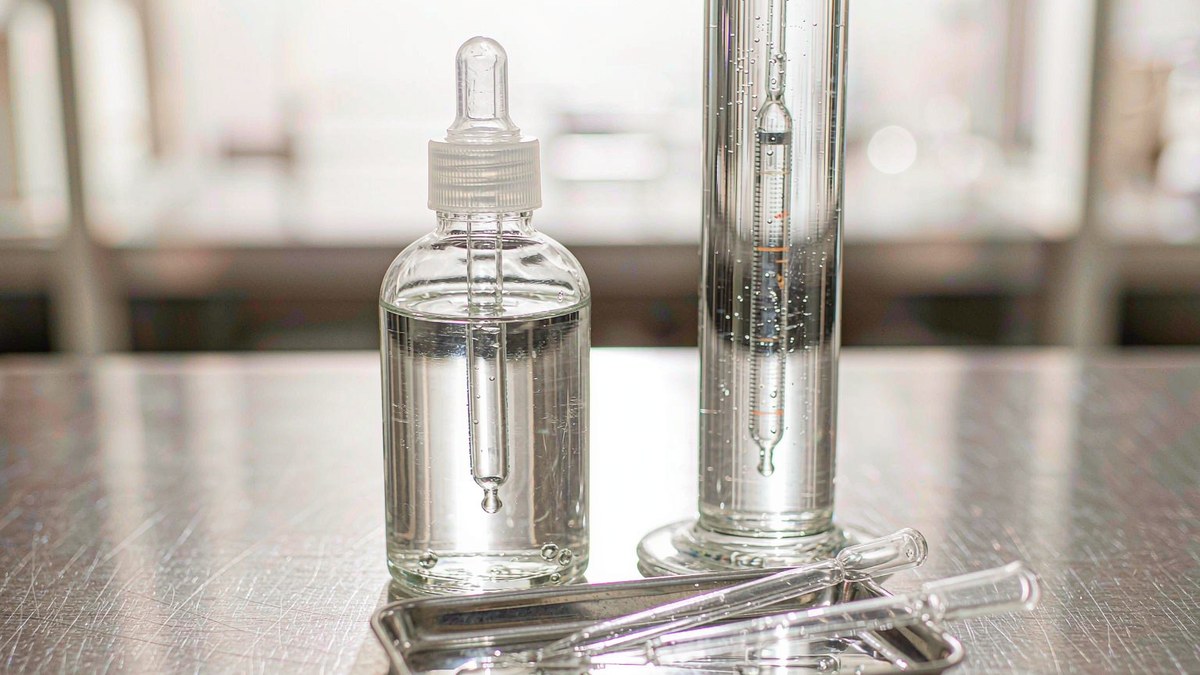
Ethanol is the largest single component of most eau de parfum, and the least examined. Buyers compare fragrance costs per kilogram and bottle weights per gram, then accept whatever alcohol the factory uses. That choice affects odour, colour, flash point, duty treatment, transport classification and, occasionally, whether the product can be sold at all in a given market.
This article explains ethanol grades, denaturation, what each choice does to a fragrance, and the commercial questions a buyer should ask before approving a formula.
Table of Contents
- Grades and what they mean
- Denatured versus undenatured
- Odour and colour impact
- Flash point and transport
- Duty and tax consequences
- Supply and specification
- Practical guide: specifying ethanol
- Frequently asked questions
- Conclusion
Grades and what they mean
| Grade | Typical use | What to specify |
|---|---|---|
| Perfumery grade, undenatured | High-end fragrance, some markets | Odour profile, water content, aldehyde content |
| Perfumery grade, denatured | Most commercial fragrance | Denaturant type and level, odour impact |
| Technical / industrial | Not suitable for cosmetics | Not acceptable as a substitute |
| Bio-based / agricultural origin | Brands with a sustainability claim | Certification of origin, odour consistency |
Perfumery grade is defined by odour neutrality and controlled impurities, not only by concentration. Two suppliers at 96% can behave differently in a formula if one carries a trace odour.
Denatured versus undenatured
Denatured alcohol contains additives that make it unfit for drinking, which in most jurisdictions reduces the excise burden. The denaturant is chosen by regulation and by the supplier, and it can carry odour. Some markets require specific denaturants for cosmetics; others restrict which may be used in products applied to skin.
Undenatured alcohol avoids denaturant odour and is preferred for premium fragrance, but it carries full excise and stricter handling. The commercial difference can be substantial, which is why factories default to denatured unless told otherwise.
Odour and colour impact
A denaturant is present at a level that is small in percentage but not necessarily small in perception. Common denaturants introduce a faint sharp or solvent note that is masked in a strong fragrance and visible in a delicate one. Colour can also shift with grade, particularly where the alcohol has been stored in contact with certain metals.
The practical test is a side-by-side dilution: the same compound at the same dosage in both alcohols, evaluated blind after 24 hours. Most differences appear as a slightly rougher opening.
Flash point and transport
Ethanol concentration drives flash point, and flash point drives dangerous-goods classification. A change in alcohol grade can move a product between packing groups or out of a class entirely if the concentration changes. This is why the alcohol specification belongs next to the transport determination, not in a separate part of the file.
Duty and tax consequences
Alcohol is taxed in most markets, and the treatment depends on denaturation, end use and whether the product qualifies for a specific regime. Two identical perfumes can carry different duty positions if one is made with undenatured alcohol and the other with a denatured grade.
The point is not that one is better; it is that the choice has a cost line attached, and it should be a decision rather than a default.
Supply and specification
- Concentration and water content, with a maximum
- Denaturant type and level, if denatured
- Odour specification against a retained reference
- Colour, typically measured against a standard
- Origin and certification, where a claim depends on it
Practical guide: specifying ethanol
Step 1 — Decide denatured or undenatured deliberately
Based on market requirements, odour sensitivity and duty treatment, not on the factory's default.
Step 2 — Specify water content
A maximum, not a typical value. Water affects clarity and stability.
Step 3 — Run a blind dilution comparison
Same compound, two alcohols, evaluated at 24 hours.
Step 4 — Re-check the transport classification
Concentration changes can move the packing group.
Step 5 — Ask for the duty treatment in writing
Per market, with the denaturant named.
Step 6 — Control the supplier
Grade substitution is a common silent change. Fix it in the specification and audit it.
Frequently asked questions
Does alcohol grade affect how a perfume smells?
It can. Denaturants carry odour, and trace impurities in a lower grade can roughen the opening. The effect is most visible in delicate compositions.
Why do factories use denatured alcohol?
Because it usually reduces excise duty and simplifies handling. The trade-off is possible odour impact and market-specific restrictions on denaturants.
Can I switch alcohol suppliers without re-testing?
No. Odour, water content and trace impurities can differ. Re-test clarity and odour on the first batch with a new supplier.
Is higher alcohol percentage always better?
It improves solubility and projection but raises hazard and cost. The right figure depends on the format and the market.
Does alcohol content affect shipping?
Yes. It drives flash point and therefore dangerous-goods classification and packing group.
What is perfumery grade?
An alcohol specification defined by odour neutrality and controlled impurities, not simply by concentration.
Do alcohol-free formats avoid these issues?
They avoid duty and dangerous-goods complications but introduce their own: carrier selection, viscosity and stability in oil or glycol bases.
Can a brand specify organic or bio-based alcohol?
Yes, where certified supply exists. Expect a price premium and a need to verify odour consistency between lots.
Conclusion
Ethanol is a decision, not a filler. Grade, denaturant, water content and concentration each carry an odour, safety or cost consequence that a formula cannot correct later.
Choose deliberately, specify numerically, compare blind and re-check the transport classification. The cheapest alcohol is rarely the cheapest product.
We invite you to explore our capabilities and discuss your next product line.
You can reach us directly via WhatsApp +86 17324762943
Email: adon@customperfumeoem.com
Website: customperfumeoem.com


