
Essential Oils vs Synthetics: Cost, Consistency and Allergen Profiles
Most commercial fragrance uses both naturals and aroma chemicals, and a brief that forbids one forecloses options later. This article compares them on cost, consistency, allergen load and impurity control, and shows where each belongs in a private-label programme.
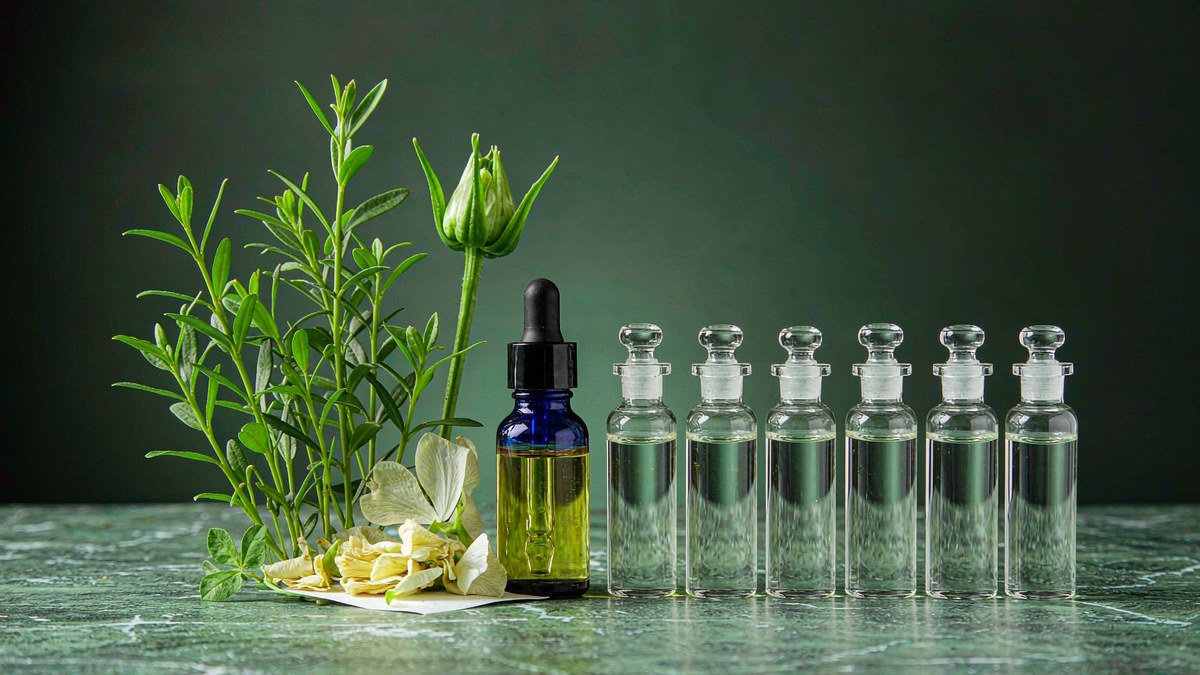
Natural is a marketing position, not a technical one. Essential oils bring complexity, provenance and a story; synthetics bring consistency, safety data and price stability. Most commercial fragrance uses both, and a brief that forbids one of them forecloses options the brand may later need.
This article compares essential oils and aroma chemicals on cost, consistency, allergen profile and regulatory behaviour, and explains where each belongs in a private-label programme.
Table of Contents
- What the terms actually mean
- Cost and volatility
- Consistency and supply
- Allergen and restriction profiles
- Safety data and impurities
- Where each belongs
- Practical guide: setting a materials policy
- Frequently asked questions
- Conclusion
What the terms actually mean
An essential oil is a volatile material obtained from a plant, usually by distillation or expression. An aroma chemical is a defined molecule, whether identical to one found in nature or not. A natural isolate is a molecule purified from a natural source — chemically identical to the synthetic version, but marketed differently.
The last category creates most of the confusion in "100% natural" claims, because an isolate is natural by origin and identical by chemistry.
Cost and volatility
| Material type | Cost | Price stability | Typical share in a compound |
|---|---|---|---|
| Common essential oils | Low to mid | Seasonal, weather-driven | 5-30% |
| Rare or premium oils | Very high | Highly volatile | Trace to 5% |
| Aroma chemicals | Low to mid | Stable | Can be most of the formula |
| Natural isolates | Mid to high | Moderate | Used where a natural claim matters |
Essential oil prices track harvests and are among the most volatile inputs in a fragrance. A compound built mostly on naturals carries commodity risk that has to be managed contractually, the same way wax prices are.
Consistency and supply
Naturals vary by harvest, origin and lot. That variation is part of their appeal and a problem for a product that must smell identical across five years. Aroma chemicals are consistent by definition, which is why a signature scent built on them is easier to reproduce.
The practical compromise is a compound with a synthetic skeleton and natural character materials at low percentages, so lot variation shifts the texture rather than the identity.
Allergen and restriction profiles
Naturals are chemically complex, which means they often contain declarable allergens at meaningful levels. A citrus oil can push several allergens over the labelling threshold on its own. Aroma chemicals are simpler and can be selected to avoid specific allergens, which is one reason reformulations for allergen compliance usually move towards synthetics.
This has a direct commercial consequence: a "natural" range can carry a longer allergen declaration than a synthetic one, which some consumers find counter-intuitive.
Safety data and impurities
Naturals require specification of the plant part, the extraction method and the origin, plus limits on impurities such as pesticides, heavy metals and, for some materials, phototoxic compounds. A certificate of analysis for an essential oil is not the same as a safety assessment of the finished product.
Aroma chemicals require purity specifications and control of by-products. Neither category is inherently safer; both depend on specification and testing.
Where each belongs
- Naturals for character, story and differentiation at the top and heart
- Synthetics for structure, fixation and cost control in the base
- Isolates where a natural claim requires a defined molecule
- Reconstitutions where supply risk on a natural is unacceptable
Practical guide: setting a materials policy
Step 1 — Decide what the claim actually is
"Natural", "natural origin" and "contains essential oils" are different claims with different evidence requirements.
Step 2 — Map supply risk per material
Which naturals are single-origin and volatile in price, and what substitutes exist.
Step 3 — Calculate the allergen load both ways
Compare a natural-led and synthetic-led version before committing to a claim.
Step 4 — Specify origin and plant part
An essential oil without that specification is not a reproducible material.
Step 5 — Set an impurity specification
Pesticides, heavy metals and restricted constituents, tested per lot or per supplier audit.
Step 6 — Re-check the claim against the final formula
A late substitution can quietly undermine the claim the marketing depends on.
Frequently asked questions
Are natural fragrances safer?
Not inherently. Naturals contain allergens and sometimes phototoxic or restricted constituents. Safety depends on specification and dosage.
Why do natural perfumes cost more?
Because natural materials are lower-yield, harvest-dependent and often more expensive per kilogram, and they require more of the compound to achieve the same effect.
Can a perfume be 100% natural?
Technically possible, but difficult to stabilise, expensive, and usually carries a longer allergen declaration.
Is a natural isolate natural?
It is natural in origin and chemically identical to the synthetic version. Whether it counts as natural depends on the certification standard you follow.
Do synthetics have allergens?
Some do, and they must be declared at the same thresholds. The difference is that synthetics can be selected to avoid specific allergens.
What causes essential oil price spikes?
Harvest failures, disease, geopolitical disruption in growing regions and demand shifts. A single-origin material can double in a season.
How do I make a scent reproducible?
Specify the material precisely, keep a retained reference standard and re-evaluate against it on each lot.
Which is better for candles?
Both are used; the choice depends on the wax, the target cost and whether the brand needs a natural story. Performance must be tested in the system either way.
Conclusion
Essential oils and aroma chemicals are tools with different cost structures, different risk profiles and different stories. The mistake is treating either as a moral category rather than a specification decision.
Decide the claim, map the supply risk, calculate the allergen load and specify origin and impurities. Then use each material where it does the most work for the least risk.
We invite you to explore our capabilities and discuss your next product line.
You can reach us directly via WhatsApp +86 17324762943
Email: adon@customperfumeoem.com
Website: customperfumeoem.com


