
CLP and Transport Classification for Diffuser Oils
Diffuser oil sits between chemical and consumer product, and its label and transport documents follow from the mixture rules. This article covers flash point, packing group, CLP elements, UFI and the point where air freight becomes a different question.
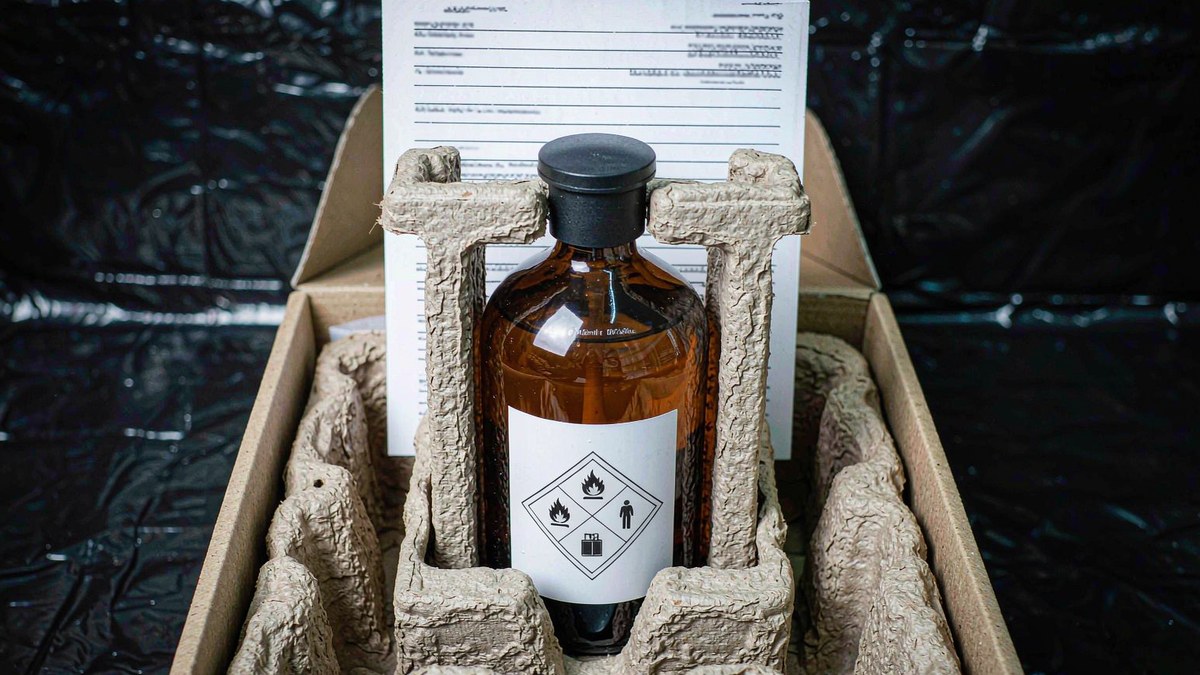
A reed diffuser is not a cosmetic, so the perfume paperwork does not apply. What applies instead is chemical classification and, depending on the formula, transport rules — and those two documents decide whether the product can be labelled, shipped and sold.
This article covers flash point, packing group, the CLP label elements a diffuser oil requires, and where air freight becomes an entirely different question.
Table of Contents
- What the product legally is
- Flash point and classification
- The CLP label
- UFI and poison-centre information
- Transport classification
- Why air freight differs
- Practical guide: classifying a diffuser oil
- Frequently asked questions
- Conclusion
What the product legally is
A diffuser oil is a mixture placed on the market for scenting a space. In the EU it falls under CLP for classification and labelling, and under general product safety for the rest. It is not a cosmetic, so no safety report or notification applies — but the chemical file is not optional.
Flash point and classification
| Flash point | Likely classification | Practical consequence |
|---|---|---|
| Below 23°C | Flammable liquid, low flash | Strict packing, DG shipping |
| 23–60°C | Flammable liquid category 2 or 3 | Hazard label, DG documentation |
| Above 60°C | Not classified as flammable liquid | Usually general cargo |
Alcohol-containing bases usually fall in the middle band; glycol ether and ester bases often sit above 60°C. That single number changes both the label and the freight.
The CLP label
Where classified, the label needs the hazard pictogram, the signal word, the hazard and precautionary statements, and the supplier identity. It also needs the nominal quantity and a batch identifier for traceability.
UFI and poison-centre information
In the EU, mixtures classified for health or physical hazards generally require a unique formula identifier on the label and a submission to the relevant poison centre. The UFI is generated from the formula, so a reformulation produces a new one.
Transport classification
Transport rules are separate from CLP but driven by the same data. A product classified as a flammable liquid may require UN-approved packaging, hazard labels and a dangerous goods declaration. Limited-quantity provisions can reduce the burden for small packs, but only within defined limits.
Why air freight differs
Airlines apply stricter limits than sea carriers. A consignment acceptable under limited quantity by sea may be refused by air, and a product classified differently under transport regulations than under CLP can create a mismatch between the label and the shipping documents. Confirm per mode, in writing.
Practical guide: classifying a diffuser oil
Step 1 — Get the flash point from the finished formula
Not from the fragrance alone; the base dominates.
Step 2 — Classify and produce the label
Pictogram, signal word, statements, supplier details, quantity.
Step 3 — Generate the UFI where required
And file with the poison centre before shipping.
Step 4 — Check transport rules separately
Same data, different thresholds.
Step 5 — Confirm packaging compliance
UN-certified where applicable, with correct markings.
Step 6 — Re-check on reformulation
A base change can move the classification entirely.
Frequently asked questions
Is a reed diffuser a cosmetic?
No. It is a mixture, so chemical labelling applies rather than cosmetic rules.
Does every diffuser need a hazard label?
Only where the finished mixture meets classification criteria. Many non-alcohol bases do not.
What is a UFI?
A unique formula identifier printed on the label and linked to a poison-centre submission.
Can a diffuser ship as general cargo?
Often yes, if the flash point is above the threshold and no other hazard applies.
Why does air freight cost more?
Stricter acceptance rules, more documentation and limited capacity for dangerous goods.
Is the SDS the same as the CLP label?
No. The SDS communicates hazards through the supply chain; the label communicates them to the consumer.
Does packaging matter for classification?
For transport, yes — the packaging must be certified for the class and quantity.
What changes if I add alcohol?
Potentially everything: flash point, classification, label, transport mode and freight cost.
Conclusion
A diffuser oil is a chemical mixture with a scent, and the paperwork follows from the base more than the fragrance. Flash point is the hinge.
Classify from the finished formula, label accordingly, file the UFI where required, and confirm transport per mode. The fragrance choice is a design decision; the base is a compliance one.
We invite you to explore our capabilities and discuss your next product line.
You can reach us directly via WhatsApp +86 17324762943
Email: adon@customperfumeoem.com
Website: customperfumeoem.com


