
Deposit Return Schemes and Perfume Packaging: Is Your Bottle in Scope?
A glass perfume bottle is glass, it is a container, and in more European markets it falls inside a scheme drafted for beverage bottles. This article explains how deposit return schemes treat fragrance packaging, where scope is decided, and how to check before the label goes to print.
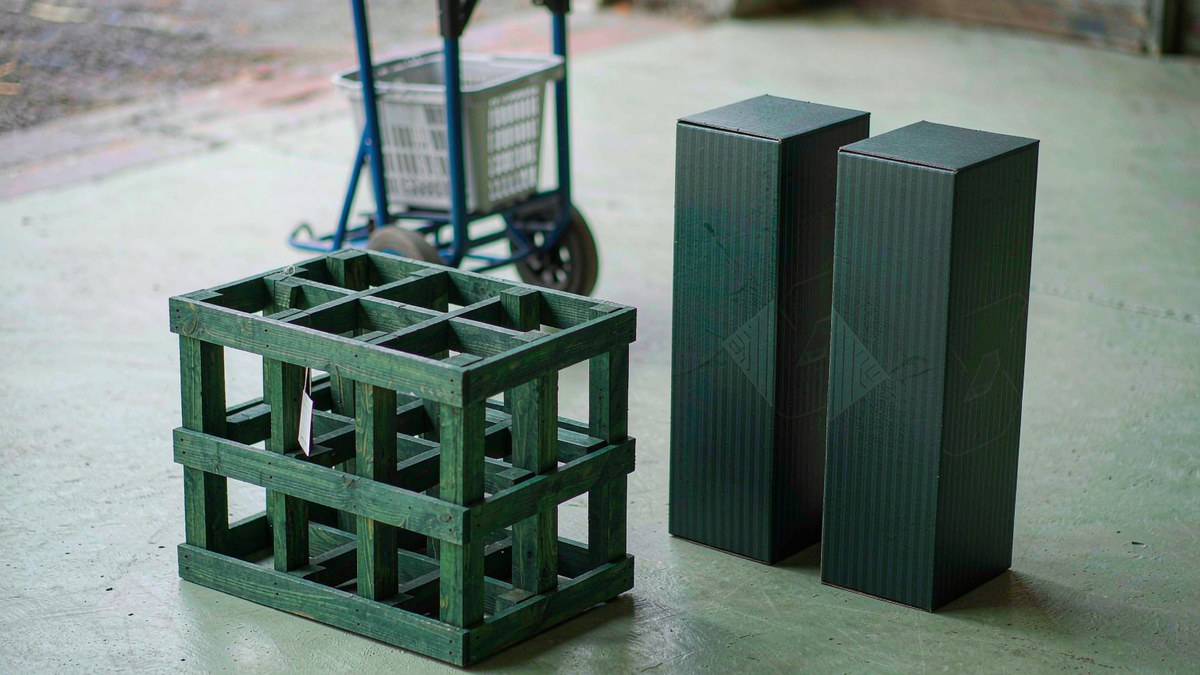
Europe's deposit return schemes were designed for beverage containers, and fragrance has been caught in the drag. A glass perfume bottle is glass, it is a container, and in an increasing number of markets it falls inside a scheme that was drafted with bottles of water in mind. The result is a packaging decision that now has a financial consequence at the till, not just a sustainability story on the carton.
This article explains how deposit return schemes treat fragrance packaging, which markets are relevant, and how a brand should test whether its bottle is in scope before the artwork is printed.
Table of Contents
- What a deposit return scheme does
- Is a perfume bottle in scope?
- Where it matters in Europe
- Label and marking consequences
- Design responses
- The cost arithmetic
- Practical guide: checking scope before print
- Frequently asked questions
- Registration and reporting in practice
- When the bottle is refillable
- Conclusion
What a deposit return scheme does
A deposit return scheme places a small refundable charge on a container at the point of sale, collected by the retailer and redeemed when the empty container is returned. The purpose is to raise collection rates for a material stream. For the producer, the scheme creates three obligations: registration, per-unit reporting, and, where applicable, participation in the labelling of the container.
The schemes differ in what they cover. Some cover beverage containers only, defined by volume and by the product inside. Others extend to household containers more broadly, which is where glass fragrance bottles can fall in.
Is a perfume bottle in scope?
The scope question is decided by four criteria, and a brand needs all four answered before it can conclude anything.
- Product category: beverage, household, cosmetic, or something else. Some schemes exclude cosmetics explicitly; others exclude them by volume threshold.
- Material: glass, PET, metal. Schemes often treat glass differently, and a frosted or coated bottle may not be recyclable in the intended stream.
- Volume: a 30 ml bottle usually sits below thresholds that were written for 500 ml drinks; a 200 ml diffuser may not.
- Channel: retail, travel retail, e-commerce, or hotel amenity. Channel can change who is treated as the producer.
The most common error is assuming that "cosmetic" means "excluded". Several schemes exclude cosmetics above a certain volume, or include them where the container is glass and the market has a glass collection target.
Where it matters in Europe
| Market | Scheme status | Practical relevance for fragrance |
|---|---|---|
| Germany | Long-running deposit scheme, historically beverage-focused | Perfume generally outside; packaging law obligations still apply |
| Nordics | Mature schemes with defined container categories | Check volume and material thresholds per market |
| France | EPR for household packaging with deposit pilots | EPR registration is certain; deposit scope is evolving |
| Italy, Spain | EPR schemes with deposit mechanisms in development | Plan for change rather than assuming current status holds |
| UK | Deposit scheme development with devolved differences | England, Scotland, Wales and NI may diverge |
Read the third column as a warning rather than a conclusion: deposit scope in these markets is actively moving, and a scheme that excludes fragrance this year may include glass containers next year.
Label and marking consequences
Where a scheme applies, the container may need a deposit mark, a barcode link to the scheme, or a specific recycling instruction. That has three consequences for packaging: artwork space, print method, and the risk of a re-print if the mark changes.
For a fragrance bottle, the label is often small and already carrying mandatory information, allergen declarations and a barcode. A deposit mark can force a layout change on a label that was already tight — a cost that appears at the design stage rather than at launch.
Design responses
- Confirm scope before the artwork freeze, not after
- Choose a closure and bottle that separate cleanly, because mono-material packaging reduces both EPR fees and deposit risk
- Avoid coatings that make glass non-recyclable in the local stream
- Keep a version of the label with reserve space for a scheme mark
The cost arithmetic
Where a deposit applies, the producer's direct cost is the unredeemed deposit plus scheme fees, and the indirect cost is working capital: deposits are collected and held until redemption. For a high-volume, low-price line, that cash timing matters more than the fee itself.
The second cost is administrative. Reporting per unit, per material, per market, on a monthly or quarterly cycle, requires data that many brands do not hold at SKU and component level. Our note on packaging EPR for perfume bottles covers the declaration mechanics that sit alongside these schemes.
Registration and reporting in practice
Where a scheme applies, three administrative steps follow, and each has a data requirement that brands usually discover late.
Registration identifies the producer and the material streams it places on the market. It requires a legal entity in that market, a contact who will answer scheme queries, and a classification of the packaging by material. A brand that sells through a distributor may find it is not the producer at all, in which case registration belongs to the distributor and the brand's task is to supply the data.
Volume reporting is the step that fails most often. It requires weights per component per SKU per market for the reporting period, and it must reflect what was actually placed on the market rather than what was forecast. A bottle weight taken from a supplier catalogue rather than measured from production can be several grams out, which across a volume becomes a material misdeclaration.
Reconciliation is the annual check that reported volumes match sales. Schemes have become considerably better at this, and the consequence of under-declaration is a back-charge rather than a warning.
Where the data comes from
The only reliable source is the production record. Ask the factory for measured component weights at the point of first production, keep them against the SKU, and update them whenever a component changes. A packaging change is a reporting change, even if the product looks identical.
For markets with a threshold, the reporting unit may be per container rather than per kilogram, which is why the scheme's own definitions matter more than a general understanding of "packaging weight".
When the bottle is refillable
Refillable and reusable packaging is treated differently in most schemes, and the difference can be commercially significant. A container designed to be refilled several times may carry a reduced fee, or be excluded from the deposit, or be subject to a separate registration as a reusable item.
Three conditions usually apply before a bottle counts as reusable. It must be designed to be refilled a defined number of times; there must be a system for collecting and refilling it; and the producer must be able to demonstrate both. A bottle marketed as "refillable" with no collection route and no refill infrastructure is a single-use container with a claim on it.
What this means for a fragrance range
Refill programmes for diffusers and perfume are the most plausible candidates, because the vessel is durable and the consumer already keeps it. The economics work when the refill pack is designed as its own SKU, with its own weight and its own declaration, rather than as an afterthought.
A useful test before committing: can you describe, in one page, how the empty vessel returns, who cleans it, how many cycles it survives and what the consumer pays for the refill? If any of those answers is missing, the packaging is not reusable in the sense the schemes mean.
Practical guide: checking scope before print
Step 1 — List the markets and volumes
Per SKU, per market, because thresholds are volume-based.
Step 2 — Check the product category definition
Beverage, household or cosmetic, and whether cosmetics are excluded by category or by volume.
Step 3 — Confirm the material classification
Clear, frosted, coated and decorated glass can be treated differently.
Step 4 — Identify the producer
Brand, importer or marketplace seller. The obligation follows that entity.
Step 5 — Reserve label space
Even if the scheme does not apply today, a reserve area avoids a reprint later.
Step 6 — Set a review date
Deposit schemes are being extended. Review at least annually.
Frequently asked questions
Does a perfume bottle carry a deposit in Germany?
The German deposit scheme has historically focused on beverage containers, so perfume is usually outside it. Packaging law obligations — registration, system participation and volume reporting — still apply.
Are cosmetics always excluded from deposit schemes?
No. Some schemes exclude by category, others by volume, and some include glass containers regardless of the product. The definition in each market decides.
Does the deposit apply to the diffuser bottle too?
Volume thresholds often make a large diffuser more likely to be in scope than a 30 ml perfume. Check per SKU rather than per brand.
Who pays the deposit — brand, importer or retailer?
The obligation attaches to the producer as defined by the scheme, which may be the brand, the importer or the seller of record. Retailers collect the deposit from the consumer.
Can a deposit mark be printed on the carton instead of the bottle?
Depends on the scheme's marking rules. The container itself is usually what must be marked, which is why label space matters.
Is the deposit a tax?
No, it is a refundable charge. The producer's cost is the unredeemed portion plus scheme fees and the administrative burden.
Does a coated bottle affect eligibility?
It can, because coatings may make the glass harder to recycle in the local stream. That affects both EPR fees and, where relevant, deposit treatment.
How often do these rules change?
Frequently. Several European markets are expanding deposit scope towards glass and non-beverage containers, which is why an annual review is the minimum.
Conclusion
Deposit return schemes are a beverage rule reaching into packaging categories that were never designed for it. For fragrance, the question is narrow but consequential: is this bottle, in this market, at this volume, in scope?
Answer it before the artwork freeze, reserve label space, confirm who the producer is and diarise a review. A scheme that does not apply today is a scheme that may apply at the next print run.
We invite you to explore our capabilities and discuss your next product line.
You can reach us directly via WhatsApp +86 17324762943
Email: adon@customperfumeoem.com
Website: customperfumeoem.com


