
Co-Packing vs In-House Filling: Choosing Where Your Fragrance Is Filled
A candle brand discovers three production models with similar prices and very different risk profiles. This article compares in-house manufacture, co-packing and hybrid assembly on responsibility, changeover risk, cost and lead time, and shows how to specify the model.
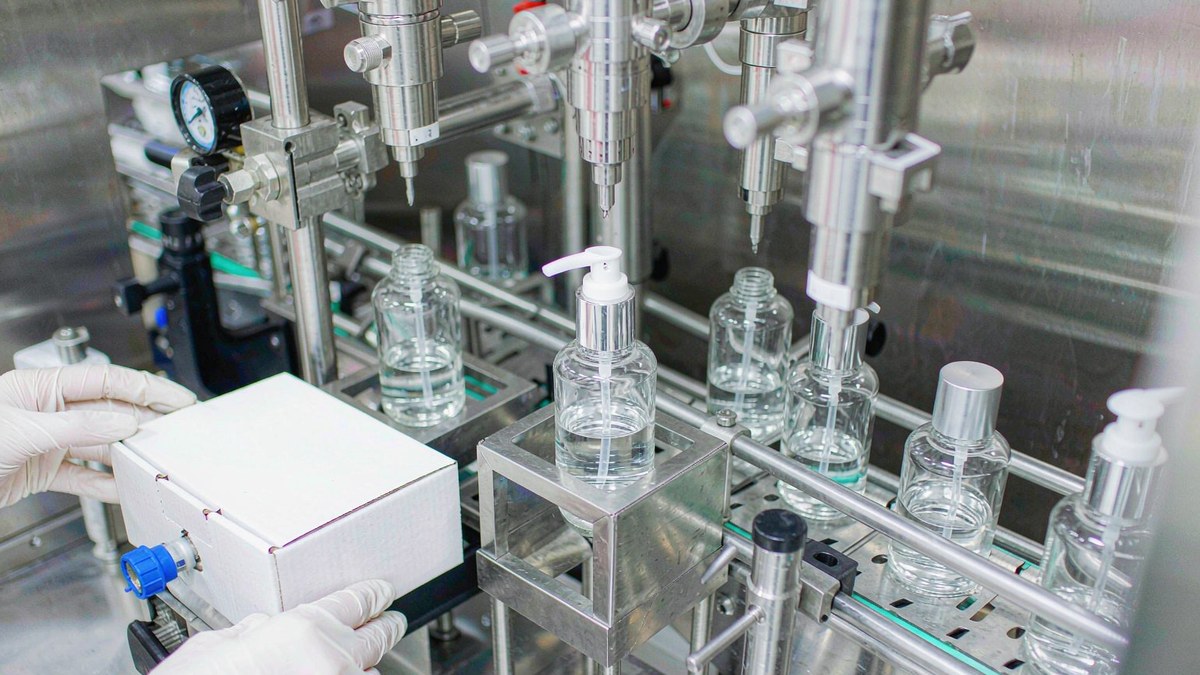
A brand decides to launch a candle range and discovers three different production models on the table. One factory compounds the fragrance, makes the candle and fills it in-house. Another compounds and fills but buys in vessels. A third is a co-packer that takes components from several suppliers and assembles. The price differences between them are small; the risk differences are not.
This article compares in-house manufacture, co-packing and hybrid models for fragrance and home fragrance, focusing on where quality responsibility, lead time and cost actually sit.
Table of Contents
- The three models
- Who is responsible for what
- Quality and changeover risk
- Where the cost differences come from
- Lead time and flexibility
- How to choose
- Practical guide: specifying a production model
- Frequently asked questions
- Conclusion
The three models
In-house manufacture means one entity controls compounding, filling and packing, usually with its own quality system. Co-packing means an assembler takes finished components — filled units from one source, cartons from another — and kits, labels and ships. Hybrid is the common reality: fragrance compounded by a house, product filled by a factory, decoration by a specialist, kitting by a co-packer.
Each model is legitimate. The mistake is assuming that a single invoice implies a single point of responsibility.
Who is responsible for what
| Activity | In-house | Co-packing | Risk if unclear |
|---|---|---|---|
| Fragrance conformity | Factory | Often the brand's fragrance house | Certificate names the wrong category |
| Fill accuracy | Factory | Co-packer | Net content disputes at retail |
| Label version | Factory | Brand supplies artwork | Old label applied to new batch |
| Batch traceability | Factory | Split across parties | Recall impossible to scope |
| Final inspection | Factory QC | Co-packer, or buyer's agent | Nobody owns the AQL |
Quality and changeover risk
In-house manufacture concentrates changeover risk in one place, which is easier to control. Co-packing distributes it: a line that filled a citrus product for another client on Monday must be validated for cleaning before your rose candle on Tuesday, and the validation belongs to the co-packer, not to you.
The specific hazard in fragrance is odour carryover that no analytical test detects. Ask any assembler how they validate changeover between fragrance runs, and ask to see the record. A confident answer with a document is worth more than a certificate on the wall.
Where the cost differences come from
Co-packing is usually cheaper at low volume and more expensive at high volume, because you are buying labour and changeover time rather than amortising equipment. In-house manufacture is cheaper per unit above a threshold, but requires a minimum order that justifies the setup.
- Co-packing: low MOQ, higher unit cost, more parties to coordinate
- In-house: higher MOQ, lower unit cost, single point of accountability
- Hybrid: best cost per component, worst traceability unless documented
Lead time and flexibility
A co-packer can often start sooner because they are not waiting for their own production slots to clear, but they are dependent on components arriving. In-house manufacture has a longer queue but fewer dependencies. For a first order, the co-packer usually wins on time; for a repeat programme, in-house usually wins on stability.
How to choose
Choose on three criteria rather than price. First, who can trace a batch end to end. Second, who can validate changeover for fragrance. Third, who will still be able to produce your volume in eighteen months. A supplier that is cheapest now and cannot scale is a re-sourcing exercise later.
Practical guide: specifying a production model
Step 1 — Map every step to an owner
Compound, fill, decorate, kit, pack, inspect. One name per step, in writing.
Step 2 — Ask for the changeover validation record
Between fragrance runs specifically, not general cleaning procedures.
Step 3 — Fix the label control process
Who holds the approved artwork, who checks the version at the line, who signs off.
Step 4 — Agree the inspection owner
An AQL inspection with no owner is a formality. Name the party and the level.
Step 5 — Test traceability with one batch
Ask for the full chain for a recent shipment. Time the response.
Step 6 — Model cost at your target volume, not at MOQ
Co-packing often looks cheaper at 500 and dearer at 5,000. Decide for the volume you intend to reach.
Frequently asked questions
Is co-packing cheaper than a factory?
At low volume, often. At scale, usually not, because you pay for labour and changeover rather than amortising equipment.
Who is responsible for quality in a co-packing arrangement?
Contractually, whoever the agreement says. In practice the brand is exposed, so the inspection and traceability ownership should be written down.
Can a co-packer handle dangerous goods?
Only if they hold the relevant storage and handling arrangements and the staff are trained. Ask before assuming the filled goods can leave their site legally.
What is the main risk of a hybrid model?
Split traceability. If a defect appears, no single party can scope the affected batches without assembling records from three companies.
Does in-house manufacture guarantee better quality?
No, but it concentrates responsibility. Quality depends on the system, and a well-run co-packer can outperform a poorly run factory.
How do I compare quotes across models?
Compare landed cost per unit at your target volume, including changeover, inspection, freight and the internal cost of coordinating extra parties.
Can I switch models later?
Yes, but tooling ownership and specification control determine how easily. Write both into the first contract.
What should the contract say about changeover?
That validated cleaning between fragrance runs is required, with records available on request, and that odour carryover is a defect.
Conclusion
The production model decides who answers when something goes wrong. That is a more important criterion than a cent per unit, because the cost of an unowned defect is paid by the brand.
Map every step to an owner, ask for changeover validation, fix label control and name the inspection party. Then compare cost at the volume you intend to reach, not at the volume you are starting from.
We invite you to explore our capabilities and discuss your next product line.
You can reach us directly via WhatsApp +86 17324762943
Email: adon@customperfumeoem.com
Website: customperfumeoem.com


