
Car Fragrance Safety Files: Child-Appeal, Small Parts and Heat
Car fragrance combines a decorative object, a small part and a volatile mixture. This article sets out the four risks a safety file must cover — child appeal, small parts, heat exposure and chemical classification — and how format choice changes the answers.
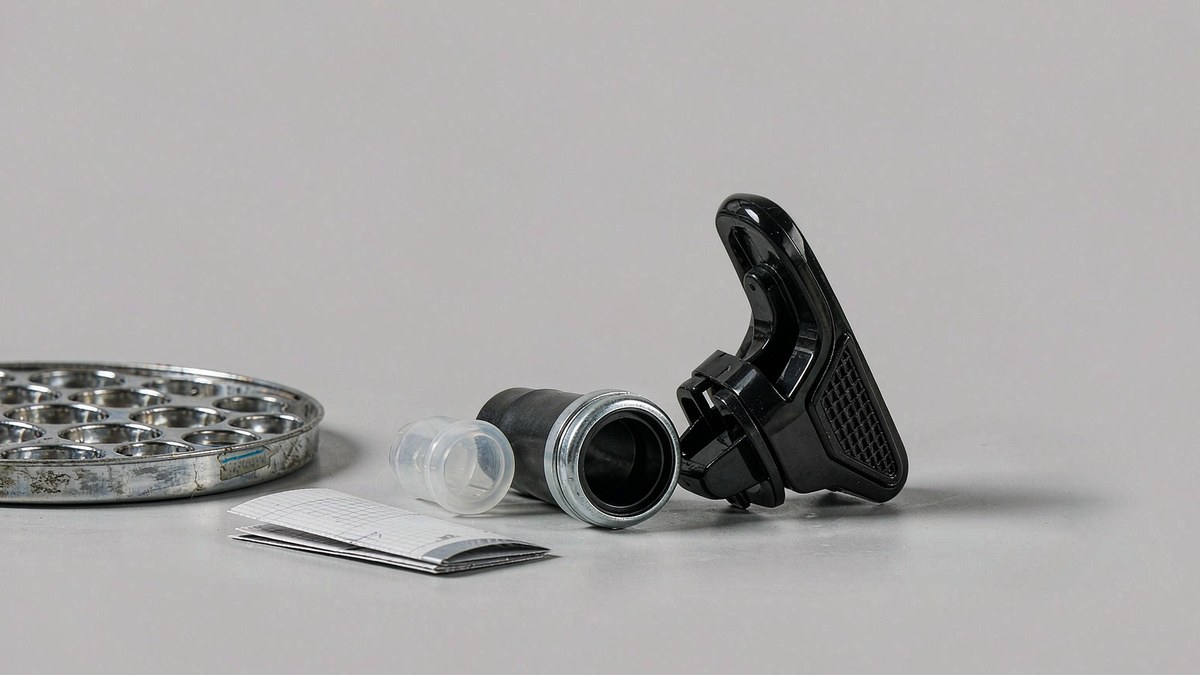
A car air freshener is three things at once: a small decorative object, a product containing a volatile mixture, and something a child can reach from a rear seat. Safety files for this category fail when one of those three is assessed and the other two are assumed.
This article sets out the four risks a car fragrance file has to address, and how the choice of format changes the answers.
Table of Contents
- The four risks
- Child appeal and small parts
- Heat and pressure
- Chemical classification
- Mount and retention
- Warnings that do work
- Practical guide: building the file
- Frequently asked questions
- Conclusion
The four risks
| Risk | Why it applies | Where it is assessed |
|---|---|---|
| Child appeal | Small, colourful, scented objects attract children | Design and labelling review |
| Small parts | Clips, caps and cartridges can detach | Mechanical testing |
| Heat and pressure | Dashboard temperatures exceed 60°C | Thermal and leak testing |
| Chemical hazard | The mixture may be classified | CLP classification |
Child appeal and small parts
Products shaped like fruit, animals or toys invite a hazard that a plain block does not. Where the form is appealing, the file needs a documented assessment of small parts and a warning that keeps the product out of reach. Novelty shapes are the most common source of recall in this category.
Heat and pressure
A sealed cartridge in a hot car is a pressure vessel. The file should show the seal tested at temperature, the material rated for it, and a failure mode that does not result in leakage onto the dashboard — which is both a staining and a slip hazard.
Chemical classification
If the mixture meets classification criteria, the product needs the corresponding label elements, and transport documents must match. A car product with a fragrance load and an alcohol carrier is more likely to be classified than a gel.
Mount and retention
The mount is the safety-critical component. A clip that releases under vibration becomes a projectile in braking; a hanging cord that frays becomes a distraction. Retention testing belongs in the file, not in the marketing photography.
Warnings that do work
Effective warnings are specific and placed where they will be read: keep out of reach of children, do not ingest, avoid contact with eyes, do not place where it obstructs the driver's view. Generic "keep away from children" text on the back of a carton is the least effective option.
Practical guide: building the file
Step 1 — Classify the mixture
From the finished formula, including carrier and load.
Step 2 — Assess the form for child appeal
If it looks like a toy, document why it is not one.
Step 3 — Test small parts
Pull, torque and drop, on the components that can detach.
Step 4 — Test at 60°C
Seal, pressure and material deformation.
Step 5 — Test retention under vibration
Repeated cycles, then grip measurement.
Step 6 — Place the warnings where they are read
On the product or its immediate pack, not only on the outer carton.
Frequently asked questions
Is a car freshener a toy if it is shaped like an animal?
No, but it will be treated as child-appealing. That triggers a small-parts assessment and stronger warnings.
Does every car fragrance need a hazard label?
Only if the mixture is classified. Gels and low-alcohol formats often are not.
What temperature should be tested?
60°C minimum for the product, with dark-surface conditions in mind.
Who is responsible for the file?
The entity placing the product on the market, usually the brand or importer.
Are hanging cards treated the same way?
They avoid clip retention issues but still carry chemical and child-appeal questions.
Can warnings be in one language for the EU?
No. The destination market's language is required.
What is the most common failure?
Leakage at temperature, and clips that lose grip after a summer.
Do refills need their own file?
They are separate articles with their own classification and labelling.
Conclusion
Car fragrance safety is a design problem as much as a documentation one. Shape, seal and mount decide the risks; the file records how they were addressed.
Classify the mixture, assess the form, test at heat, test retention and place the warnings where they will be read. A pretty clip that fails in July is a recall, not a design flaw.
We invite you to explore our capabilities and discuss your next product line.
You can reach us directly via WhatsApp +86 17324762943
Email: adon@customperfumeoem.com
Website: customperfumeoem.com


