
Candle Wax Economics in 2026: Soy, Coconut and Rapeseed Blends
Wax moves like a commodity and behaves like a technical material. This article compares the four main wax families on cost, throw and surface, explains why fragrance load changes the arithmetic, and shows how to structure a quote that survives a price swing.
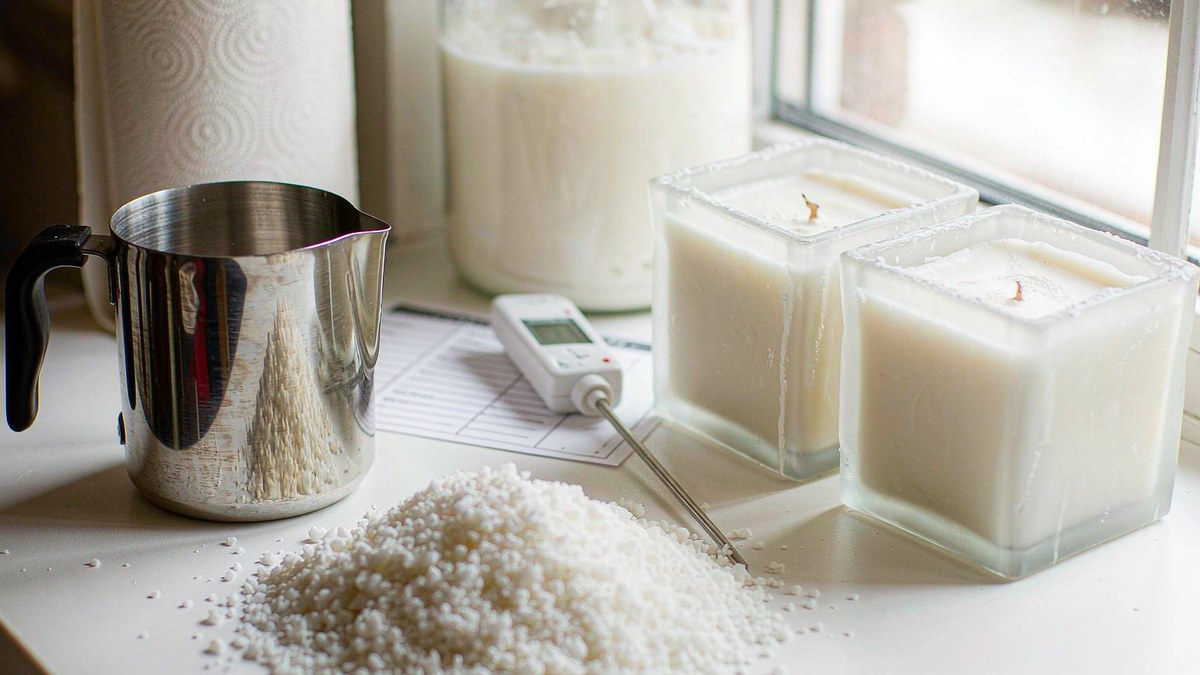
Wax is the largest single material cost in a scented candle after the vessel, and it is the one that moves most. Soy, coconut and rapeseed are agricultural commodities with harvest cycles, freight exposure and a supply base that has consolidated; paraffin tracks oil. A factory that quotes a candle for twelve months without a wax clause is either absorbing risk it cannot see or planning to change the specification quietly.
This article explains how the main wax families behave commercially and technically in 2026: what drives their price, what each does to throw, appearance, burn and vessel choice, and how to structure a range so that a commodity swing does not wipe out the margin on an approved product.
Table of Contents
- What drives wax cost
- The four wax families
- Commercial and technical comparison
- Fragrance load changes the arithmetic
- Vessel choice is a wax decision
- Structuring a quote that survives a swing
- Practical guide: choosing a wax strategy
- Frequently asked questions
- Conclusion
What drives wax cost
Four inputs determine the price a factory pays. The first is the underlying commodity: soybean oil, coconut oil, rapeseed oil or paraffin slack wax. The second is refining and hydrogenation, which converts oil into a wax with the melting point and crystallinity a candle needs. The third is logistics — wax is heavy and bulky, so freight is a real share of landed cost, and regional supply matters more than global price. The fourth is certification and blending: a cosmetic-grade, kosher or RSPO-certified wax carries a premium that is easy to overlook in a spreadsheet.
Why soy is not one price
"Soy wax" covers blends with different soy fractions, different melting points and different additives. A 100% soy container blend and a soy-paraffin blend at 70/30 are both sold as soy wax and behave differently in a vessel, a wick and a cost sheet. When a buyer compares two quotes, they are often comparing two different materials under one name.
The four wax families
Soy
The default for container candles in Europe and North America because it carries a clean-burn story and takes fragrance well at 6-10%. Weaknesses are cosmetic: frosting, wet spots and a rougher top after burning, all of which are manageable with pour temperature and cooling control but never fully eliminated.
Coconut
Excellent cold and hot throw, a smooth creamy surface and strong performance in coloured candles. It is also the most expensive of the vegetable waxes and behaves differently in warm climates, softening earlier in transit. Coconut is often blended with soy to get throw without the full cost.
Rapeseed (canola)
Widely used in Europe as a non-GM, non-soy alternative with a good carbon story and reliable supply from European crush. Performance sits close to soy; the appeal is sourcing and certification rather than a technical advantage.
Paraffin
Still the best cost per unit and the strongest hot throw per gram of fragrance, which is why it remains in commercial and large-format candles. The reputational cost is real in some retail channels, and the technical trade-off is a faster, hotter burn that demands a more careful wick and vessel specification.
Commercial and technical comparison
| Wax | Relative cost | Cold throw | Hot throw | Surface | Best fit |
|---|---|---|---|---|---|
| Soy | Mid | Good | Moderate | Prone to frosting and wet spots | Mainstream retail, clean-burn positioning |
| Coconut | High | Strong | Strong | Smooth, creamy | Premium ranges, colour-critical candles |
| Rapeseed | Mid | Good | Moderate | Similar to soy | European sourcing stories, non-GM claims |
| Paraffin | Low | Moderate | Strong | Very smooth, opaque | Large formats, cost-led programmes |
| Soy-coconut blend | Mid-high | Strong | Strong | Smooth with less frosting | Balanced premium mainstream |
Fragrance load changes the arithmetic
Fragrance is the second-largest material cost and the one buyers push hardest on. A 6% load and a 10% load differ by roughly two-thirds more oil per candle, which at premium oil prices is a meaningful share of unit cost. The load also determines whether the candle performs: too low and it will not throw in a large room, too high and the wax can sweat, the wick can struggle and the burn can tunnel.
The cost-per-throw test
The useful comparison is not cost per gram of wax but cost per hour of satisfactory burn. A cheaper wax at a lower load may deliver the same room-filling effect as a premium wax at a higher load, and the reverse is also true. Run the burn test in a defined room volume before deciding which is cheaper.
Vessel choice is a wax decision
Glass weight, diameter and wall thickness all interact with the wax. A wide vessel needs a different wick and often a harder wax to avoid tunnelling; a narrow tumbler concentrates heat and can overheat a soft coconut blend. Vessel cost usually exceeds wax cost in premium candles, which is why the pair should be specified together rather than chosen sequentially.
Structuring a quote that survives a swing
Three mechanisms keep a candle programme stable without hiding risk. First, quote the wax separately from the conversion cost, so a price movement is visible and negotiable rather than concealed in a total. Second, fix a validity window with a defined reference index and a stated adjustment formula. Third, agree a substitution protocol: which blends are considered equivalent, and who approves a change.
For the vessel side of the same problem — food-contact rules applied to candle containers — see our note on CLP classification for scented candles, which is where a fragrance load change also changes the hazard label.
Practical guide: choosing a wax strategy
Step 1 — Define the burn, not the material
Room size, burn hours, wick type and vessel diameter first. The wax follows from those requirements, not the other way round.
Step 2 — Test two blends, not one
Run the intended load in the intended vessel with two candidate blends. Choose on throw, surface and burn, then negotiate price.
Step 3 — Separate wax from conversion in the quote
A split quote makes a commodity swing visible and keeps the negotiation honest.
Step 4 — Fix a validity window and an index
Ninety days with a named reference and an adjustment formula is standard practice for programmes above a container.
Step 5 — Agree substitutions in advance
Name acceptable alternatives and the approval route. Unilateral substitution is the most common cause of a specification dispute.
Step 6 — Re-test after any change
A different wax lot, load or wick batch can change the burn. Re-test on the first production run of each new material lot.
Frequently asked questions
Why did my candle price change without a specification change?
Because wax is a commodity. Unless the contract fixes a validity window and an adjustment formula, a raw material movement will appear as a price change or, worse, as a quiet substitution.
Is soy wax always more expensive than paraffin?
Usually yes, per kilogram, though the gap varies with oil prices and certification. The comparison that matters is cost per hour of satisfactory burn in the intended vessel.
What fragrance load should a private-label candle use?
Typically 6-10% for container candles. The correct figure is the one that passes a burn test in the intended vessel, not the highest number a supplier will quote.
Why does my soy candle have white patches on top?
Frosting is crystallisation of the soy fraction and wet spots are adhesion failures between wax and glass. Both are cosmetic and can be reduced with pour and cooling control, but not eliminated in pure soy.
Can I switch wax suppliers without re-testing?
No. Even within the same specification, a different lot or supplier changes crystallinity and burn behaviour. Re-test wick and burn on the first run with the new material.
Does a higher fragrance load always smell stronger?
No. Beyond a point the wick cannot vaporise the oil efficiently, so the candle sweats, tunnels or smokes. Throw peaks at a load that depends on wax, wick and vessel diameter.
Is rapeseed wax a drop-in replacement for soy?
Close but not identical. Melting point, contraction and surface finish differ, so wick and pour temperature usually need adjustment before the burn matches.
How should a candle quote be structured?
Wax, fragrance, vessel, wick and assembly as separate lines with a stated validity window and reference index. A single all-in price hides the part most likely to move.
Conclusion
Wax is where candle economics are decided, and where specification discipline pays. The material is a commodity, the behaviour is technical, and the contract is the bridge between the two.
Choose the wax from the burn requirement, quote it separately, fix a validity window with an index, and agree substitutions in writing. Do that and a commodity swing becomes a line in a spreadsheet rather than a renegotiation of an approved product.
We invite you to explore our capabilities and discuss your next product line.
You can reach us directly via WhatsApp +86 17324762943
Email: adon@customperfumeoem.com
Website: customperfumeoem.com


