
Candle Safety Standards: EN 15493, EN 15494, EN 15426 and ASTM F2417
A candle is not a cosmetic and not a toy, but it is covered by product safety law and by standards a retailer will test against. This article explains what EN 15493, EN 15494, EN 15426 and ASTM F2417 each cover, and how to build the evidence file.
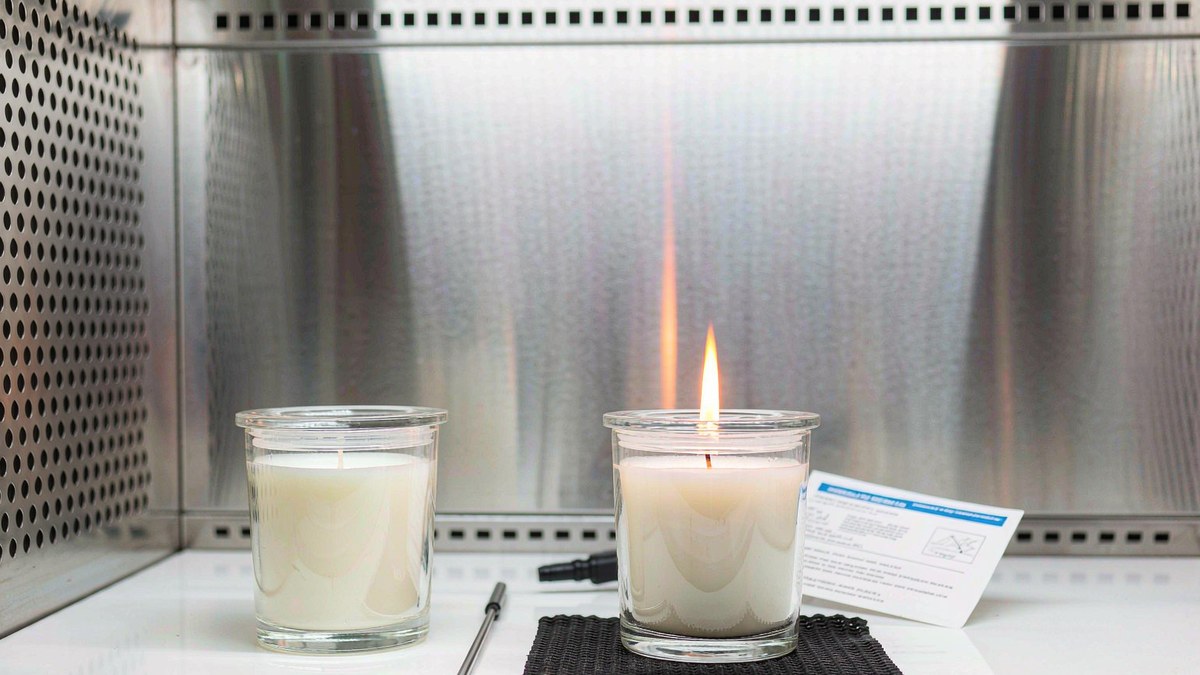
A candle is not a cosmetic and not a toy, which is why brands sometimes assume it is barely regulated. In practice it sits under general product safety law and, in Europe and the United States, under specific standards that a retailer may test against before listing.
This article explains what each candle standard actually covers, and how to build the evidence file a buyer will ask for.
Table of Contents
- The regulatory landscape
- EN 15493: safety
- EN 15494: safety information
- EN 15426: sooting
- ASTM F2417: the US
- What evidence looks like
- Practical guide: building a candle file
- Frequently asked questions
- Conclusion
The regulatory landscape
Three layers apply. General product safety law requires a safe product and, in the EU, technical documentation and traceability. Chemical rules govern the fragrance as a mixture, including classification and labelling. And voluntary-but-expected standards define how safety is demonstrated for candles specifically.
EN 15493: safety
The European safety standard for candles. It addresses stability, burning behaviour and the risk of secondary ignition — whether a candle self-extinguishes, whether the container overheats, whether wax pools in a way that creates a hazard.
EN 15494: safety information
The companion standard for safety labelling: which warnings, in what form, and where they go on the pack. Retail buyers frequently check this before EN 15493, because the label is visible in a way that a burn test is not.
EN 15426: sooting
The sooting standard. Soot is the failure consumers notice first and the one that damages walls; the test measures deposition under controlled burn conditions. A candle that passes safety but fails sooting is still a retail problem.
ASTM F2417: the US
The American consumer safety specification for candles, covering similar ground — stability, burn behaviour, warnings — with its own test conditions. A European test report does not substitute for it.
| Standard | Region | Covers | Typical evidence |
|---|---|---|---|
| EN 15493 | EU | Candle safety | Test report per SKU |
| EN 15494 | EU | Safety information | Label artwork review |
| EN 15426 | EU | Sooting | Soot deposition test |
| ASTM F2417 | US | Candle safety | Test report per SKU |
What evidence looks like
A test report naming the SKU, the wax, the wick, the vessel and the fragrance load; a label artwork showing the required warnings; and a retained sample. The report must match the product actually shipped — a report for a 200 g candle does not cover the 400 g version.
Practical guide: building a candle file
Step 1 — Freeze the specification
Wax, wick, vessel, load and fragrance reference. Tests follow that spec.
Step 2 — Test each SKU, not each family
Size and vessel change the outcome.
Step 3 — Review the label against EN 15494
Warnings, placement and legibility.
Step 4 — Run sooting on the worst case
Often the largest vessel with the highest load.
Step 5 — Add the chemical file
Fragrance SDS and, where applicable, CLP labelling.
Step 6 — Keep reports current
A wax or wick change invalidates the test, not just the label.
Frequently asked questions
Are these standards mandatory?
They are the recognised route to demonstrating safety. Retailers treat them as required, and authorities use them as the benchmark.
Does one report cover a whole range?
Only where size, vessel, wick and load are materially the same.
What about reed diffusers?
Different rules: the diffuser is a mixture, so CLP and general product safety apply rather than candle standards.
Is a sooting test required?
Not by law, but retail buyers increasingly request it, and it protects against the most visible failure.
Can I self-declare?
You can self-assess against the standards, but third-party reports are what buyers accept.
Does the fragrance need its own classification?
Where the finished mixture meets classification criteria, yes — and that drives the label.
What invalidates a report?
A change of wax, wick, vessel, load or fragrance version.
Do US and EU reports interchange?
No. The standards differ in method and criteria.
Conclusion
Candle compliance is not one certificate; it is a specification plus four kinds of evidence. The product that ships must be the product that was tested.
Freeze the spec, test each SKU, review the label, run sooting and keep the file current. Safety is demonstrated per product, not per brand.
We invite you to explore our capabilities and discuss your next product line.
You can reach us directly via WhatsApp +86 17324762943
Email: adon@customperfumeoem.com
Website: customperfumeoem.com


