
The Batch File for a Retailer Audit: COA, SDS and Specification
Retail quality teams do not ask whether you have certificates; they ask for the batch file for the goods on the order and check that the numbers reconcile. This article sets out what a COA, SDS and specification must each contain, and the four checks that prevent a documentation hold.
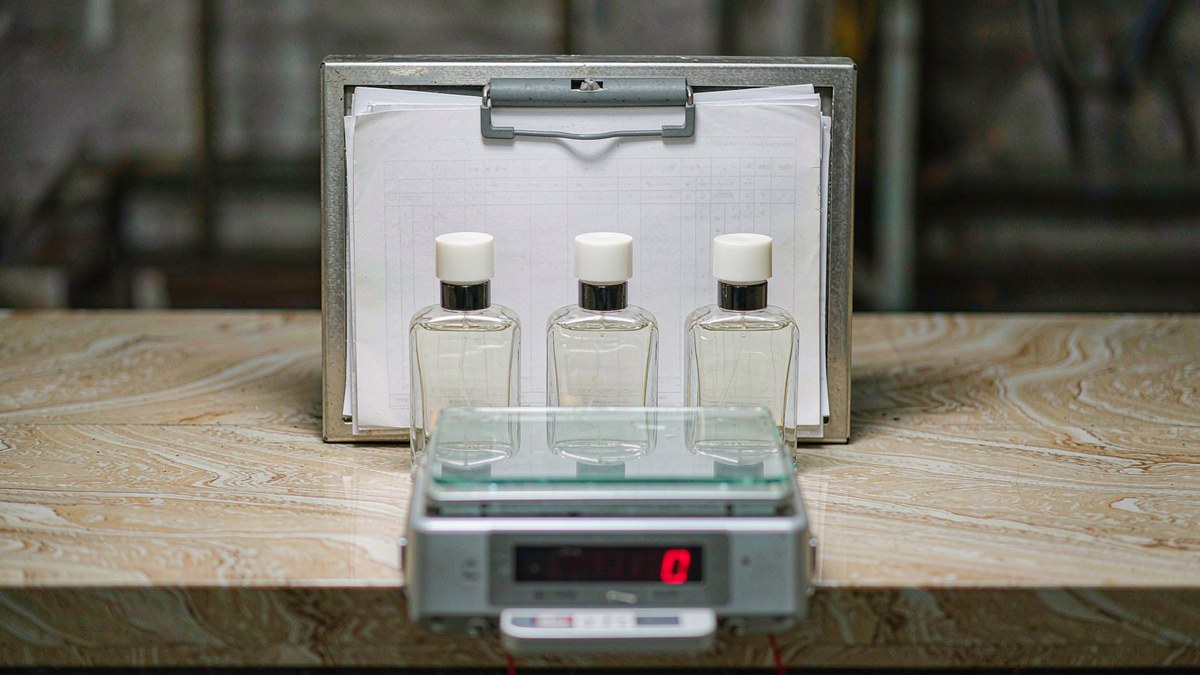
A retailer's quality team does not ask whether you have certificates. It asks for the batch file for the specific goods on the purchase order, and then it checks whether the numbers on the certificate match the numbers on the carton. When they do not, the consignment is held — not because the product is unsafe, but because the paperwork cannot be reconciled.
This article sets out what a batch file for a fragrance or home-fragrance consignment should contain, how COA, SDS and specification relate to each other, and the reconciliation points an auditor checks first.
Table of Contents
- Three documents, three jobs
- What a COA must actually show
- The SDS: what it is and is not
- The specification as the anchor
- Reconciliation points
- Retention and version control
- Practical guide: building the file
- Frequently asked questions
- Conclusion
Three documents, three jobs
The three documents are routinely confused because all three contain numbers. They answer different questions, and none substitutes for another.
| Document | Answers | Produced by | Per batch? |
|---|---|---|---|
| Specification | What the product is supposed to be | Brand and factory, agreed | No, per product version |
| Certificate of analysis (COA) | What this batch actually measured | Factory or laboratory | Yes |
| Safety data sheet (SDS) | Hazards, handling and transport status | Manufacturer, per formulation | No, per formulation version |
A fourth document often travels with them and is frequently missing: the batch record extract, showing the fill volumes, the components used and the date of manufacture. Retail auditors ask for it when a COA looks too clean.
What a COA must actually show
A COA that states "conforms to specification" and nothing else is a letter, not an analysis. A usable COA carries the batch code, the manufacturing date, the parameter measured, the specification range, the measured result and the method or instrument where relevant.
Parameters that matter for fragrance
- Appearance and colour, ideally against a reference standard
- Odour, assessed against an approved retention sample
- Specific gravity or density, where the fill is sold by volume
- Refractive index for compounds, as an identity check
- Flash point for alcohol-based products, relevant to transport
- Fill weight or volume per unit, with the sampling plan
- Microbiological results for water-containing products
The single most common defect is a COA without a specification range. A measured value with nothing to compare against cannot be audited.
The SDS: what it is and is not
The SDS describes hazards. It is not a compliance certificate, not a safety assessment, and not evidence that the product may be sold. It is required for handling and transport, and it is the first document a carrier or a platform will ask for.
Common SDS problems
- Version mismatch: the SDS describes a formulation that has since changed
- Wrong language for the destination
- Missing transport section, or a section that contradicts the dangerous-goods declaration
- Supplier's SDS rather than the finished product's
For cosmetic products, an SDS is not a substitute for the safety report. For mixtures such as diffuser liquids, the SDS is the gateway to CLP classification and the hazard label.
The specification as the anchor
The specification is the only document the other two are measured against, and it is the one brands most often leave to the supplier. It should state the formula version, the fragrance dosage, the fill volume and tolerance, the component part numbers, the label version, the carton configuration and the tests required per batch.
Where a specification is vague, a COA becomes decorative, because there is no range to fail. That is convenient for a supplier and dangerous for a brand.
Reconciliation points
Auditors reconcile four things, in this order. First, the batch code on the COA against the batch code on the carton and the label. Second, the formula version on the COA against the version on the specification. Third, the fill volume on the batch record against the net content declared on the label. Fourth, the label version against the artwork approval that the brand signed.
A failure at any of the four is a documentation hold, and documentation holds cost more time than quality holds because they cannot be fixed by rework.
Retention and version control
Keep the file for at least the period the destination requires and the retailer demands, which is often longer than the legal minimum. Retain a physical retention sample per batch where the product is cosmetic; it resolves disputes about odour and colour that no document can settle.
Practical guide: building the file
Step 1 — Write the specification before the first batch
Formula version, dosage, fill tolerance, components, label version, tests. Without it, nothing downstream is auditable.
Step 2 — Require a COA with ranges, per batch
Reject COAs that state conformity without measured values. They will not survive a retailer review.
Step 3 — Match the SDS to the formulation version
Date it and cross-reference it to the specification.
Step 4 — Reconcile batch codes across documents and cartons
Four checks, fifteen minutes, and it prevents most holds.
Step 5 — Keep retention samples
One per batch, stored under controlled conditions, labelled with the batch code.
Step 6 — Date and version everything
A file that cannot show which version applied on a given date cannot defend a batch produced in that period.
Frequently asked questions
What is the difference between a COA and an SDS?
A COA reports what a batch measured against specification. An SDS describes the hazards of the formulation. They are produced for different purposes and one cannot substitute for the other.
Does every shipment need its own COA?
Every batch does, and a shipment usually contains one or more batches. If a consignment mixes batches, the file should list each with its own COA.
Is an SDS required for candles?
Where the product is classified as hazardous, an SDS is required for handling and transport. Even where it is not, retailers commonly request one as part of supplier onboarding.
Can a COA be issued by the fragrance supplier instead of the factory?
The fragrance supplier can certify the compound. The finished product needs its own analysis, because the compound is only one input.
What is a retention sample for?
It is the physical record of what the batch smelled and looked like. Disputes about odour drift or colour change are resolved by comparison, not by documentation.
How long should batch records be kept?
At least as long as the destination requires and the retailer asks for. For cosmetics, documentation linked to the product information file is commonly kept for ten years after the last batch.
Why is a fill volume tolerance written into the specification?
Because filling is not exact. A stated tolerance allows a batch to pass or fail objectively, and it protects the net content declaration on the label.
What if the label version on the carton is older than the approved artwork?
That is a documentation hold. It is usually resolved by re-labelling, which is slow and expensive, or by a concession from the buyer, which is not guaranteed.
Conclusion
A batch file is not a folder of certificates; it is a chain in which the specification defines the target, the COA reports the batch, the SDS describes the hazard, and the batch code links all three to the carton in the warehouse.
Write the specification, demand measured values, reconcile four points before dispatch, and keep a retention sample. That is what makes an audit a two-hour meeting rather than a two-week hold.
We invite you to explore our capabilities and discuss your next product line.
You can reach us directly via WhatsApp +86 17324762943
Email: adon@customperfumeoem.com
Website: customperfumeoem.com


